














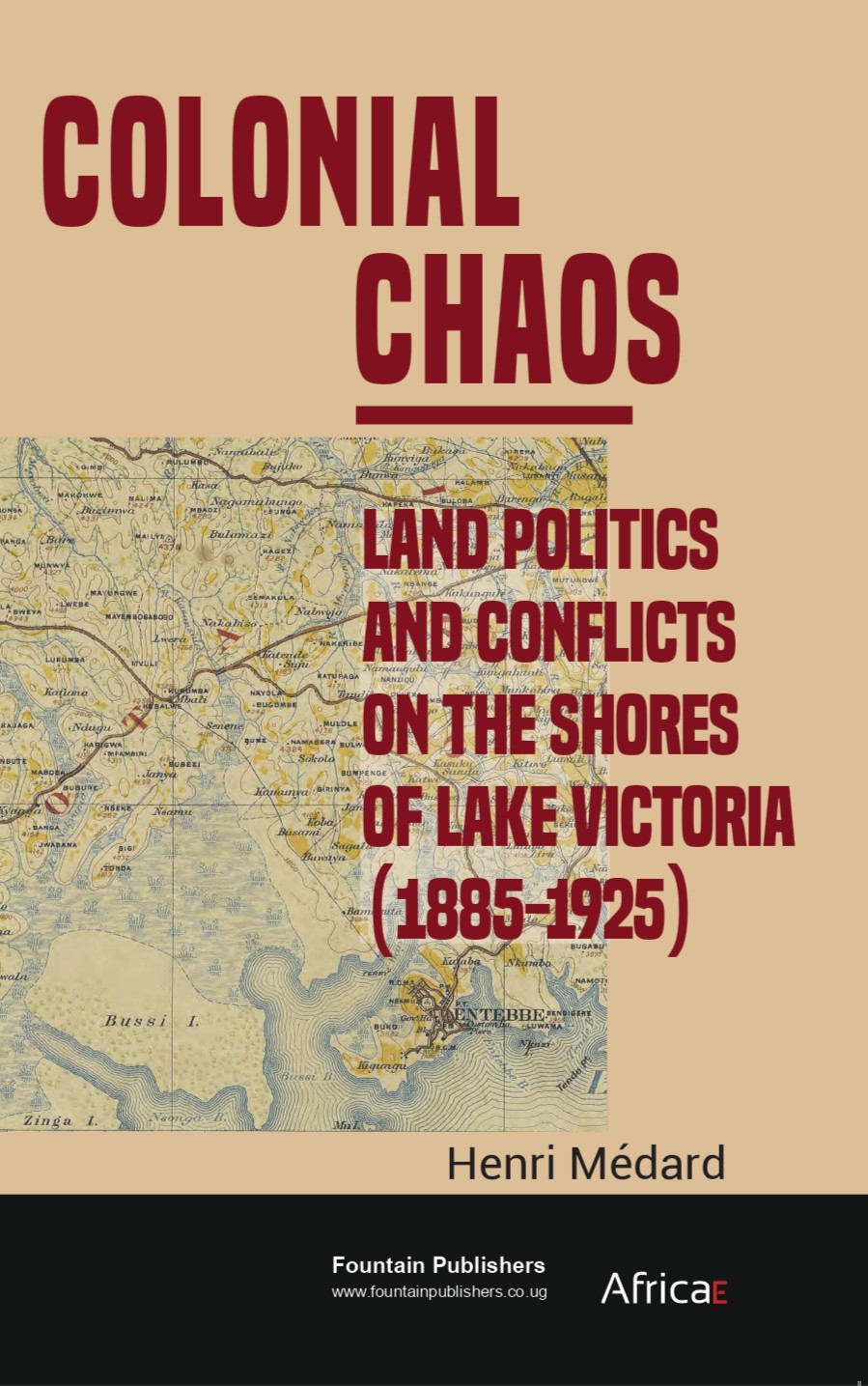

This book looks at the multiple consequences of the colonial imposition of private property on Bussi Island, on Lake Victoria, which in 1900 became the private property of the Prime Minister and Regent of the kingdom of colonial Buganda, Sir Apolo Kagwa. Three intertwined themes are explored between the 1880s and the 1920s: the abrupt arrival of Western private property in an African kingdom that knew nothing of it; the forgotten importance of the islands and shores of Lake Victoria within the kingdom; and the emergence of a new politico-religious party (uniting the Malakite Church and the Bataka movement) that opposed the colonial oligarchy in power in Buganda. This research has led to an in-depth re-reading, of the history of the entire kingdom of Buganda and colonial Uganda between 1885 and 1925. It makes the history of Buganda more complex by incorporating lake areas, a novel approach in the historiography of colonial Uganda. It deconstructs current historical oral traditions and shows that most of their roots go back to the Buganda of the 1920s, inherited from the inhabitants of Lake Victoria. The book shows that the tension surrounding the hereditary clan chiefs in Buganda is as much a geographical tension between the people of the lake and the people of the land as it is a tension between ancient clan powers and a modernising patronage power. The very rich land sources relating to the island of Bussi show the autonomy of African actors in a context of indirect government. They shed a unique light on the history of the globalisation of property and the history of colonisation and its contestation.
“This book is a major intervention in Ugandan historiography. Its insightful analysis of previously neglected sources requires a reimagining of the history of the kingdom of Buganda, challenging a series of established narratives which reflected the interests of mainland elites. By viewing Buganda’s modern history from the alternative perspective of Lake Victoria’s once powerful islands, Médard provides a compelling revisionist interpretation of the evolution of clanship, the expansion of Christianity, the imposition of freehold land, and the development of populist nationalism.” Shane Doyle, University of Leeds.






Reviews
Clear filtersThere are no reviews yet.