

ENJOY FREE DELIVERY WITHIN NAIROBI FOR ORDERS ABOVE 10,000
Nuria App
Kenyan Shilling (KSh)
  • Kenyan Shilling (KSh)
  • United States (US) dollar ($)
  • Pound sterling (£)
  • Ugandan Shilling (UGX)
0 Wishlist
Login / Register
  • Home
  • Shop
  • Kenyan Books
  • Rare Books
  • Gift Card
  • Blog
  • Contact Us
  • SELL ON NURIA
  • VENDOR LOGIN
Menu
12 items KShs13,476.00
Browse Categories
  • Kenya Books
  • Rare Books
  • International Bestsellers
  • Self Help & Motivation
  • Fiction
  • Autobiography
  • Business
  • Children’s Books
  • Kids & Teens
  • African Interest
  • Educational Books
  • Romances & Thrillers
HELP / SUPPORT

0794 233 261

12 items KShs13,476.00
View basket “I, the Gikuyu and the White Fury by H...” has been added to your basket.
-20%
Click to enlarge
Home Books Business History Gusii Soapstone Industry:Critical issues, Opportunities, Challenges & Future Alternatives
ITS A SHE: A TALE OF LIFE, LOSS AND LOVE BY MAGDALENE MATTHEWS KShs2,000.00 KShs1,500.00
Back to products
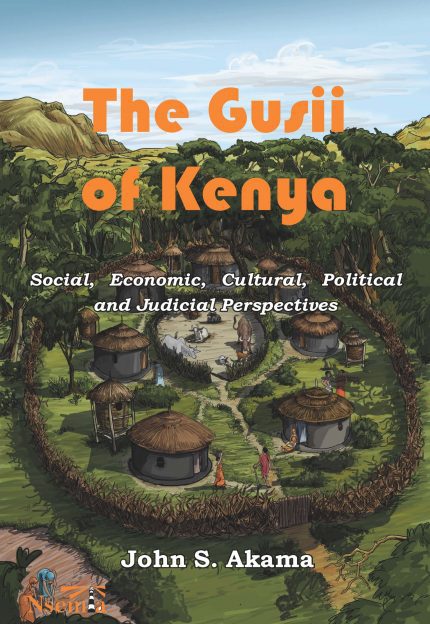
The Gusii of Kenya by John S. Akama KShs1,800.00 KShs1,600.00

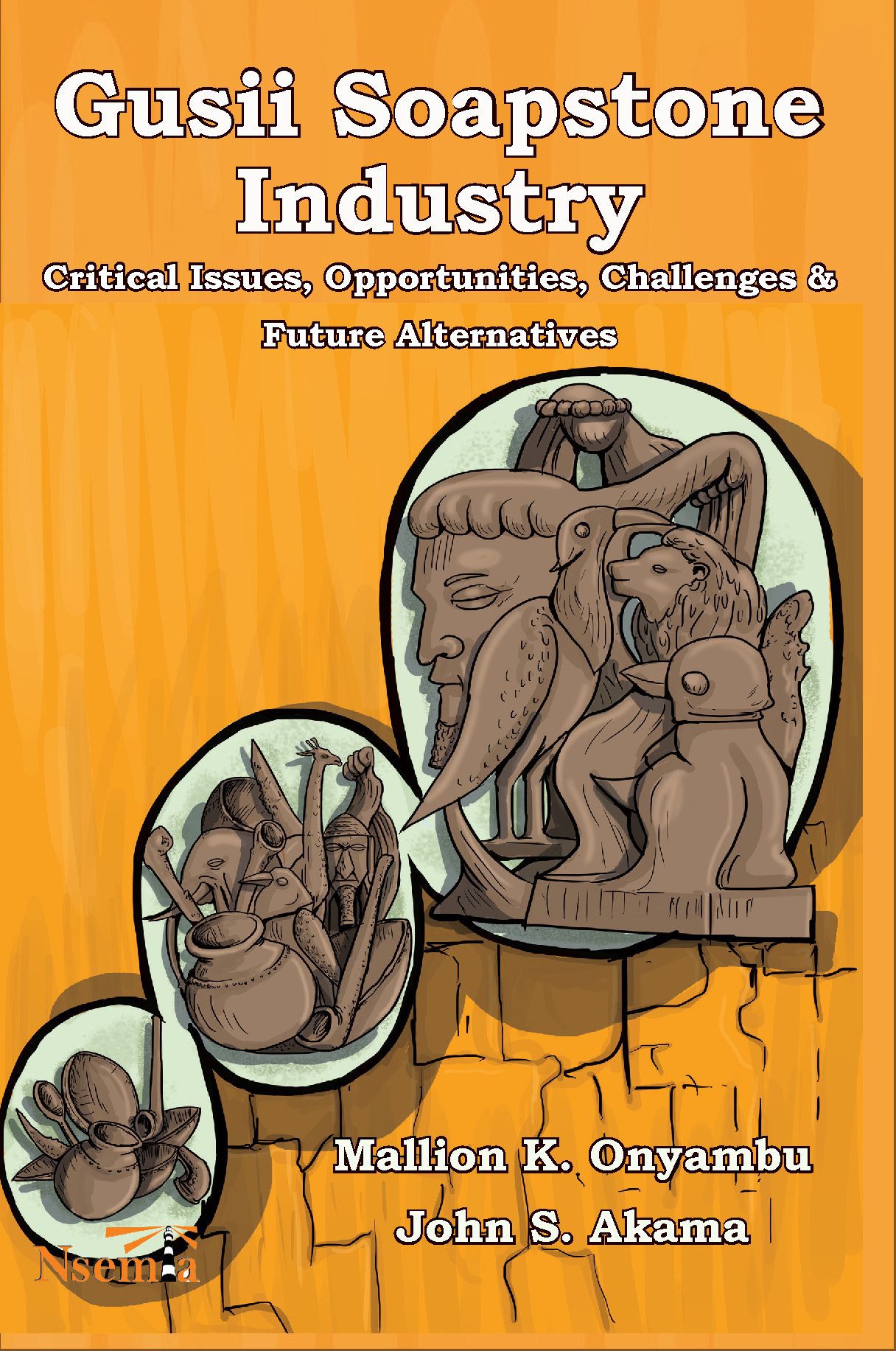
Gusii Soapstone Industry:Critical issues, Opportunities, Challenges & Future Alternatives

KShs1,000.00 KShs800.00

Nuria Ranking: #27 in History

Purchase this product now and earn 2 Points!

As is the case with most African indigenous industries, not much research has been done on
the Gusii soapstone industry. Consequently, the main aim of this book is to fill the identified
gap. Specifically, this book traces the origin of the Gusii soapstone industry, going through
various stages, i.e. the Pre-Colonial, Colonial and Post-Colonial periods. Within this historical
context, the book provides an elucidation of the social, economic, political and cultural factors
that have impacted on the evolution and/or development of the soapstone industry. A critical
issue captured in the book is the fact that, over the years, the soapstone handicraft products
have been transformed from being items of utility for the local people to, mainly, becoming
non-utility items that are sold to outsiders, particularly international tourists as unique pieces
of indigenous handicraft and/or African art. However, it should be noted that, notwithstanding
this transformation, indigenous cultural attributes and/or cultural themes that would have
otherwise disappeared, due to increased impacts of globalization, are being preserved by the
sculpturing of unique indigenous soapstone products. Furthermore, currently, the soapstone
industry has become a major source of livelihood for the Gusii people of Tabaka in
Southwestern Kenya.
This book provides a lucid articulation of various facets (i.e., social, economic, cultural and
political perspectives) of the Gusii soapstone industry, and the fundamental factors that have
made the industry survive, over the years, notwithstanding the introduction of mass produced
goods from the Western world. The conceptualization of the role of the indigenous industry in
promoting sustainable livelihood is clearly brought out, and is presented within the broader
milieu of the Gusii society. The book provides excellent reading for anyone interested in having
proper perspectives on the history and the overall development of the Gusii soapstone industry.
Elkanah Ong’esa, a world renowned artist and soapstone sculptor.
As much as the soapstone sculptures are found in museums, art galleries, curio shops and
people’s homes in most major cities of the world, not much research and documentation of
these unique indigenous industry initiatives has been done. In light of that, this book on the
Gusii soapstone industry fills a critical niche and is quite handy for people from all walks of
life and academia looking for up to date information on the Gusii soapstone industry. Dr.
Margaret Barasa, Anthropolinguistic Expert, and Dean, Faculty of Arts and Social
Sciences, Kisii University, Kenya.
Most literature on African indigenous industries, such as soapstone mining, carving and
marketing, is based on Eurocentric approach which looks at these industries and African art as
exotic items for the pleasure of Western gentry and middleclass. Adopting an Afrocentric
approach, this book provides a refreshing analysis of the history, transformation and growth of
the Gusii soapstone industry; an indigenous initiative that has evolved, systematically, over the
years, and has shown a lot of resiliency in the face of many complex challenges. The book is
recommended to people who want to have a proper perspective of similar indigenous industries
and the Gusii soapstone industry in particular. Matunda Nyanchama, Publisher.
This book looks at the resilience of the soapstone industry in Gusii. It shows that the soapstone
carvings as currently developed by the Gusii people may have its origin in ancient traditions
that dates back to hundreds and perhaps thousands of years. It also gives a good historical
analysis of the growth and development of the soapstone industry. It will goes a long way in
illuminating critical aspects of the Gusii soapstone industry. Herman Kiriama, Senior
Research Fellow, Kisii University, Kenya.

Your order qualifies for free delivery within Nairobi!
Add to wishlist
Category: History Tags: Academic Books, African Books, Ekegusii Books, Kenya History, Kenya. Kenyan Books
Share:
Close
  • Shipping
  • Reviews (0)
  • Vendor Info
  • More Products
Shipping
Reviews (0)
Rated 0 out of 5
0 reviews
Rated 5 out of 5
0
Rated 4 out of 5
0
Rated 3 out of 5
0
Rated 2 out of 5
0
Rated 1 out of 5
0

Reviews

Clear filters

There are no reviews yet.

Be the first to review “Gusii Soapstone Industry:Critical issues, Opportunities, Challenges & Future Alternatives” Cancel reply

Your email address will not be published. Required fields are marked *


Vendor Info

Vendor Information

  • Store Name: Nsemia Inc Publishers
  • Vendor: Linda Kiboma
  • No ratings found yet!
More Products
-22%

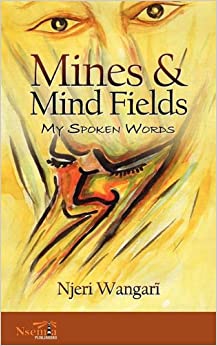
Mines and Mind Fields: The Spoken Word

Poetry
KShs900.00 KShs700.00
"These poems especially speak to a number of related realities in Kenya and other countries in the African continent; they speak about a people with ingenuity and yet forced to make tough choices because of hard economic and political conditions; they speak of an evolving culture, shaped by everyday realities of life and the ingenuities of survival. The mixture of languages and slang also give the poems an interesting immediacy and life." - Mwenda Ntarangwi, Sociology Professor "She is one of the most respected female poets in Nairobi today". The Sunday Nation writer Joseph Ngunjiri says of Njeri, "Njeri Wangari has a powerful voice, and she knows how to put it to good use. Whenever she takes to the podium to recite a poem, she has her enthusiastic audience applauding all the way. " -Sunday Nation 8 February 2009. - Kenya's Leading newspaper. "The poems bring a lot into perspective; and give me a thing or two to think about. ... Very nice ..." - - Cee- A Kenyan Blogger "I have had a hearty laugh reading Maisha Ya Hawker, got the tears to prove it :-) You just topped Women Behaving Badry and I love it! Your expression is amazing Njeri. I can't wait to see you perform this one." - Ndanu - Performance Poet "I must admit these are lovely poems. I have been following your blog for a while and it is very inspiring and informing. I am a poet and run the blog Two Hours Before. Your blog actually inspired me to do it also and I must tell you that your work is excellent. I will keep tuned and hopefully will get an opportunity to meet you and may be attend your performances." - Simon Mwangi Muthiora - Blogger and Poet
Add to wishlist
Add to basket
Quick view
-14%

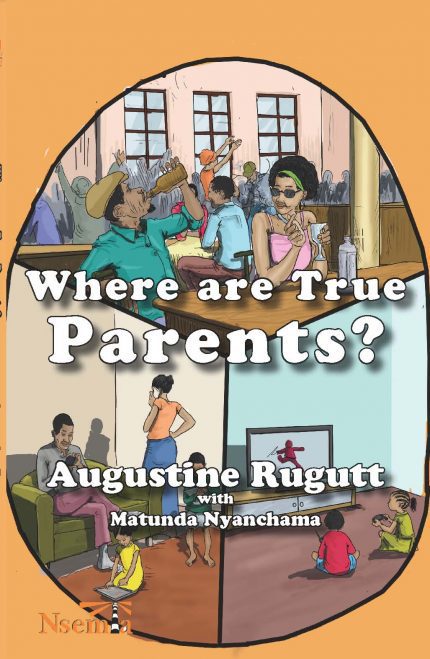
Where are True Parents?

Parenting
KShs700.00 KShs600.00
In Where are True Parents?, Augustine Rugutt explores ways in which parenting determines children’s behaviour and character beyond formative years. In doing so, he associates society’s changing value system, social pressures and use of technology with parenting outcomes, some of which are unpalatable in the eyes of society. He asks whether parents are truly aware of the impact of their conduct and action in shaping the future of their children. A fundamental question is whether parents truly know their children. On the other hand, do children really understand their parents? Such understanding is essential for a sound foundation for society. He makes the irrefutable case that poorly parented children are likely to be poor parents themselves. He challenges parents to understand that parenting is a God-given responsibility. As such, parents owe it to the Maker and the future of society to play their role as parents guided by teachings from the Bible. Step by step advice, most of which is informed by his work with Church, is invaluable for today’s parent.
Add to wishlist
Add to basket
Quick view
-20%

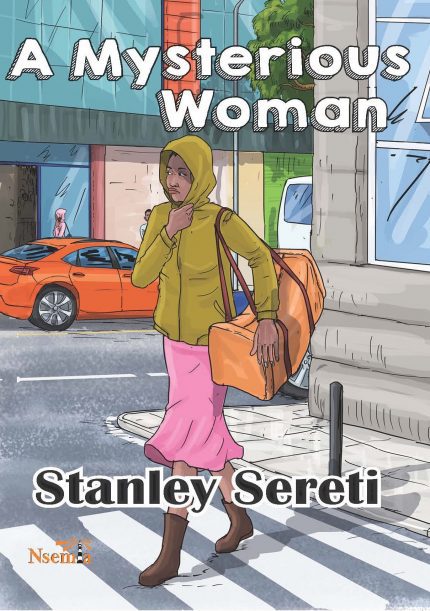
A Mysterious Woman

Kenya Fiction
KShs1,000.00 KShs800.00
A Mysterious Woman is a captivating story of Nyang’arisa, the protagonist and a woman who chose a life of crime for survival. Unlike what society is accustomed to, Nyang’arisa joins a group of men, her ‘business partners,’ to make a living through an unlawful acquisition of what belongs to others. After some time, Nyang’arisa finds love in a young, hardworking, and loving man, Michael, whom she later marries. The thought of Michael knowing of her life in crime makes her scared and restless. She chooses to lead a mysterious life, with her history hidden from her husband and family. Nyang’arisa builds a new family, her tainted past notwithstanding. However, she lives always looking back over her shoulder with the nagging thought that her past might one day catch up with her. True to her thoughts, her past catches up with her as she ends up spending the rest of her life behind bars.
Add to wishlist
Add to basket
Quick view
-30%

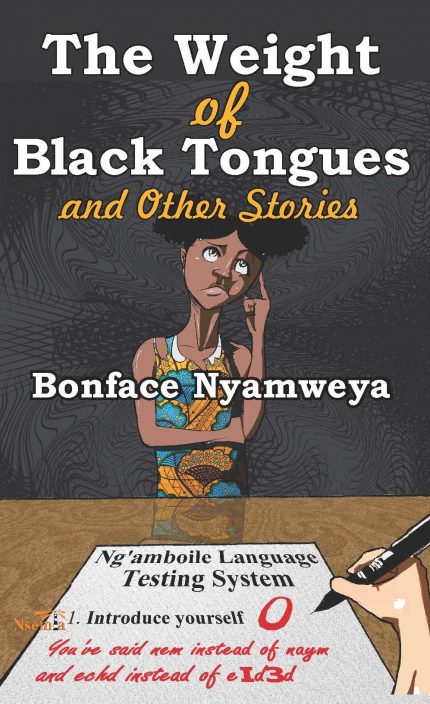
The Weight of Black Tongues and Other Stories

African Interest
KShs1,000.00 KShs700.00
“The Weight of Black Tongues is an anthology of over half a dozen original short stories by an emerging star of new Kenyan literature, Bonface Nyamweya. This debut collection is both startling and gripping – envision it as a ride on the tail of a shooting star, zooming through Kenya’s night skies, each twinkle representing a unique story. As a dynamic figure in post-COVID-19 literary circles, whom I have had the honour of mentoring, Nyamweya showcases the depth and scope of storytelling in Kenya, transitioning from unusual novels and sartorial poetry to making his mark in short story fiction. From the enigmatic Whose Title Died to the riveting Waiting for Mama, each title in this new book invites readers into a world of mystery and profound reflection, solidifying Nyamweya as a rising force in African literature in the wake of the fin de siècle.
Add to wishlist
Add to basket
Quick view
-14%

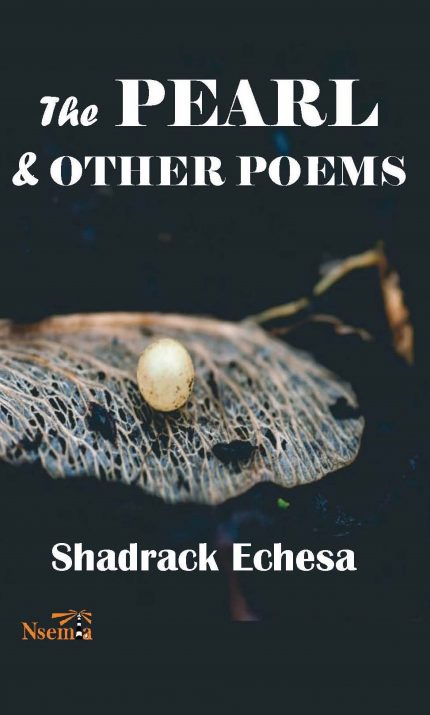
The Pearl and Other Poems

Poetry
KShs700.00 KShs600.00
The Pearl and other Poems is a collection of 41 poems of different forms, styles and themes; themes that touch on varying aspects of life like love, marriage, politics, farming, education, business, leadership, religion, and anxiety, among others. What Other’s Say The poems in this collection are really enticing and evoke real emotions leaving me yearning for more. The content and titles have no match. Echesa’s creativity is just out of this world - Elizabeth Namarome Mukenya. I just can’t argue with the message in the poem “Dancing in the room”, indeed people don’t get tired of doing things they love. I love the poems in this collection, and keep coming back to them - Silas Khasao Wandera.
Add to wishlist
Add to basket
Quick view
-25%

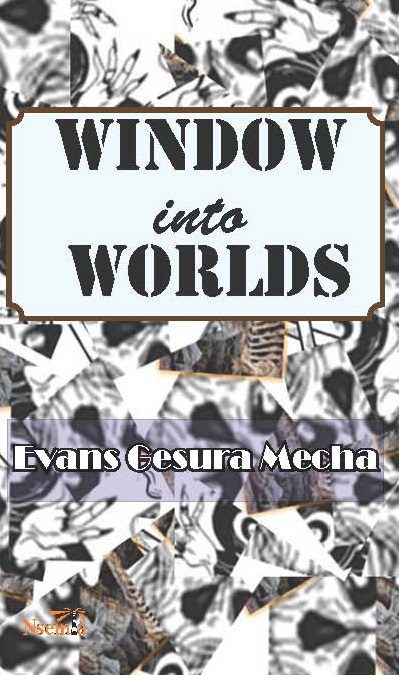
Window into Worlds

Books
KShs800.00 KShs600.00
Dr. Evans Gesura Mecha’s poems in Window into Worlds stir the soul and evoke worlds beyond worlds. I am overjoyed to read them, as I believe other readers would. Mecha’s poetry easily blends the jigsaws of life in the present with that of antiquity and the metaphysical. It is as much rooted in contemporaneity, indigenous ethos, as in the inwardness of a universal rhythm which ripples through his poetry like a pure, crystalline stream flowing effortlessly. It is delightfully oblique yet not constricted by the artifice of rhetoric and prosody. The subterranean nuances trigger the mind to introspect and delve into untold depths of the “feeling intellect” (Wordsworth).His powerful imagism and natural impressionism makes it superbly impactful, permeating the deepest consciousness of the reader. His poetic diction revels as much in the ordinary beauty of everyday natural life as in the transcendental realm eluding the patterns of words. His poetry smells of the musk of the soil and wings out into the transcendental. Mecha takes one easily on the magic carpet of a poetic elysium into the realms of the multiverse. I am sure readers will revel in his poetry as much as I have. - Prof. Dr. Laksmisree Banerjee, Poet, Professor, Vocalist & Ex-Vice Chancellor; Universities of Calcutta, Ranchi & Kolhan, INDIA.
Add to wishlist
Add to basket
Quick view

Related products

-21%

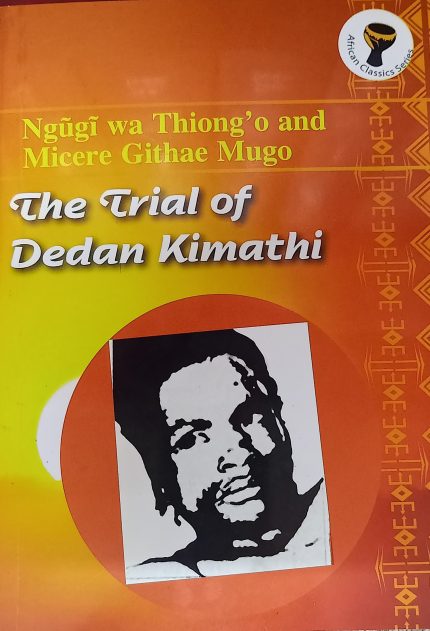
The trial of Dedan Kimathi by Ngugi wa Thiongo and Micere Githae Mugo

Books, African Interest
KShs1,000.00 KShs790.00
The Trial of Dedan Kimathi, written in collaboration with Micere Githae-Mugo, is Ngugi’s response to colonialist writings about the Mau-Mau movement, which traditionally depicted the movement and its leader, Dedan Kimathi, as mentally unbalanced and vicious. Ngugi and his collaborator choose to counter this image with a portrait of Kimathi as a man of great courage and commitment. This was how he was seen by many of the peasants and laborers of Kenya.  
Add to wishlist
Add to basket
Quick view
-20%

Dedan Kimathi Speaks We will fight to the last gun by Maina wa Kinyatti

Books, African Interest
KShs2,500.00 KShs2,000.00
Brief Summary Dedan Kimathi Speaks: We Will Fight to the Last Gun
Add to wishlist
Add to basket
Quick view
-7%

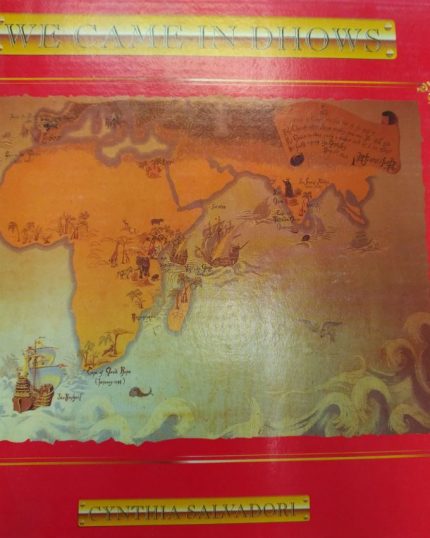
We Came in Dhows by Cynthia Salvadori 3 volumes

Books, African Interest
KShs19,900.00 KShs18,500.00
Brief Summary From the introduction: "This volume has been designed as a companion to Through Open Doors: A View of Asian Cultures in Kenya. Although that book describes the historical background of the various Asian communities in Kenya, it has little information about individual people. This book is all about people."
Add to wishlist
Add to basket
Quick view
-15%

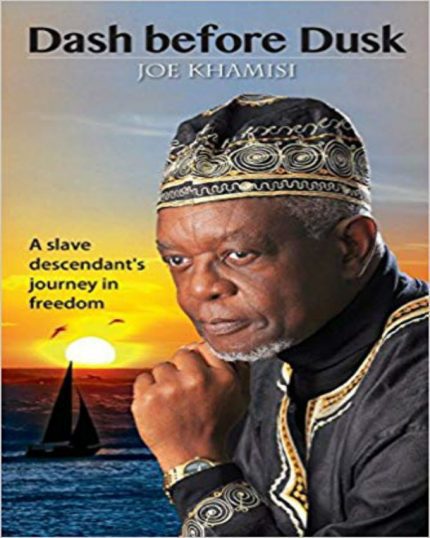
Dash before Dusk: A Slave Descendants Journey in Freedom by Joe Khamisi

Books, African Interest
KShs1,999.00 KShs1,699.00
Brief Summary Dash before Dusk: A slave descendant's journey in freedom is an account of the life and times of Joe Khamisi, a Kenyan slave descendant whose ancestors were taken captive by Arab traders from Nyasaland and Tanganyika, rescued at sea by the British, and settled at Rabai, a slave encampment along the East African coast. Khamisi, a former journalist, diplomat and politician, narrates the significant contributions former slaves and their descendants made in the transformation of Kenya into an independent state and their continuing struggle for recognition.
Add to wishlist
Add to basket
Quick view

Looters and Grabbers by Joe Khamisi

Books, African Interest
Rated 5.00 out of 5
KShs3,899.00
This book is about unbridled corruption, bribery and scandalous financial skullduggery in one of Africa's most promising countries, Kenya. It is a narrative of money-laundering, mega scandals, and international wheeler-dealing, and describes how Mafia-like lobbyists have been devouring the country's resources with blatant impunity over four regimes since independence in 1963. It is an important resource for historians, students, researchers, social and political scientists, non-governmental organizations, development and anti-corruption agencies.
Add to wishlist
Add to basket
Quick view
-20%Sold out

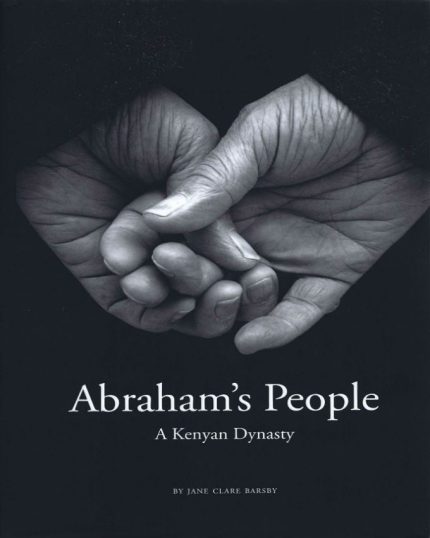
Abrahams People a Kenyan Dynasty by Jane Barsby

Books, African Interest
KShs5,000.00 KShs3,999.00
Brief Summary The book, all 400 pages of it, sticks largely to the script of facts but unlike many other biographies brings Abraham’s journey alive, saturated with anecdotes, narrating the many twists in the tail of Abraham’s life as if the author had been the proverbial fly on the wall at times. Jane manages to find that perfect blend of what story telling should embrace, an embroidery of facts and at times a bit of fiction surely, giving readers of the book ‘Abraham’s People’ the impression of reading a novel rather than a dry story dictated entirely by time lines and actual events. Abraham’s escape route took him to Britain first, still as a young lad, before taking a leap into the unknown when he decided to first go to South Africa in 1901 to join up with his father, working his passage as a ‘grease monkey’ in the engine room before finally making his way to Kenya in 1903 at the age of 20. The first chapters in the book are dedicated to the story of his forefathers, how they came to Lithuania where they first prospered and then suffered under increasingly intolerant rulers, leading up to the days when first his father had to flee for his dear life before, almost one by one, the rest of the family managed to make their getaway. It must have been in those days in Leeds, when a little acorn took root in Abraham’s mind, germinating along the way, taking shape and eventually becoming a vision taking visible shape. His arrival at the port of Mombasa and the rail journey on the ‘Lunatic Express, aka as The Iron Snake’, his stepping off the train in Nairobi, back then but a depot for the railway, around which a town had just started to grow, his first meetings with contemporaries who were part of Kenya’s colonial history, all is meticulously captured by the author. Again it almost appears that Jane Barsby was present or else managed to train her looking glass back in time as she describes how Abraham met with Tommy Woods on arrival in Nairobi, who became a fast friend, or how Abraham made a quick 25 pounds profit on a land deal, which he struck with one of the Asian community’s icons Mr. Jevanjee and how he then ventured into business, farming, ranching and deal making, soon becoming part of the colonial Kenya’s ‘furniture’ too. The author ably sums up Abraham’s business acumen when she describes him as basically a jack of all trades with an uncanny ability to smell money if it could be made somewhere by buying or selling, investing or trading, importing and exporting. As the chapters add up, more and more insight is given into the life Abraham lived, the setbacks he suffered and his almost throwing in the towel had it not been for Lord Delamare, the Kenyan colony’s leading aristocrat and an icon in his own right.
Add to wishlist
Read more
Quick view
-7%

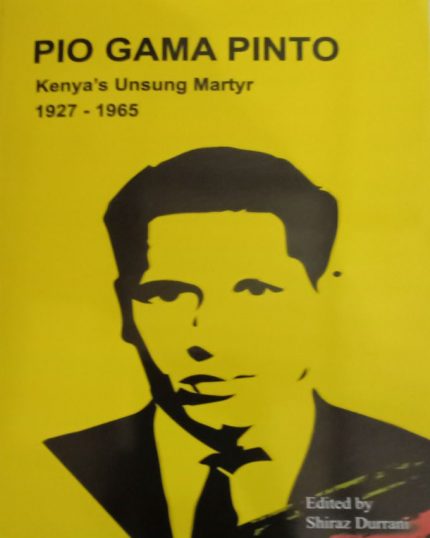
Pio Gama Pinto Untold Life Story of First Unsung Martyr

Books, African Interest
KShs3,000.00 KShs2,800.00
Pio Gama Pinto: Kenya’s Unsung Martyr 1927– 1965 is edited by Shiraz Durrani and includes letters, recollections from family and comrades and newspaper articles. Shortly after independence, Pinto was shot dead outside his Westlands home (where Sarit Centre is). He was 38. That his two-year-old daughter was in the car with him or that it was broad daylight did not deter the assassins -- they were determined to eliminate him. One stark reason to finish him, it has been argued over the years, was the fact that he was a hardcore socialist caught in the cross-hairs of neo-imperialists hell-bent on directing Kenya the capitalistic way. The 2013 report by the Truth, Justice and Reconciliation (TJRC) said his death was motivated by "ideological differences at the heart of the global cold war but also mirrored in domestic politics.” Three men were nabbed in connection with the murder. TJRC said those arrested were "scapegoats” meant to divert attention from the real killers. Fingers were pointed at the government led by Mzee Jomo Kenyatta. One of his closest friends Achieng’ Oneko, on learning about his death, would shout: "No, no, no! Kenyatta must explain! He must explain!” Kenya’s second Vice President Joseph Murumbi, also a dear friend, was the most distraught and in tears after learning of his death (Murumbi is quoted saying that Pintomade him join politics). Two weeks earlier, Pinto had been tipped that there was a plot to murder him alongside Bildad Kaggia and JD Kali due to their "secret anti-Government” activities. But did Kenyatta have a hand in Pinto’s death? Pinto after all, had fought for Kenyatta’s release from detention. The book suggests that his assassination needs to be seen in its "overall national and international” context. Durrani quotes authors who have tied his death to that of slain US black rights activist Malcolm X. The two met when Malcolm visited Kenya in 1959. Pinto was active in the fight against colonialism as well as neo-colonialism in the post-independence struggle and was targeted by colonial Portuguese Goan and British Kenyan administrations. The post-independence ruling elite ultimately silenced him. "The bullets that killed Pinto may have been fired or organized by the former home guards, now the new power brokers, but their foreign backers were the real instigators of his assassination,” writes Durrani. Pinto gave away almost all his money and not even his wife Emma, knew how much he earned. As secretary of the Pan African press, Pinto used to tell his wife that his salary was half of what he earned and gave out the other half to the poor. According to Murumbi, he didn’t own a house and was very reluctant when it was suggested. When Pinto died, poor people from all over went to his house. "It was really pathetic to see elderly Kikuyu weeping for a man who had helped them, a man who was their colleague in detention and a man who had never forgotten them,” said Murumbi. After his death, Murumbi arranged for Emma to immigrate to Canada where they became citizens. Now 90, Emma describes Pinto as a "humanist.” The author says the book has been in the works since the 1980s and blames unfavourable political climate for the cancellations and delays on any work on Pinto.  
Add to wishlist
Add to basket
Quick view
-9%Sold out

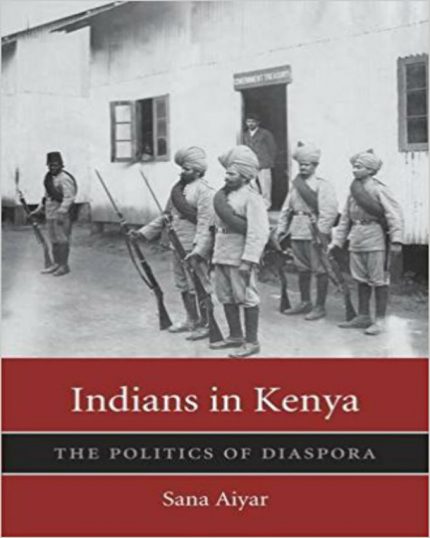
Indians in Kenya The Politics of Diaspora

Books, African Interest
KShs8,000.00 KShs7,299.00
Brief Summary Working as merchants, skilled tradesmen, clerks, lawyers, and journalists, Indians formed the economic and administrative middle class in colonial Kenya. In general, they were wealthier than Africans, but were denied the political and economic privileges that Europeans enjoyed. Moreover, despite their relative prosperity, Indians were precariously positioned in Kenya. Africans usually viewed them as outsiders, and Europeans largely considered them subservient. Indians demanded recognition on their own terms. Indians in Kenya chronicles the competing, often contradictory, strategies by which the South Asian diaspora sought a political voice in Kenya from the beginning of colonial rule in the late 1890s to independence in the 1960s. Indians’ intellectual, economic, and political connections with South Asia shaped their understanding of their lives in Kenya. Sana Aiyar investigates how the many strands of Indians’ diasporic identity influenced Kenya’s political leadership, from claiming partnership with Europeans in their mission to colonize and "civilize” East Africa to successful collaborations with Africans to battle for racial equality, including during the Mau Mau Rebellion. She also explores how the hierarchical structures of colonial governance, the material inequalities between Indians and Africans, and the radicalized political discourses that flourished in both colonial and postcolonial Kenya limited the success of alliances across racial and class lines. Aiyar demonstrates that only by examining the ties that bound Indians to worlds on both sides of the Indian Ocean can we understand how Kenya came to terms with its South Asian minority. " ISBN:9780674289888 Author:Sana Aiyar
Add to wishlist
Read more
Quick view
-5%Sold out

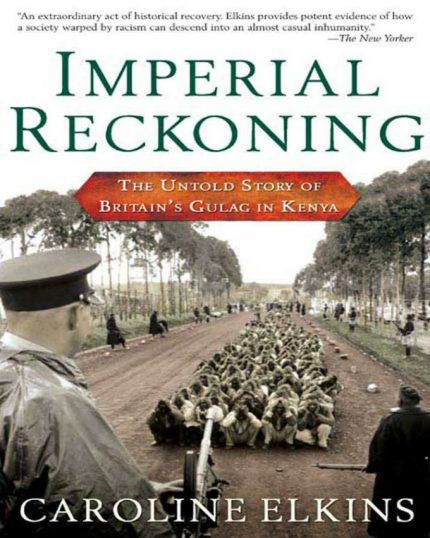
Imperial Reckoning The Untold Story of Britains Gulag in Kenya by Caroline Elkins

Books, African Interest
KShs4,000.00 KShs3,800.00
Brief Summary Britain fought in the Second World War to save the world from fascism. But just a few years after the defeat of Hitler came the Mau Mau uprising in Kenya - a mass armed rebellion by the Kikuyu people, demanding the return of their land and freedom. The draconian response of Britain's colonial government was to detain nearly the entire Kikuyu population of one-and-a half-million - to hold them in camps or confine them in villages ringed with barbed wire - and to portray them as sub-human savages. From 1952 until the end of the war in 1960 tens of thousands of detainees - and possibly a hundred thousand or more - died from the combined effects of exhaustion, disease, starvation and systemic physical brutality. Until now these events have remained untold, largely because the British government in Kenya destroyed most of its files. For the last eight years Caroline Elkins has conducted exhaustive research to piece together the story, unearthing reams of documents and interviewing several hundred Kikuyu survivors. Britain's Gulag reveals what happened inside Kenya's detention camps, as well as the efforts to conceal the truth. Now, for the first time, we can understand the full savagery of the Mau Mau war and the ruthless determination with which Britain sought to control its empire. ISBN:9780805080018 Author: Caroline Elkins
Add to wishlist
Read more
Quick view
-15%Sold out

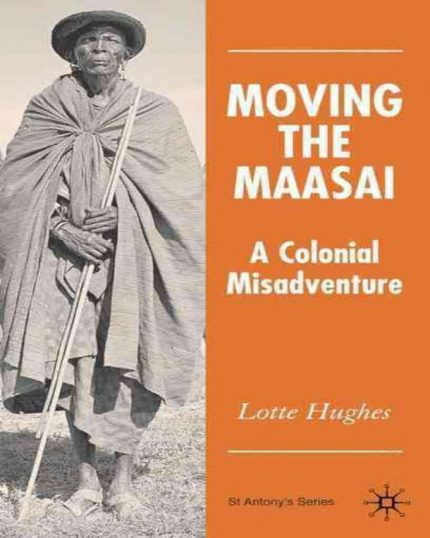
Moving the Maasai A Colonial Misadventure by Lotte Hughes

Books, African Interest
KShs7,500.00 KShs6,399.00
This is the scandalous story of how the Maasai people of Kenya lost the best part of their land to the British in the 1900s. Drawing upon unique oral testimony and extensive archival research, Hughes describes the intrigues surrounding two enforced moves and the 1913 lawsuit, while explaining why recent events have brought the story full circle.
Add to wishlist
Read more
Quick view
-9%Sold out

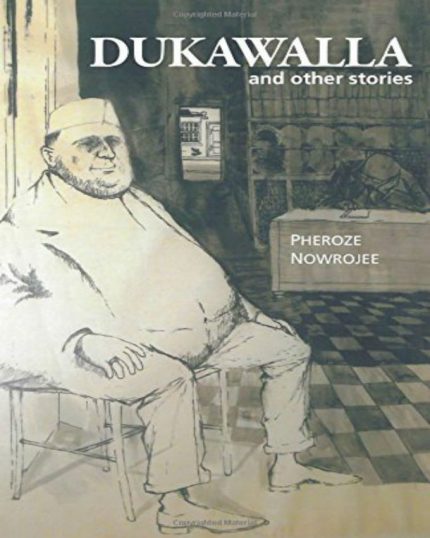
Dukawalla and Other Stories by Pheroze Nowrojee

Books, African Interest
KShs1,650.00 KShs1,499.00
In this collection of stories, Pheroze Nowrojee takes his readers on journeys into varied Kenyan, East African, and other landscapes, delving into lives and personalities equally diverse. Whether actively transforming their surroundings or being transformed by what is around them, his complex characters reflect our common humanity in sometimes ordinary and sometimes surprising—but always compelling—ways. Exquisitely told, laden with humor and beauty and poignancy, these stories are a vital addition to the East African anthology.  
Add to wishlist
Read more
Quick view
-33%

Unbounded by Boniface Mwangi

Books, African Interest
KShs3,000.00 KShs2,000.00
Brief Summary In just over a decade, Boniface Mwangi has risen from poverty to prominence in Kenya. He is renowned for his powerful photographs and his courageous protests calling for social justice. However, little is known about the man himself. Unbounded is a collection of engaging personal stories that takes us through some of the people, places and events that have shaped Boniface, easily one of Kenya best known photographers and activists. It is a portrait of the child, the man and some of the human, harrowing and even humorous episodes that he has witnessed and photographed. This book tells of the two remarkable women - his mother and grandmother - who influenced his character and inspired his drive to raise awareness about poverty, inequality and corruption. His work as a photo-activist is grounded in social engagement, collective action and the need for justice. This is the story of a man of determination and warmth, a man who lives his life to make a difference. We cannot change the world as individuals. We can only change the world together.
Add to wishlist
Add to basket
Quick view
-7%

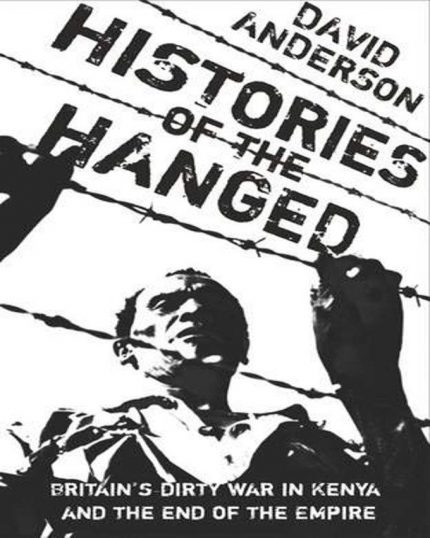
Histories of the Hanged by David Anderson

Books, African Interest
KShs3,000.00 KShs2,790.00
In "a gripping narrative that is all but impossible to put down" (Joseph C. Miller), Histories of the Hanged exposes the long-hidden colonial crimes of the British in Kenya. This groundbreaking work tells how the brutal war between the colonial government and the insurrectionist Mau Mau between 1952 and 1960 dominated the final bloody decade of imperialism in East Africa. Using extraordinary new evidence, David Anderson puts the colonial government on trial with eyewitness testimony from over 800 court cases and previously unseen archives. His research exonerates the Kikuyu rebels; hardly the terrorists they were thought to be; and reveals the British to be brutal aggressors in a "dirty war" that involved leaders at the highest ranks of the British government. This astonishing piece of scholarship portrays a teetering colonial empire in its final phase; employing whatever military and propaganda methods it could to preserve an order that could no longer hold.
Add to wishlist
Add to basket
Quick view

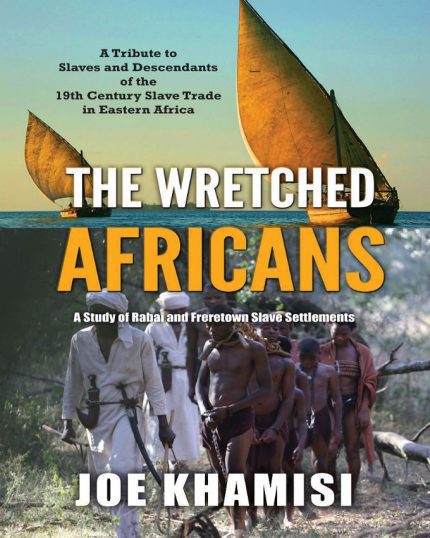
The Wretched Africans: A Study of Rabai and Freretown Slave Settlements by Joe Khamisi

Books, African Interest
Rated 5.00 out of 5
KShs1,900.00
Brief summary The Wretched Africans: A Study of Rabai and Freretown Slave Settlements. This book is about the 19th century slave trade in Eastern and Central Africa. No one in the history of humankind has suffered the indignity, abuse and pain of slavery than the African. Over many centuries, millions of Africans were uprooted from their quaint villages in the interior of the "Dark Continent" and taken into slavery. They were exported to the Americas, Asia, Arabia and a dozen other countries around the globe, to work in plantations, in the pearl industry, and as soldiers and domestic workers. Boys were castrated and made eunuchs and girls were sexually abused and forced into harems. Unfortunately, the African slave narrative - written mostly by Western historians and missionaries - has been contemptibly distorted to portray Europeans as the gallant saviors, the notorious slave traders as swaggering heroes, and the African captives as wretched victims of a horrible but regrettably inevitable human phenomenon of the time. The truth has been loftily garbled or masked and the role of liberated Africans vastly under-represented. The Wretched Africans peels of what is beneath the Arab slave trade, unravels the racism and abuse meted against Africans by European explorers and missionaries, and lays bare the heroism and resilience of the African captives. It memorializes Africans who died in caravan trails, at sea and those who found freedom in slave settlements around the world. It is a must read for historians, researchers, students and the general public wanting to understand the truth about what happened to an estimated eleven million people taken captive from the east coast of Africa to the new world and beyond.
Add to wishlist
Add to basket
Quick view
-15%Sold out

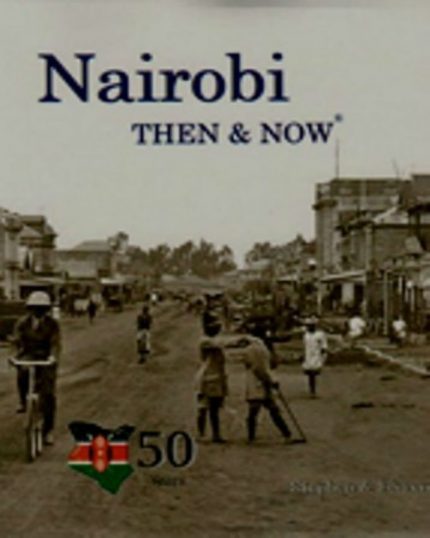
Nairobi then and now 50 years by Stephen and Bhavna Mills

Books, African Interest
KShs2,699.00 KShs2,299.00
Brief Summary This book is a window into Nairobi's past and a reminder of its present. The transformation we see is uneven - some things and places have evolved unrecognizably, while others remain constant. Nairobi is a place of great change. Rapid development and outward expansion is ever reshaping the landscape. Kenya and the UK have been partners in Nairobi's evolutionary journey throughout. Not just government, but also in terms of trade and investment, technology, security, knowledge, and people. The Kenya-UK partnership will continue the journey down this road to the future, towards achieving the Kenyan Government's Vision 2030 and beyond. 50 years in the future many places shown in this book could be long gone. While a few special old places might remain, our vision for the 2063 edition of this book is an ultra-modern Nairobi, a major interchange of the globalized and interconnected world. And a place where we continue to learn from the lessons of the past, as we focus on the promise of the future.
Add to wishlist
Read more
Quick view
-17%

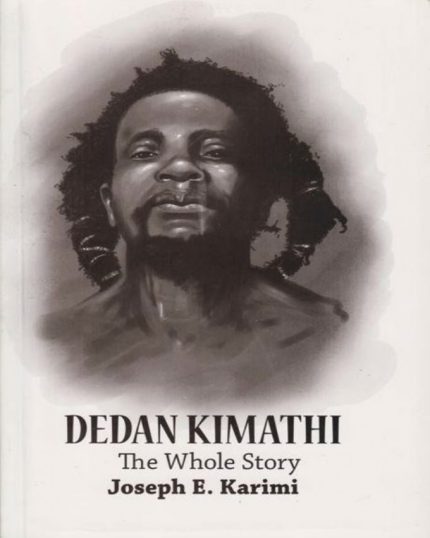
Dedan Kimathi The Whole Story by Joseph E. Karimi

Books, African Interest
KShs1,800.00 KShs1,490.00
Brief Summary Writer takes an honest look at the life and times of Dedan Kimathi, Kenya’s foremost freedom fighter at his Kimathi Street corner statue in Nairobi, a dreadlocked Dedan Kimathi is a small, frail, bent old man struggling to lift his rifle. That is the public image of the greatest Kenyan ever to live. Old, frail, starved. The sculptors were not helped by a literature that portrays Mau Mau adherents as bloodthirsty, atavistic, rural, poor and illiterate. Which child wants this for his grandpa? Yet image is everything. ISBN:9789966229724 Author:Joseph Karimi
Add to wishlist
Add to basket
Quick view
delivery

QUICK DELIVERY

Swift dispatch
ONLINE PAYMENT

Multiple options

EXPERT SUPPORT

Help when you need it

WIDE VARIETY

Thousands of books

GLOBAL SHIPPING

Worldwide delivery

  • TALK TO US
    • 0794 233261 / 0724 670194
    • nuriakenyabookstore@gmail.com
    • The Bazaar Building, 1st Floor
  • About Nuria
    • Our Story
    • Blog
    • Contact Us
  • VENDORS
    • Sell on Nuria
    • Vendor Login
    • Privacy Policy
  • USEFUL LINKS
    • Delivery Policy
    • Returns
    • Gift Card Balance
digitals-app-store-button
google-play-button

We Accept

2023 NURIA KENYA All rights reserved
  • Menu
  • Categories
  • Kenya Books
  • Rare Books
  • International Bestsellers
  • Self Help & Motivation
  • Fiction
  • Autobiography
  • Business
  • Children’s Books
  • Kids & Teens
  • African Interest
  • Educational Books
  • Romances & Thrillers
  • Home
  • Shop
  • Gift Card
  • About Us
  • Nuria App
  • Contact Us
  • Wishlist
  • Login / Register
Shopping cart
Close
Sign in
Close

Lost your password?

No account yet?

Create an Account
Shop
Sidebar
0 Wishlist
12 items Cart
My account