














Dear Reader,
I wrote this story because I once stood in a crowded marketplace in Accra,
Ghana, and heard a rhythm that made my chest ache with memory. I was born in
East Africa, but that drumbeat spoke to something older than geography—it spoke
to belonging itself.
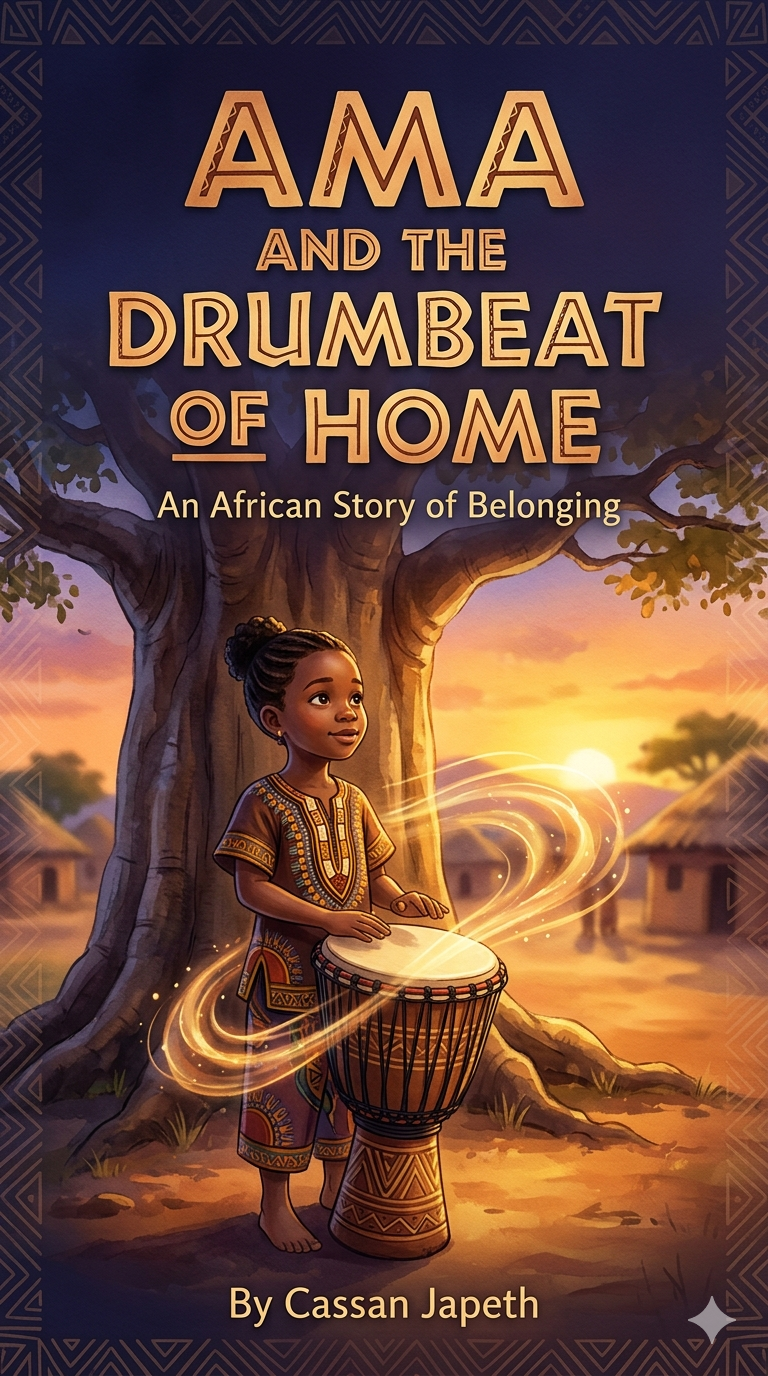
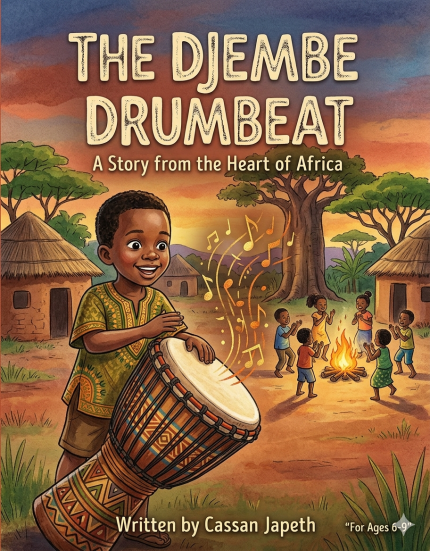
Across West Africa, the djembe drum is not merely an instrument. It is a voice.
In the Bambara language of Mali, “djembe” comes from the phrase “Anke djé, anke
bé”—”everyone gather together in peace.” This drum has called communities to
marriage, to mourning, to harvest, and to war for over 800 years. But its
greatest power is this: it teaches us that rhythm is not something we hear. It
is something we are.
This story follows a child who learns that cultural identity is portable. You
can leave your village, cross borders, enter unfamiliar spaces—and still carry
your home within you. This is the Ubuntu philosophy in action: “I am because we
are,” but also, “We are because I remember.”
In an era where African children increasingly navigate between traditional
spaces and global ones, this story offers a bridge. It says: You do not have to
choose between worlds. You can be a child of the village and a citizen of the
world, because the drumbeat travels with you.
May this story find its way into classrooms from Lagos to Nairobi, from
Kumasi to Kinshasa—and may every child who reads it hear their own rhythm more
clearly.
With hope and rhythm,
Cassan Japeth
Nairobi, Kenya











Reviews
Clear filtersThere are no reviews yet.