ENJOY FREE DELIVERY WITHIN NAIROBI FOR ORDERS ABOVE 10,000
Nuria App
United States (US) dollar ($)
  • Kenyan Shilling (KSh)
  • United States (US) dollar ($)
  • Pound sterling (£)
  • Ugandan Shilling (UGX)
0 Wishlist
Login / Register
  • Home
  • Shop
  • Kenyan Books
  • Rare Books
  • Gift Card
  • Blog
  • Contact Us
  • SELL ON NURIA
  • VENDOR LOGIN
Menu
0 items $0.00
Browse Categories
  • Kenya Books
  • Rare Books
  • International Bestsellers
  • Self Help & Motivation
  • Fiction
  • Autobiography
  • Business
  • Children’s Books
  • Kids & Teens
  • African Interest
  • Educational Books
  • Romances & Thrillers
HELP / SUPPORT

0794 233 261

0 items $0.00
-19%
Click to enlarge
Home Books 8-4-4 History And Government THE KENYAN GEN-Z PROTEST LEXICON
Doctor at Heart: An autobiography by Dr Dan Gikonyo $25.00 $21.50
Back to products
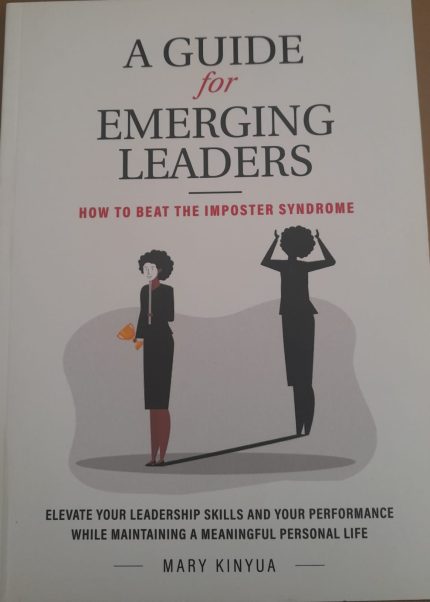
A guide for Emerging Leaders How to beat the imposter syndrome by Mary Kinyua $18.00 $16.60

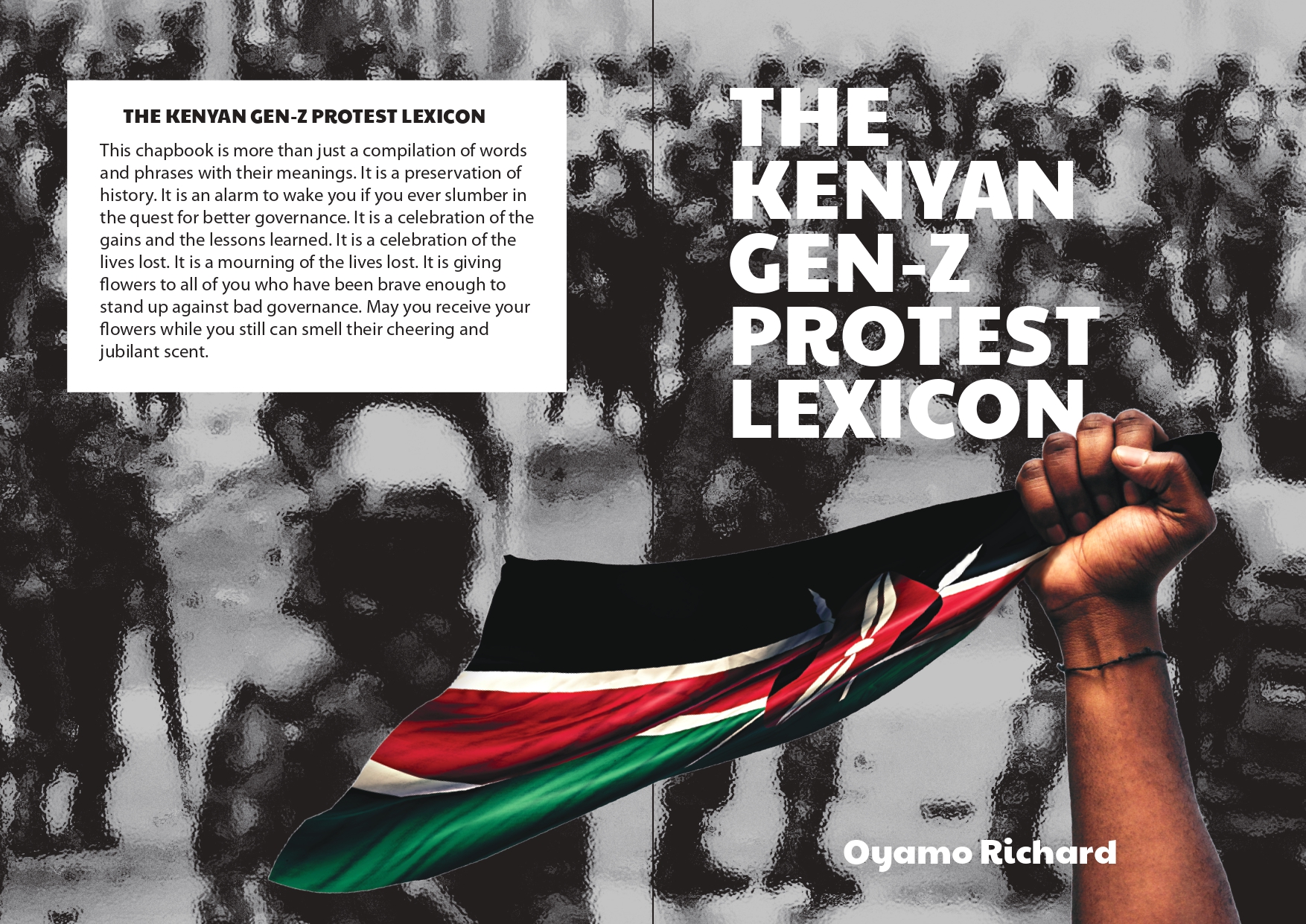
THE KENYAN GEN-Z PROTEST LEXICON

$11.00 $8.90

Nuria Ranking: #1 in History And Government

In stock

This chapbook is more than just a compilation of words and phrases with their meanings. It is a preservation of history. It is an alarm to wake you if you ever slumber in the quest for better governance. It is a celebration of the gains and the lessons learned. It is a celebration of the lives lost. It is a mourning of the lives lost. It is giving flowers to all of you who have been brave enough to stand up against bad governance. May you receive your flowers while you still can smell their cheering and jubilant scent.

Add $10,000.00 worth of products to your cart for free delivery within Nairobi!
Add to wishlist
Category: History And Government Tag: Kenyan Politics
Share:
Close
  • Shipping
  • Reviews (0)
  • Vendor Info
  • More Products
Shipping
Reviews (0)
Rated 0 out of 5
0 reviews
Rated 5 out of 5
0
Rated 4 out of 5
0
Rated 3 out of 5
0
Rated 2 out of 5
0
Rated 1 out of 5
0

Reviews

Clear filters

There are no reviews yet.

Be the first to review “THE KENYAN GEN-Z PROTEST LEXICON” Cancel reply

Your email address will not be published. Required fields are marked *


Vendor Info

Vendor Information

  • Store Name: OYAMO RICHARD
  • Vendor: OYAMO RICHARD
  • No ratings found yet!
More Products

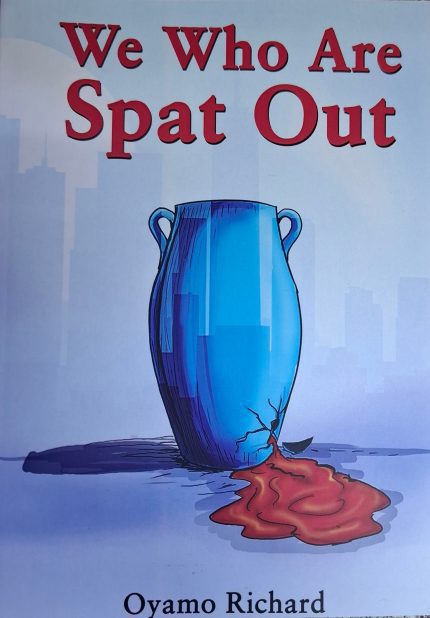
We Who Are Spat Out: Short stories by Oyamo Richard

Fiction
$12.40
We Who Are Spat Out is a compelling collection of short stories that introduces Oyamo Richard as a confident and thoughtful new voice in Kenyan Fiction. Moving across diverse settings and moments, the stories explore the complexities of human relationships, inner conflict, and social encounters with precision and emotional depth. With a keen command of narrative craft, Oyamo builds tension subtly, reveals character through carefully shaped scenes, and allows meaning to emerge with quiet power. His language is flexible and expressive, enriched by moments of code-switching and code-mixing that lend authenticity and vividly reflect contemporary Kenyan life. These stories probe psychological turmoil, trauma, love, betrayal, and fragile bonds of family, while others turn their gaze toward institutions where power and authority shape human experience. Taken together, We Who Are Spat Out offers a textured portrait of society and self, marking an important contribution to the vibrant body of twenty-first century Kenyan writing.
Add to wishlist
Add to basket
Quick view
-19%

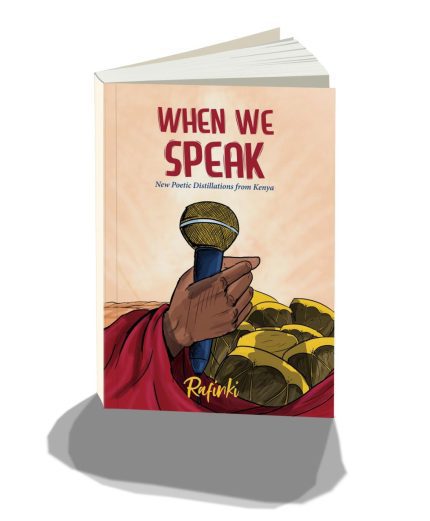
When We Speak (New Poetic Distillations from Kenya)

Poetry
$11.00 $8.90
A poetry anthology from about 20 different poets.
Add to wishlist
Add to basket
Quick view
-13%

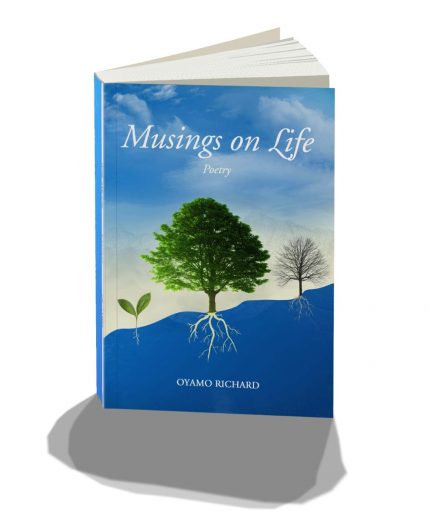
MUSINGS ON LIFE Poetry Anthology by OYAMO RICHARD

Poetry
$11.00 $9.60
Oyamo Richard employs aesthetics and adroitness in language and structure in uniquely woven verses. He has a way of making, through poetry,simpler matters complex and complex ones simpler. This book explored six thematic areas namely; 1.Genesis, 2.Of Dreams and Ambitions, 3.Mental and Physical health, 4.Spirituality, 5.Beauty , Affection and Ties 6.Artistry 7.Sunset
Add to wishlist
Add to basket
Quick view

Related products

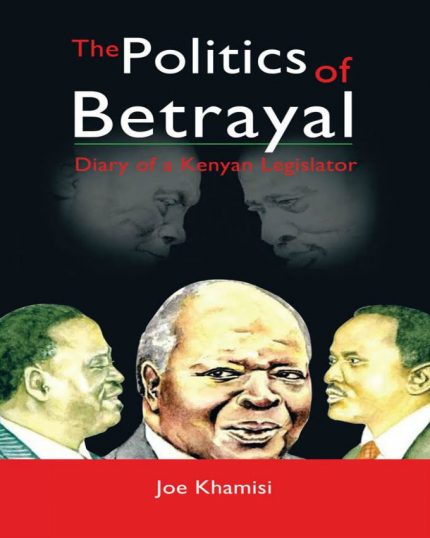
The Politics of Betrayal: Diary of a Kenyan Legislator by Joe Khamisi

Books, African Interest
Rated 4.00 out of 5
$17.30
Brief Summary The Politics of Betrayal: Diary of a Kenyan Legislator In this provocative treatise, author Joe Khamisi catalogues the events that took place during one of Kenya's most important periods in history. This period began in 2002, when Daniel Arap Moi stepped down after twenty-four years as president of Kenya. Khamisi reviews events up to the time when the country exploded in post-election violence in 2007 and the subsequent formation of the Grand Coalition Government between President Mwai Kibaki and Raila Amolo Odinga the following year. Khamisi explores the leadership betrayals that he believes are responsible for the political, social, and economic rot that are pervasive in Kenya. He recounts how he helped a presidential poll loser in the 2007 elections, Stephen Kalonzo Musyoka, capture the coveted role of vice president. He also presents an in-depth analysis of Senator Barack Obama's visit to Kenya in 2006, as well as his own personal experiences with Barack's late father, who he describes as a person who "chain-smoked contentedly, drank copiously, and partied spiritedly." The Politics of Betrayal is critical reading for anyone who is interested in the transformation of Kenya from a one-party dictatorship to a pluralistic nation.
Add to wishlist
Add to basket
Quick view
-12%

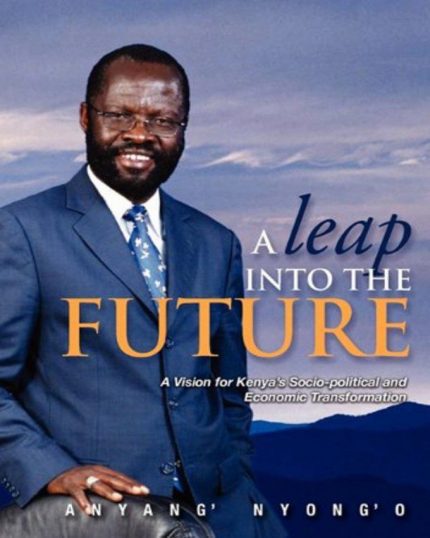
A Leap Into the Future by Anyang Nyongo

Books, African Interest
$17.23 $15.19
Brief Summary A Leap into the Future is a collection of speeches, essays and articles compiled during Prof. Anyang' Nyong'o's tenure in the Kenya government and soon afterwards (2002-2006). In this provocative collection, Prof. Nyong'o examines the challenges of development, analyses how pan-African and global partnerships could facilitate development, and invokes the visionary direction pointed out by prominent personalities in Kenya's political leadership to whom he pays tribute. Through the collection, the author projects his vision for socio-political and economic transformation of the Kenyan society in a bid to formulate an economic strategy capable of leap-frogging the country from the current quagmire of underdevelopment to development. Professor Anyang' Nyong'o is a renowned reformist and political scientist in Africa and is best known for his role in Kenya's "second liberation". He holds a doctorate degree in Political Science from the University of Chicago and has taught in universities in Kenya, Mexico and Ethiopia. Upon the re-introduction of multiparty politics in Kenya in 1991, he was involved in the founding of Forum for the Restoration of Democracy (FORD), which provided the premier opposition machinery in the run-up to the 1992 general elections. He was also involved in the formation of the National Rainbow Coalition (NARC), which defeated KANU, the party that had ruled Kenya for 24 years. In the subsequent NARC government, he became the Minister of Planning and National Development. Besides teaching, he is widely published in Africa and abroad. Prof. Nyong'o has also been at the frontline in championing the reform agenda in Africa, especially through the establishment of NEPAD. At the time of publication of this book, he was Secretary General of the Orange Democratic Movement (ODM). ISBN:9789966706263 Author:Anyang Nyongo
Add to wishlist
Add to basket
Quick view
-8%Sold out

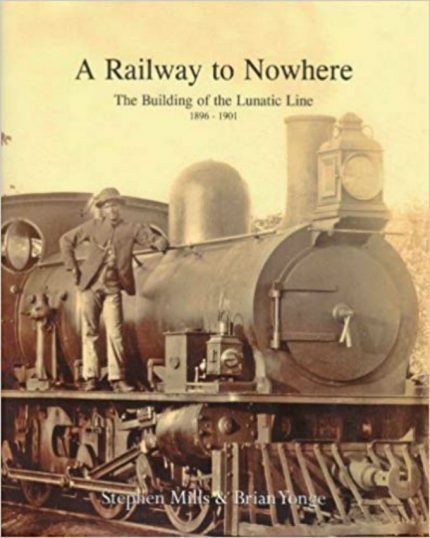
A Railway to Nowhere The Building of the Lunatic Line 1896 -1901 by Brian Yonge and Stephen Mills

Books, African Interest
$46.00 $42.50
Mervyn Hill made a significant contribution to East African studies in his history of the Kenya and Uganda Railway from its conception to the creation of East African Railways and Harbours in 1948. Commissioned in 1942 as a 'plain story' of 'the development of the railway' and published in 1949, 'Permanent Way' has long proved a boon to those interested in the history of Kenya and Uganda. Hill was however at a great disadvantage when writing the official history, most notably because the operation of the 50-year rule prevented him from consulting official documents in the Public Record Office and elsewhere, with the result that he was largely dependent on material published in Parliamentary Command papers. Two other serious drawbacks were that war conditions restricted his sources to published works and other material available in East Africa at the time and that many of the books and articles which authors now have access to had yet to be written. The Railway to Nowhere does not suffer from these disadvantages and provides a well-researched, authoritative account coupled with a pictorial appreciation of the construction of the railway in the early years of its operation. There is no doubt that the construction of the railway was a triumph of human endeavour and resolution over the most daunting obstacles and setbacks: the vision and tenacity of the British government in the face of parliamentary, press and Treasury opposition and criticism; the steadfast leadership of Sir George Whitehouse in coping with an often querulous Foreign Office Committee, and overcoming a series of administrative engineering and personal problems; the inventiveness and skill of surveyor engineers when tackling exceptional professional challenges and the hardiness shown by the working gangs, of all races, in carrying on under adverse conditions of climate and terrain.
Add to wishlist
Read more
Quick view
-6%

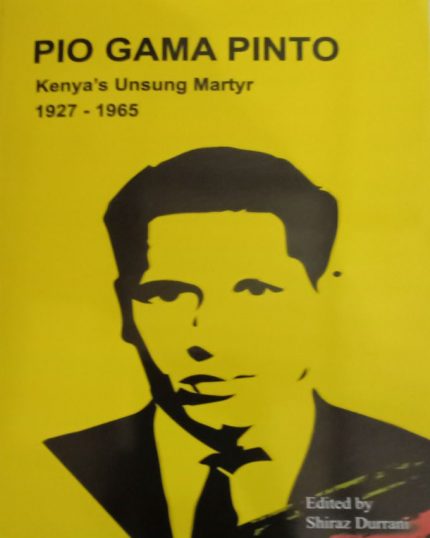
Pio Gama Pinto Untold Life Story of First Unsung Martyr

Books, African Interest
$25.00 $23.60
Pio Gama Pinto: Kenya’s Unsung Martyr 1927– 1965 is edited by Shiraz Durrani and includes letters, recollections from family and comrades and newspaper articles. Shortly after independence, Pinto was shot dead outside his Westlands home (where Sarit Centre is). He was 38. That his two-year-old daughter was in the car with him or that it was broad daylight did not deter the assassins -- they were determined to eliminate him. One stark reason to finish him, it has been argued over the years, was the fact that he was a hardcore socialist caught in the cross-hairs of neo-imperialists hell-bent on directing Kenya the capitalistic way. The 2013 report by the Truth, Justice and Reconciliation (TJRC) said his death was motivated by "ideological differences at the heart of the global cold war but also mirrored in domestic politics.” Three men were nabbed in connection with the murder. TJRC said those arrested were "scapegoats” meant to divert attention from the real killers. Fingers were pointed at the government led by Mzee Jomo Kenyatta. One of his closest friends Achieng’ Oneko, on learning about his death, would shout: "No, no, no! Kenyatta must explain! He must explain!” Kenya’s second Vice President Joseph Murumbi, also a dear friend, was the most distraught and in tears after learning of his death (Murumbi is quoted saying that Pintomade him join politics). Two weeks earlier, Pinto had been tipped that there was a plot to murder him alongside Bildad Kaggia and JD Kali due to their "secret anti-Government” activities. But did Kenyatta have a hand in Pinto’s death? Pinto after all, had fought for Kenyatta’s release from detention. The book suggests that his assassination needs to be seen in its "overall national and international” context. Durrani quotes authors who have tied his death to that of slain US black rights activist Malcolm X. The two met when Malcolm visited Kenya in 1959. Pinto was active in the fight against colonialism as well as neo-colonialism in the post-independence struggle and was targeted by colonial Portuguese Goan and British Kenyan administrations. The post-independence ruling elite ultimately silenced him. "The bullets that killed Pinto may have been fired or organized by the former home guards, now the new power brokers, but their foreign backers were the real instigators of his assassination,” writes Durrani. Pinto gave away almost all his money and not even his wife Emma, knew how much he earned. As secretary of the Pan African press, Pinto used to tell his wife that his salary was half of what he earned and gave out the other half to the poor. According to Murumbi, he didn’t own a house and was very reluctant when it was suggested. When Pinto died, poor people from all over went to his house. "It was really pathetic to see elderly Kikuyu weeping for a man who had helped them, a man who was their colleague in detention and a man who had never forgotten them,” said Murumbi. After his death, Murumbi arranged for Emma to immigrate to Canada where they became citizens. Now 90, Emma describes Pinto as a "humanist.” The author says the book has been in the works since the 1980s and blames unfavourable political climate for the cancellations and delays on any work on Pinto.  
Add to wishlist
Add to basket
Quick view

Britains Gulag The Brutal End of Empire in Kenya by Caroline Elkins

Books, African Interest
$24.23
Britain fought in the Second World War to save the world from fascism. But just a few years after the defeat of Hitler came the Mau Mau uprising in Kenya - a mass armed rebellion by the Kikuyu people, demanding the return of their land and freedom. The draconian response of Britain's colonial government was to detain nearly the entire Kikuyu population of one-and-a half-million - to hold them in camps or confine them in villages ringed with barbed wire - and to portray them as sub-human savages. From 1952 until the end of the war in 1960 tens of thousands of detainees - and possibly a hundred thousand or more - died from the combined effects of exhaustion, disease, starvation and systemic physical brutality. Until now these events have remained untold, largely because the British government in Kenya destroyed most of its files. For the last eight years Caroline Elkins has conducted exhaustive research to piece together the story, unearthing reams of documents and interviewing several hundred Kikuyu survivors. Britain's Gulag reveals what happened inside Kenya's detention camps, as well as the efforts to conceal the truth. Now, for the first time, we can understand the full savagery of the Mau Mau war and the ruthless determination with which Britain sought to control its empire.
Add to wishlist
Add to basket
Quick view
-9%

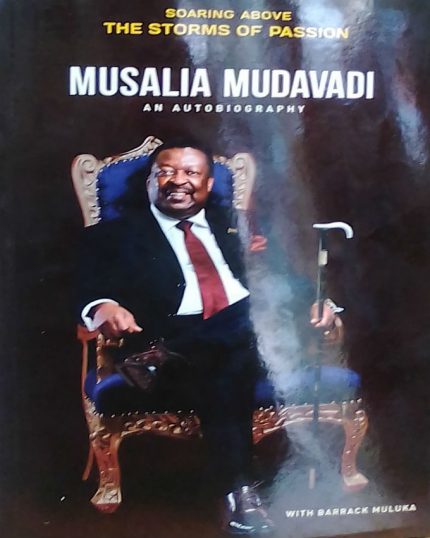
Soaring Above the Storms of Passion by Musalia Mudavadi

Books, AutoBiography
$30.60 $27.73
Mudavadi’s memoir, Soaring Above the Storms of Passion, paints Odinga as a man under pressure who was willing to play tricks on both friend and foe to overcome the difficult situation before him. Some of Mudavadi’s claims have also corroborated what had already been written by exiled Kenyan activist Miguna Miguna who was part of Odinga’s team in the aftermath of August General Election. For instance, Mudavadi writes of the plan to have a parallel swearing in ceremony for Odinga. The plan received a lot of opposition from the international community and the ANC Party Leader says one Western country went as far as to cancel Odinga’s visa and that of many of his allies. Mudavadi was in the team of those who believed the Opposition chief should not have been sworn in but Odinga was also under a lot of pressure from the swearing in diehards who included Miguna Miguna, James Orengo, Jimmy Wanjigi, Raila Junior, among others. As the pressure mounted, Mudavadi, in consultation with Raila and the technical team decided to announce the postponement of the swearing in ceremony that had been expected to take place on December 12th 2018. Just before Mudavadi could make the announcement during a press conference at Okoa Kenya office, Raila became untraceable. Unknown to Mudavadi, the Opposition chief was holed up in Jimmy Wanjigi’s house in Muthaiga where the Okoa Kenya TV had planned to film a swearing in ceremony which would then be distributed on the internet. The team in Wanjigi’s house did not know that Raila had already directed the swearing in ceremony to be postponed, and kept asking Mudavadi why he was taking too long to make the announcement. "I learnt from people present that Raila seemed to have been very shocked to watch us on TV calling off the swearing in. He is reported to have said, "Oh they are calling it off?” At this point the swearing in at Muthaiga was called off. Before we left for the Okoa Kenya offices, he had called me to ask why we were taking long to make the announcement,” Mudavadi writes in his new book.
Add to wishlist
Add to basket
Quick view
-6%

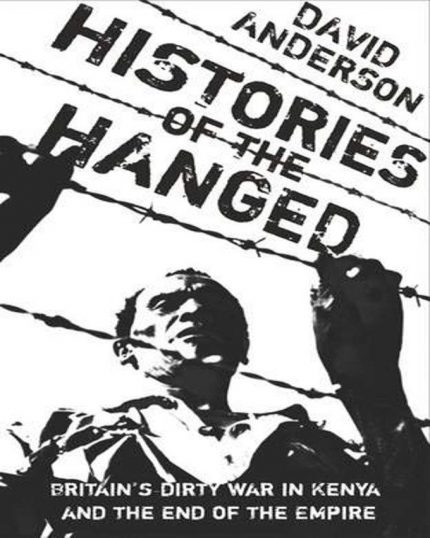
Histories of the Hanged by David Anderson

Books, African Interest
$25.00 $23.53
In "a gripping narrative that is all but impossible to put down" (Joseph C. Miller), Histories of the Hanged exposes the long-hidden colonial crimes of the British in Kenya. This groundbreaking work tells how the brutal war between the colonial government and the insurrectionist Mau Mau between 1952 and 1960 dominated the final bloody decade of imperialism in East Africa. Using extraordinary new evidence, David Anderson puts the colonial government on trial with eyewitness testimony from over 800 court cases and previously unseen archives. His research exonerates the Kikuyu rebels; hardly the terrorists they were thought to be; and reveals the British to be brutal aggressors in a "dirty war" that involved leaders at the highest ranks of the British government. This astonishing piece of scholarship portrays a teetering colonial empire in its final phase; employing whatever military and propaganda methods it could to preserve an order that could no longer hold.
Add to wishlist
Add to basket
Quick view
-4%Sold out

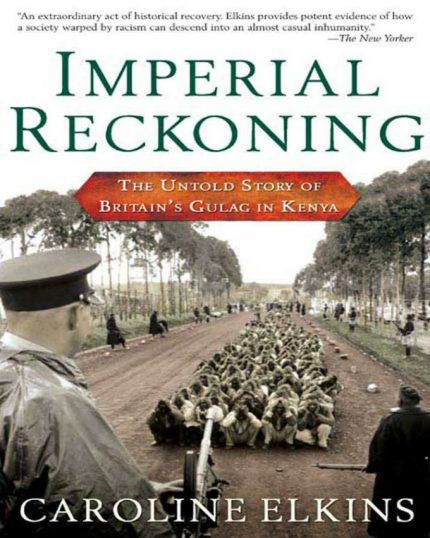
Imperial Reckoning The Untold Story of Britains Gulag in Kenya by Caroline Elkins

Books, African Interest
$32.00 $30.60
Brief Summary Britain fought in the Second World War to save the world from fascism. But just a few years after the defeat of Hitler came the Mau Mau uprising in Kenya - a mass armed rebellion by the Kikuyu people, demanding the return of their land and freedom. The draconian response of Britain's colonial government was to detain nearly the entire Kikuyu population of one-and-a half-million - to hold them in camps or confine them in villages ringed with barbed wire - and to portray them as sub-human savages. From 1952 until the end of the war in 1960 tens of thousands of detainees - and possibly a hundred thousand or more - died from the combined effects of exhaustion, disease, starvation and systemic physical brutality. Until now these events have remained untold, largely because the British government in Kenya destroyed most of its files. For the last eight years Caroline Elkins has conducted exhaustive research to piece together the story, unearthing reams of documents and interviewing several hundred Kikuyu survivors. Britain's Gulag reveals what happened inside Kenya's detention camps, as well as the efforts to conceal the truth. Now, for the first time, we can understand the full savagery of the Mau Mau war and the ruthless determination with which Britain sought to control its empire. ISBN:9780805080018 Author: Caroline Elkins
Add to wishlist
Read more
Quick view
-14%

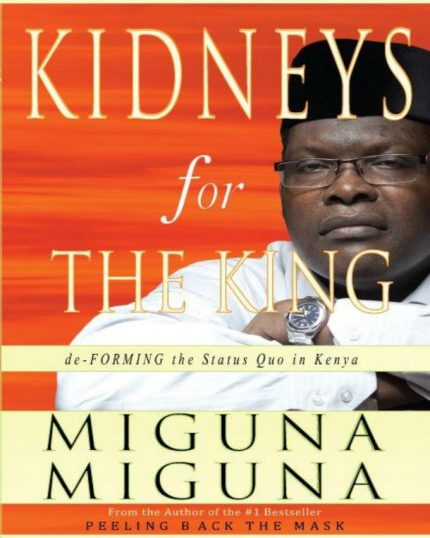
Kidneys for the King by Miguna Miguna

Books, African Interest
$24.23 $20.80
Kidneys for the King has a carefully developed structure. The first and the last chapter focus on the (de)construction of two public figures – Chief Justice Willy Mutunga and Prime Minister Raila Odinga. These two embodiments of the promise of radical transformation and their abysmal failures frame Miguna’s exposition of the trouble with Kenya in chapters 2, 3, 4 and 5. Against the background of the reception of Peeling Back the Mask in the local and international press; on television and on the Internet, Miguna details the rot of our society. A polluted police force; rampant corruption; the vagaries of an irresponsible media; a vile political culture; wayward leaders, a gullible electorate and the truant, half-hearted attempts at implementing a progressive Constitution.
Add to wishlist
Add to basket
Quick view
-9%

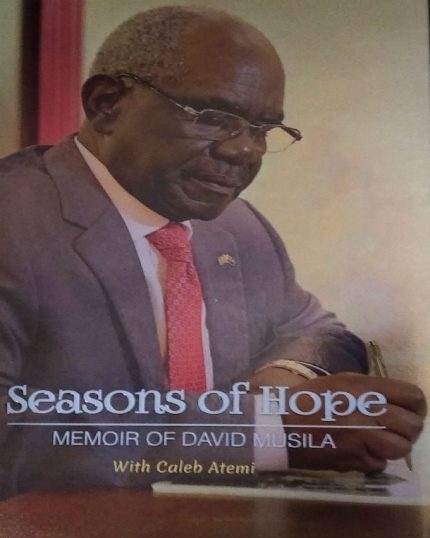
Seasons of Hope by David Musila

Books, AutoBiography
Rated 5.00 out of 5
$24.23 $22.13
A teacher, a politician, an administrator, above all a gentle human being who focused on the best for his country, Honorable David Musila, a former senator, has been a dedicated Kenyan throughout his life and continues to be so. The autobiography, Seasons of Hope – Memoirs of David Musila, is a book full of hopes; it has a capacity to restore faith. An amazingly inspirational story of a person who has encountered enormous odds, heartbreaking challenges, pitfalls, intrigues, disappointments, betrayals, never-ending friendships, forever lessons, key decisions, eye-openers. Musila has seen the darkest hours of his country, and polished his leadership skills over the years. A young administrator of the age when Kenya gained independence, the times when Kenya was seeing a sunrise, he gained experience and stature from the ranks of District Officer to Provincial Commissioner. It was a critical time for the country, with the history being rewritten, colonial settlers were in retreat, in fear, in anger, in disbelief, for indigenous Kenyans were in charge. The book delves deep into his extraordinary life, from his birth in a colonial Kenya to his studies in the USA to his starting to serve the country and cuts across the reign of four Presidents. While writing his memoir, Musila has shown utmost honesty, and has often talked of things that were talked of only in hush-hush voices or rather never talked of! Musila's first assignment was to address the thorny issue of land and resettlement in the independent Kenya, which he performed so well that many new challenges were confidently thrown at him, which he gracefully accepted. Alert, observant, keen, good listener, record maintaining, he learnt all that well, but politics is all together a different set of challenge, which becomes disheartening at times. While he already the best upbringing behind him, he also earned himself the best mentors, combining the two made many people jealous even as several tried to pull him down. Land adjudication and resettlement; peace-making with the then ruling party, KANU; unabashedly serving Kenyans in various capacities, have been few of the highlights of his carrier. Beyond everything, Musila went on to perform every duty well; as a human, a son, a brother, a husband, a father, a Public Administrator, a leader, peace makers. With David Musila Foundation, he has started working against the grassroot of all issues... lack of education and support to those who really need it to understand their needs towards growth.  
Add to wishlist
Add to basket
Quick view
-3%

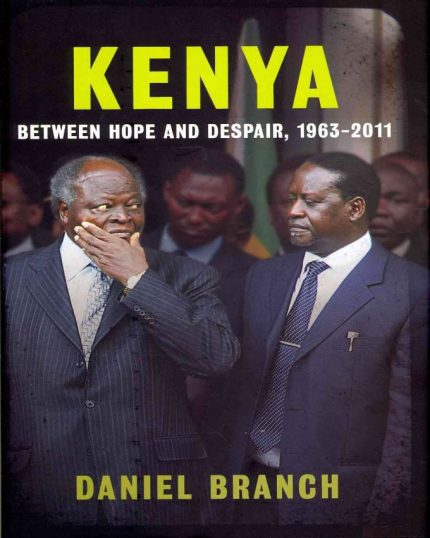
Kenya Between Hope and Despair 1963-2011 by Daniel Branch

Books, African Interest
$52.93 $51.53
On December 12, 1963, people across Kenya joyfully celebrated independence from British colonial rule, anticipating a bright future of prosperity and social justice. As the nation approaches the fiftieth anniversary of its independence, however, the people's dream remains elusive. During its first five decades Kenya has experienced assassinations, riots, coup attempts, ethnic violence, and political corruption. The ranks of the disaffected, the unemployed, and the poor have multiplied. In this authoritative and insightful account of Kenya's history from 1963 to the present day, Daniel Branch sheds new light on the nation's struggles and the complicated causes behind them. Branch describes how Kenya constructed itself as a state and how ethnicity has proved a powerful force in national politics from the start, as have disorder and violence. He explores such divisive political issues as the needs of the landless poor, international relations with Britain and with the Cold War superpowers, and the direction of economic development. Tracing an escalation of government corruption over time, the author brings his discussion to the present, paying particular attention to the rigged election of 2007, the subsequent compromise government, and Kenya's prospects as a still-evolving independent state.  
Add to wishlist
Add to basket
Quick view
-20%

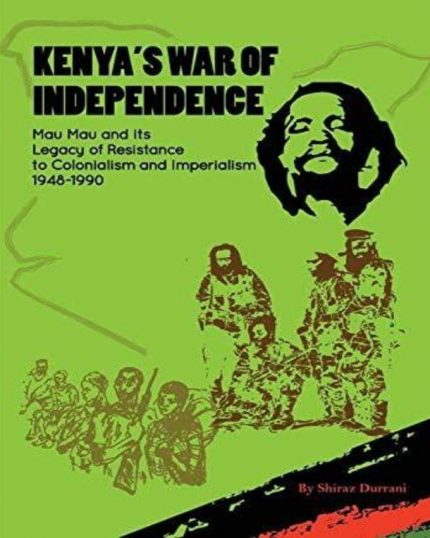
Kenyas War of Independence Mau Mau and its Legacy of Resistance to Colonialism and Imperialism 1948-1990 by Shiraz Durrani

Books, African Interest
$21.50 $17.23
Kenya's War of Independence restores Kenya’s stolen history to its rightful place, stripped of colonial interpretations. In this expanded and revised version of his 1986 booklet, Kimaathi, Mau Mau's First Prime Minister of Kenya, Durrani covers Mau Mau’s resistance to colonialism and neo-colonialism and reflects on its ideology, organisation and achievements. He sees Mau Mau in the larger context of Kenya’s war of independence and looks at the influence of organised, radical trade unions as the engine of resistance, linking economic with political demands of working people. Additional chapters document the post-independence resistance by the underground December Twelve Movement-Mwakenya. Durrani captures the dynamism of transition from colonialism to neo-colonialism: "Imperialism replaced colonialism, African elites replaced White Settlers, neo-colonial government replaced colonial government. Resistance changed from the War of Independence to War of Economic Independence. Worker and peasant resistance is evident once again. History is on the march”.
Add to wishlist
Add to basket
Quick view
-12%

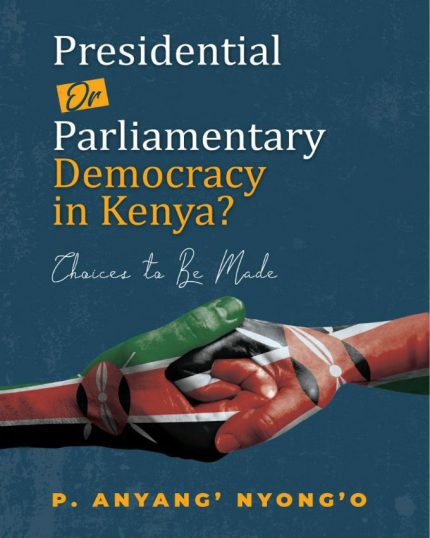
Presidential or Parliamentary Democracy in Kenya by Prof Anyang Nyongo

Books, African Interest
$16.53 $14.50
The essays presented in his new book, Presidential or Parliamentary Democracy in Kenya, underpin the two basic recommendations that he made to the Building Bridges Initiative. They amplify, illustrate and justify in greater detail the need for Kenya to introduce constitutional reforms at this stage in favour of parliamentary government (as opposed to the current presidential system), and proportional representation in the election of legislators at all levels. On Kenya specifically, the essays touch repeatedly on its immediate post-independence experience that saw the elimination, as elsewhere in Africa, of parliamentary government and its replacement by an autocratic presidentialism, the resistance to one-party rule in the 1990s, the betrayals after the 2002 General Election that were won by Narc, and the electoral crisis thereafter. Lessons in favour of the two basic constitutional reforms are drawn from that diversity of experiences, and theories. Prof Nyong’o is both a statesman and an intellectual. That is a rare combination of skills in Kenya today compared with where the country (and Africa generally) was in the immediate post-independence period. In those days, Africans debated their most fundamental political and economic development policies against the backdrop of the contours of thought charted by their leaders in government or out of it. One thinks of Tom J. Mboya, Julius Nyerere, Kwame Nkurumah, Leopold Senghor, Dunduzu Chisiza, Frantz Fanon and many others. It became normal for the first generation of African leaders to commit their thought and policy goals to paper and to invite debate. The goals of African independence, African identity, national unity, African socialism, strategies of achieving pan-African unity, economic development, inequality, non-alignment in international affairs — all these were subjected to vigorous public debate. These essays should strengthen the public debate on constitutional reforms now underway in Kenya. In that context, one of the ideas I have fully shared for long with Prof Nyong’o is that of the need to replace the presidential system of government with a parliamentary one because the latter is better suited to an ethnically polarised society like ours. A parliamentary system is no panacea, as he states at one point, but it is far better suited to our politics than the highly divisive majoritarian-based presidentialism.
Add to wishlist
Add to basket
Quick view
-12%

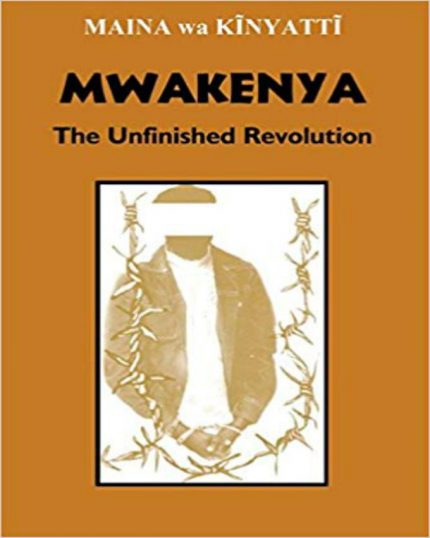
Mwakenya The Unfinished Revolution by Maina Wa Kinyatti

Books, African Interest
$28.50 $24.99
Mwakenya: The Unfinished Revolution is a 440 page book divided into six parts after the Preface and Introduction. Part One deals with the birth of the Kenyan anti-imperialist underground move- ment in the mid-1970s around the time of the brutal and grisly murder of the populist parliamentarian JM Kariuki by assassins widely believed to be working at the behest of President Jomo Kenyatta. Drawing its inspiration and legacy from the Mau Mau anti-imperialist struggle of the 1950s, the December Twelve Movement (DTM) derived its name from the date Kenya achieved its flag independence in actually the date when the freedom aspirations of Kenyans were betrayed and neocolonialism ushered in. Maina informs his readers that DTM in turn was the child of the clandestine Workers' Party of Kenya. The fledgling underground movement took an anti-imperialist, pro-socialist stance--ideology anchored in Marxism-Leninism Maoist thought. The rest of the sections are taken up by detailed narrative as well as a very frank analysis and critique of the later history of the movement when, according to Maina, it was taken over by what he refers to as "opportunist, sectarians and ultra-leftists" who later transformed it into Mwakenya with at first disastrous consequences. The author chronicles the inner party debate, struggle and rectification, which later led to the expulsion of the "liquid- ationist Dar clique". It's worth reading and re-reading the Part One of the book because it appeared a distinct departure and a fresh gust of air from Maina's previous public views on Mwakenya--especially his last major work, "History of Resistance In Kenya, 1890-2002, where to many Kenyan leftists and observers outside the movement, Maina appeared to endorse some of Mwakenya's gregarious errors through silence. In conclusion, Maina is one of Kenya's foremost historians, one of Kenya's prominent organic intellectuals, one of Kenya's Marxist scholars. He was abducted from Kenyatta University in 1982, interrogated, humiliated and tortured by Kenya's state agents before being hauled to a Kangaroo court on trumped up charges and later flung to dungeons of Kamiti and Naivasha penitentiaries. He was released in 1988.
Add to wishlist
Add to basket
Quick view
-24%Sold out

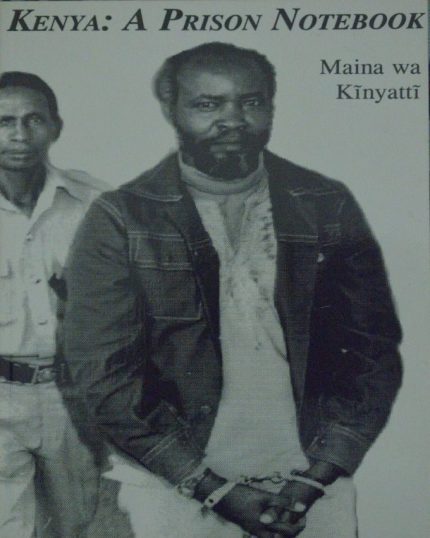
Kenya: A Prison Notebook by Maina wa Kinyatti

Books, African Interest
$14.50 $10.99
Brief Summary Maina wa Kinyatti is one of Kenya’s progressive historians. In June 1982, he was arrested by the Kenyan authoritarian regime, charged with possession of seditious literature and imprisoned. He suffered for six-and-a-half years in the hands of his brutal captors. He was repeatedly held in solitary confinement and was constantly insulted and beaten. He was tortured by vermin, untreated diseases, hunger and loneliness. But he remained defiant, his courage and spirit unbroken.
Add to wishlist
Read more
Quick view
-20%

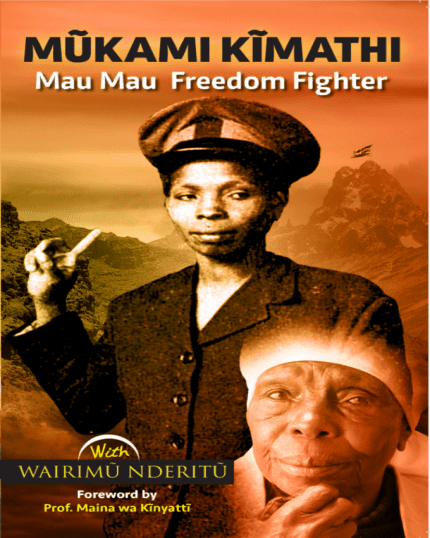
Mukami Kimathi Mau Mau Women Freedom by Alice Wairimu Nderitu

Books, African Interest
$21.50 $17.23
In 1964, a newly independent Kenya was facing the uphill task of reconstructing herself into an African State. That reconstruction was called "Africanisation”. As part of the Africanisation policy, my father, Vincent Nderitu, was posted to Sasumua Dam in Kinangop to take over from the British superintendents who were leaving the country. Not long after he had arrived, he asked the foreman, Harun Musungu, to find out where he could buy milk. That was how he met Mukami Kimathi. My father was thunderstruck. Back home in Tetu, Nyeri, his home and Mukami’s were within a walking distance. My father knew her as a legend. She was a Mau Mau heroine, the wife of Field Marshal Dedan Kimathi. My father began treating Mukami like an elder sister, fixing her fences and installing a water tank for her among other duties. When I was growing up, Mukami was the auntie through whose home we passed on our way from school; the one who made my brothers and I porridge and gave us red plums. She was not a blood relative, but we always thought she was. Mukami and her children, Nyambura and Waceke, would often come to our home in the afternoons and I would read the newspaper to her haltingly. She encouraged me saying; "When you grow up, you will write as well as you read. One day, you should write my karugano ( story) because what is not written is forgotten.” She wanted me to remind Kenyans to take care of the country the Mau Mau fought for. Her lowest point was the 2007-2008 post-election violence and often said: "Because we fought the colonialists, Kenyans now have arrow roots, sweet potatoes, bananas and yam on the table. But instead of eating, they are fighting! I wish this generation of Kenyans from all ethnic communities would rally as we did and this time emerge with, instead of independence like we did, national unity! In her story, Mukami shows us who Dedan Kimathi was as a father and husband. Her experiences provide an important complement to existing written records on Kenya’s history. Mukami Kimathi’s prophesy that I would write her karugan is now a reality. The book, Mukami Kimathi: Mau Mau Freedom Fighter, was launched at the National Museums of Kenya in Nairobi last evening. She was also proved right on another front; my sister Consolata Wakonyo became a pilot.  
Add to wishlist
Add to basket
Quick view
delivery

QUICK DELIVERY

Swift dispatch

ONLINE PAYMENT

Multiple options

EXPERT SUPPORT

Help when you need it

WIDE VARIETY

Thousands of books

GLOBAL SHIPPING

Worldwide delivery

  • TALK TO US
    • 0794 233261 / 0724 670194
    • nuriakenyabookstore@gmail.com
    • The Bazaar Building, 1st Floor
  • About Nuria
    • Our Story
    • Blog
    • Contact Us
  • VENDORS
    • Sell on Nuria
    • Vendor Login
    • Privacy Policy
  • USEFUL LINKS
    • Delivery Policy
    • Returns
    • Gift Card Balance
digitals-app-store-button
google-play-button

We Accept

2023 NURIA KENYA All rights reserved
  • Menu
  • Categories
  • Kenya Books
  • Rare Books
  • International Bestsellers
  • Self Help & Motivation
  • Fiction
  • Autobiography
  • Business
  • Children’s Books
  • Kids & Teens
  • African Interest
  • Educational Books
  • Romances & Thrillers
  • Home
  • Shop
  • Gift Card
  • About Us
  • Nuria App
  • Contact Us
  • Wishlist
  • Login / Register
Shopping cart
Close
Sign in
Close

Lost your password?

No account yet?

Create an Account
Shop
Sidebar
0 Wishlist
0 items Cart
My account