














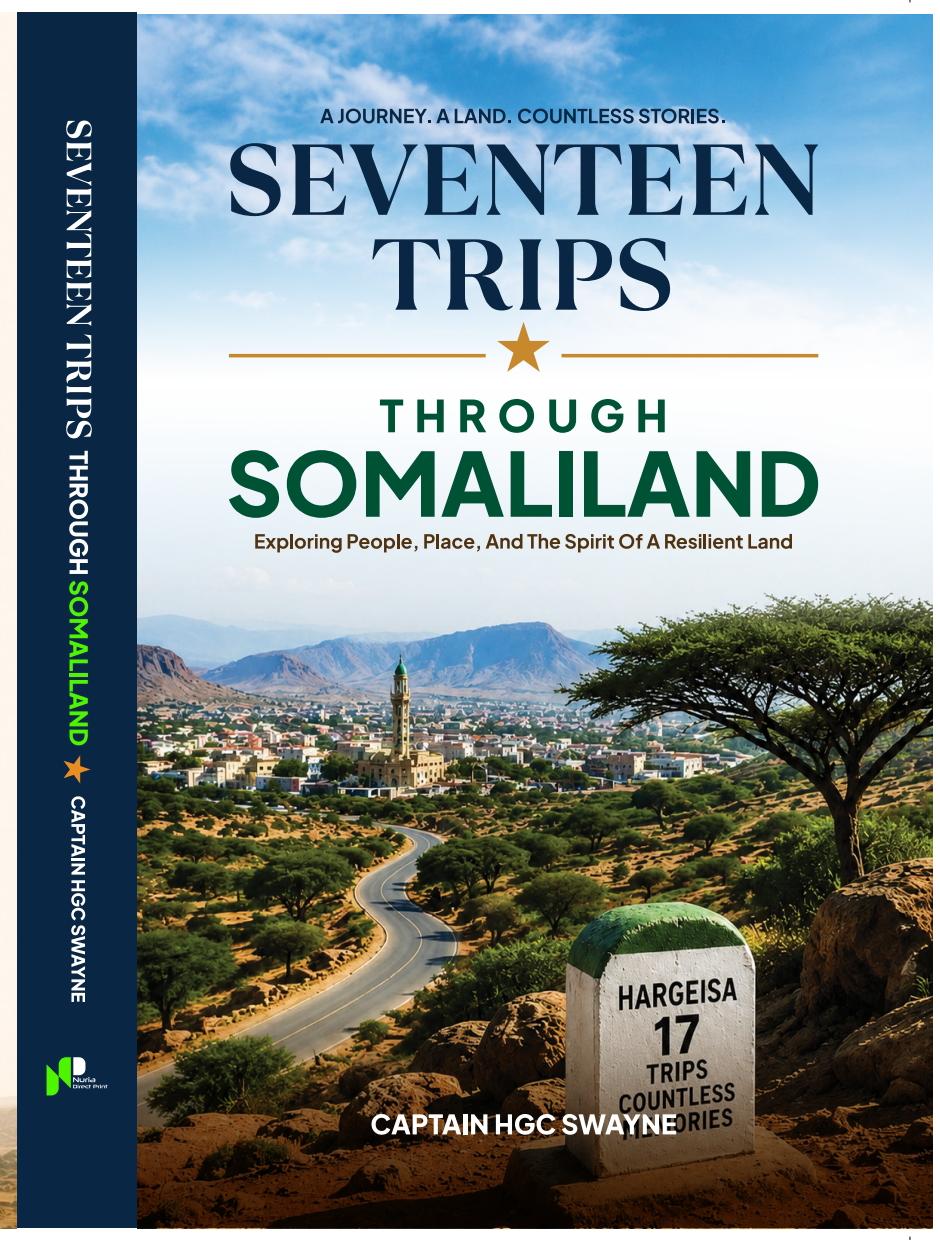
You were not meant to read this book if you are an African. Even though this book is about the Somalis and their lands, the writer most likely didn’t anticipate that a Somali would one day pick it up and read it.
The targeted reader was a European of the 19th-century middle class who carried a spirit of adventure or dreamt of being part of the emerging European colonies on the continent of Africa.
Either of these motivations had to be fueled by some level of racism. The adventurer imagined “uncivilized” societies to explore, while the colonists needed to justify the exploitation of the lands and their peoples.
This is a story of a European in Africa told to other Europeans. Consequently, it depicts the Somali, and generally the African, often in very demeaning terms. Contrary to what many might think today, the racism expressed here is not necessarily malicious, but it is not any less harmful. It was upheld by the widely accepted belief in a racial hierarchy—a “science” of the time that placed the European at the apex and the African at the base.
It is for this reason that the positive portrayal of an African in this book happens to often be what you can describe as “inadvertent coverage.” When Swayne records the Somalis’ unmatched knowledge of their genealogy or their complex native calendars, he does so to show his own observational skills, yet he accidentally preserves a record of a sophisticated society. On the other hand, the writer seemed to go further than necessary to describe the African in the negative, often focusing on “laziness” or “greed” to fit the colonial narrative.
There is no question that this book is deeply racial, and in many cases, it pushed agendas and interests that would benefit the British colonial enterprise. The question then becomes: why should you, as a Somali or African, read it?
Many people have had an issue with me for reading and quoting pre-colonial and colonial books about Africa that were written by colonizers and colonists. The message I get often is that these people not only didn’t like us but were also motivated to carry out propaganda about us in different media, including books. These are actually concerns that I identify with because they are very legitimate. However, those who believe that we should not look at these documents are those who believe that colonization happened and ended in the 1960s and 1970s—that we are completely out of the woods. I personally don’t believe that. I think that colonization has just taken a different form. African countries are still being dictated to by powerful institutions in Western capitals. Indeed, first-world countries still have a lot of sway and say in what happens in Africa economically, socially, and politically.






Reviews
Clear filtersThere are no reviews yet.