














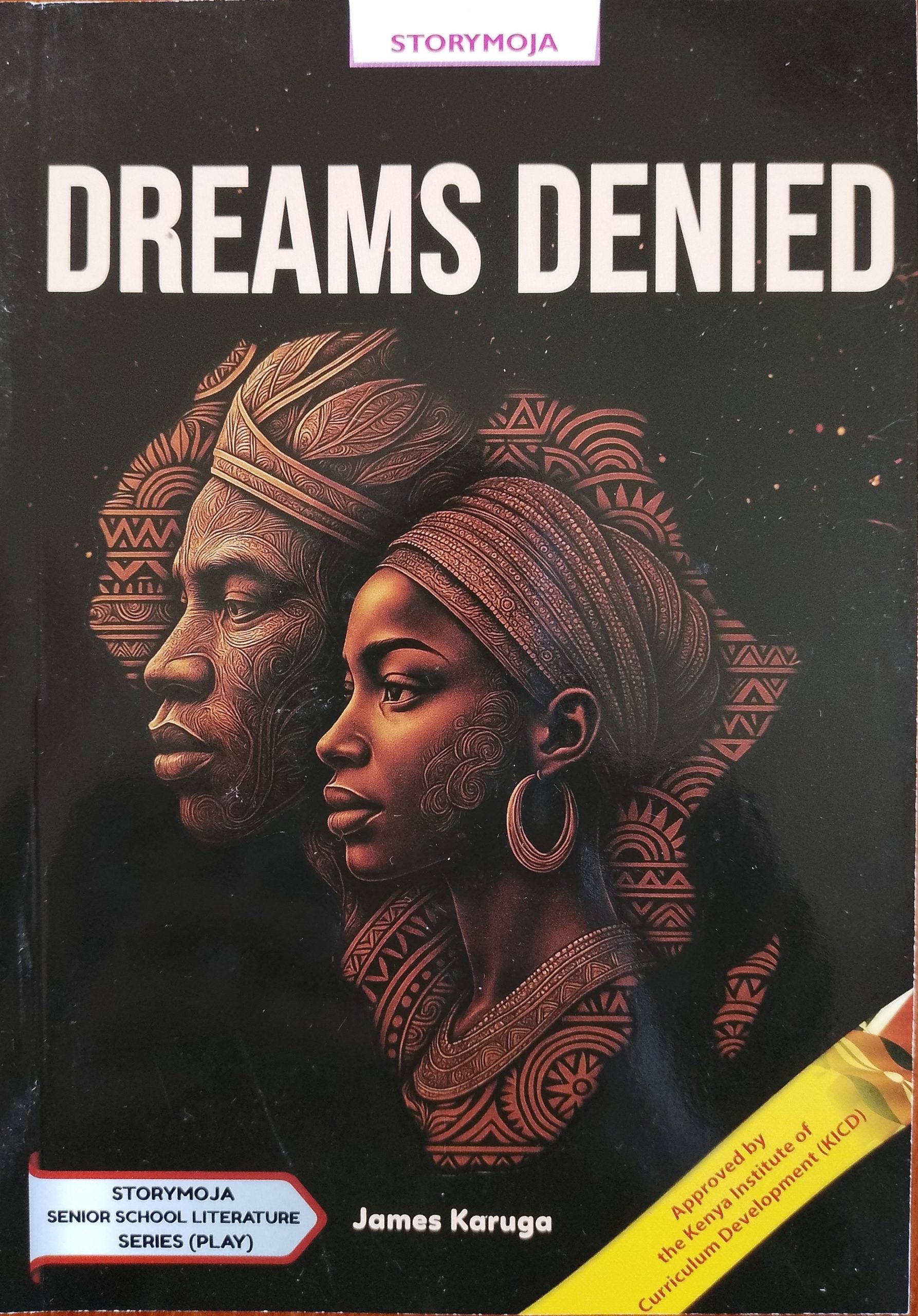

Karara County citizens elect the charismatic, deceptive, snake-oil salesman Adonis Mwitu to be their governor, expecting development. But what they get after elections is a self-absorbed governor who institutes vanity white-elephant projects that do not benefit citizens. Hospitals, schools, and roads are falling apart, yet Mwitu’s priority is to mass deworm citizens and encourage them to consume uninspected meat. Several fed-up citizens start conducting civil education, which enlightens oppressed citizens who depose Mwitu and jail him before his term is over. Karara County is hard reset, by citizens who embark on electing a development-minded governor who is not corrupt. As for Adonis Mwitu and his corrupt cronies, they are prosecuted and jailed as the Karara county citizens wanted.
The play portrays the psychology of citizens who vote for leaders based on their charisma but not their character, and how they end up regretting it. It also portrays how bad leaders have disdain for citizens who elect them behind the scenes. In conclusion, the play shows how determined citizens can overcome bad leadership through civil education and deposing corrupt leaders.









Wafula Khisa –
Playing With Fire: A Reading of James Karuga’s Play “Dreams Denied”
What really enters the moral and intellectual DNA of some elected leaders, making them forget their campaign promises, starve, and ruin the lives of the very people who put them in office? Is leadership truly about serving, solving people’s problems, and improving their lives—or is it merely a golden opportunity to loot, enrich one’s relatives, and advance a selfish agenda? Are people naturally hungry and gullible, as some leaders seem to believe? Are citizens to blame for their misery because they vote with their stomachs rather than their minds? Do leaders (elected or not) owe their citizens anything after gaining power through bribery or rigging? Do citizens ever learn from their mistakes? Are they willing—or even able—to correct or clean up their mess? And what ultimately befalls a leader who betrays their people and abuses or forgets their constitutional duty?
James Karuga’s play, “Dreams Denied”, addresses many of the issues raised above. The play, which is a KICD-approved study text for senior schools, tells the story of misery and hope in the fictional Karara County. However, this fictional setting reflects the rot evident in many counties in Kenya.
The county is run by Governor Mwitu—an arrogant, irrational, greedy, and dangerously ambitious man. It is worth noting that Karuga names him ‘Mwitu’ to suggest that he is fake, unworthy of the governorship, and elected through lies and voter bribery. Instead of serving the people, he starves them—abolishing the school feeding programme and banning meat inspection, which ruins businesses as people avoid consuming meat for fear of infection. Rather than protecting and improving lives, he endangers them. His greed, poor judgment, and misplaced priorities set the county on a path of destruction.
Two years into his term, none of his campaign promises have been fulfilled. Instead, he introduces highly unpopular policies and absurd ideas. What is even more disturbing is his belief that he is intelligent and deserving of public admiration. For example, he bans meat inspection at slaughterhouses, claiming that people should consume uninspected meat to “develop strong immunity to serious diseases,” and that Western scientists would eventually come to study them—bringing revenue to the county. In case of death, he argues that victims would be remembered as heroes, honored with statues outside slaughterhouses or county headquarters.
He is obsessed with making people love him. He even visits a school, determined to charm the children to love him. But they embarrass him by asking too much about food, and when the feeding programme will be re-introduced. This makes him uncomfortable, forcing him to leave.
He also proposes that all cattle be issued with identification documents. Furthermore, he refuses to tarmac roads, arguing that people should “skate in the mud,” unknowingly training themselves for international competitions in Europe. According to him, they would eventually excel in skating on snow and bring glory to the county. He introduces more taxes and becomes increasingly dismissive of citizens’ grievances. He even promotes a county-wide deworming exercise, claiming that complaints of hunger are simply due to a lack of deworming.
Governor Mwitu surrounds himself with advisors who fall into two distinct groups. The first group—Ogola, Mwanga, and Sadera—offers honest counsel. They caution him against his unpopular policies and urge him to act responsibly. However, their honesty makes him uncomfortable, leading to their abrupt and unjust dismissal. He openly declares that he prefers advisors who agree with him rather than challenge him.
This leads to the rise of the second group—Kimbu and Nduki. Kimbu, who insists on being addressed as “Doctor,” has questionable academic credentials. Together, they support and validate every decision the governor makes, no matter how flawed. They praise him blindly, contributing to his downfall. Their motivation is simple: ambition and greed. They do whatever is necessary to remain in his favor and secure their positions. Through this, Karuga demonstrates how bad advisors can mislead leaders and damage institutions. However, he also reminds us that sometimes advisors are not the root problem—leaders themselves shape the kind of advice they receive by encouraging conformity instead of honesty.
The play also examines the complex relationship between the church and politics. Karuga highlights the role of religious institutions in elevating leaders to power. When such leaders fail the people, should the church bear some responsibility? In the text, the church is portrayed as compromised by self-seeking individuals like Bishop Papa. He accepts money from both the governor and his congregants, using it to build the church while enriching himself. He openly admits that preaching is a job rather than a calling, and that appearing wealthy is necessary to convince his followers that they, too, can become rich. While he plays a role in helping Mwitu rise to power, he quickly distances himself when things begin to fall apart.
Eventually, the people of Karara County become enlightened, thanks to figures like Lipuka, the former senator, as well as Ogola and Mwanga. They realize the grave mistake they made by electing Mwitu instead of Mr. Sibuor—a man with a genuine vision for development. Through this realization, Karuga challenges us to reflect on what people truly look for in leaders. Is it money, powerful speeches, or flashy promises? Does this suggest that citizens are inherently ignorant, or does it highlight the need for continuous civic education?
The invaluable role of the media in promoting good governance is also highlighted in the text. Mwaria, the owner and presenter of County 96 Radio, sheds light on the miserable state of Karara County and the plight of its citizens through his shows. He invites county leaders, including Governor Mwitu and his advisor Kimbu, to discuss the state of the county. During these discussions, he puts the governor to task, demanding explanations for his unpopular policies and their devastating effects on the people. Mwaria also hosts a doctor to share findings following the outbreak of diseases. Through this, Karuga emphasizes that the media serves as a vital avenue for public enlightenment.
In the end, justice prevails. Governor Mwitu, along with his deputy, Kimbu, and Nduki, is arrested. He even finds his ally, Bishop Papa, already in police custody, awaiting trial. They are taken to court, convicted, and sentenced—serving as a powerful reminder that crime does not pay. By this point, the people of Karara County have learned a painful but valuable lesson: they must never again elect corrupt leaders. Hunger and desperation should never push citizens to sell their future for short-term gains.
In “Dreams Denied”, Karuga exposes what lies beneath campaign promises, political handouts, and persuasive church sermons. He takes readers on a journey through the corridors of power and into the minds of those who wield it. More importantly, he challenges us to re-evaluate our values, morals, and motivations when choosing leaders. Like the people of Karara County, we must recognize that our lives and futures are far more important than temporary handouts. We must become enlightened and emancipate ourselves from political and economic manipulation. We should not celebrate for a few days only to suffer for years.
This is a powerful and thought-provoking book. You will truly enjoy it.