














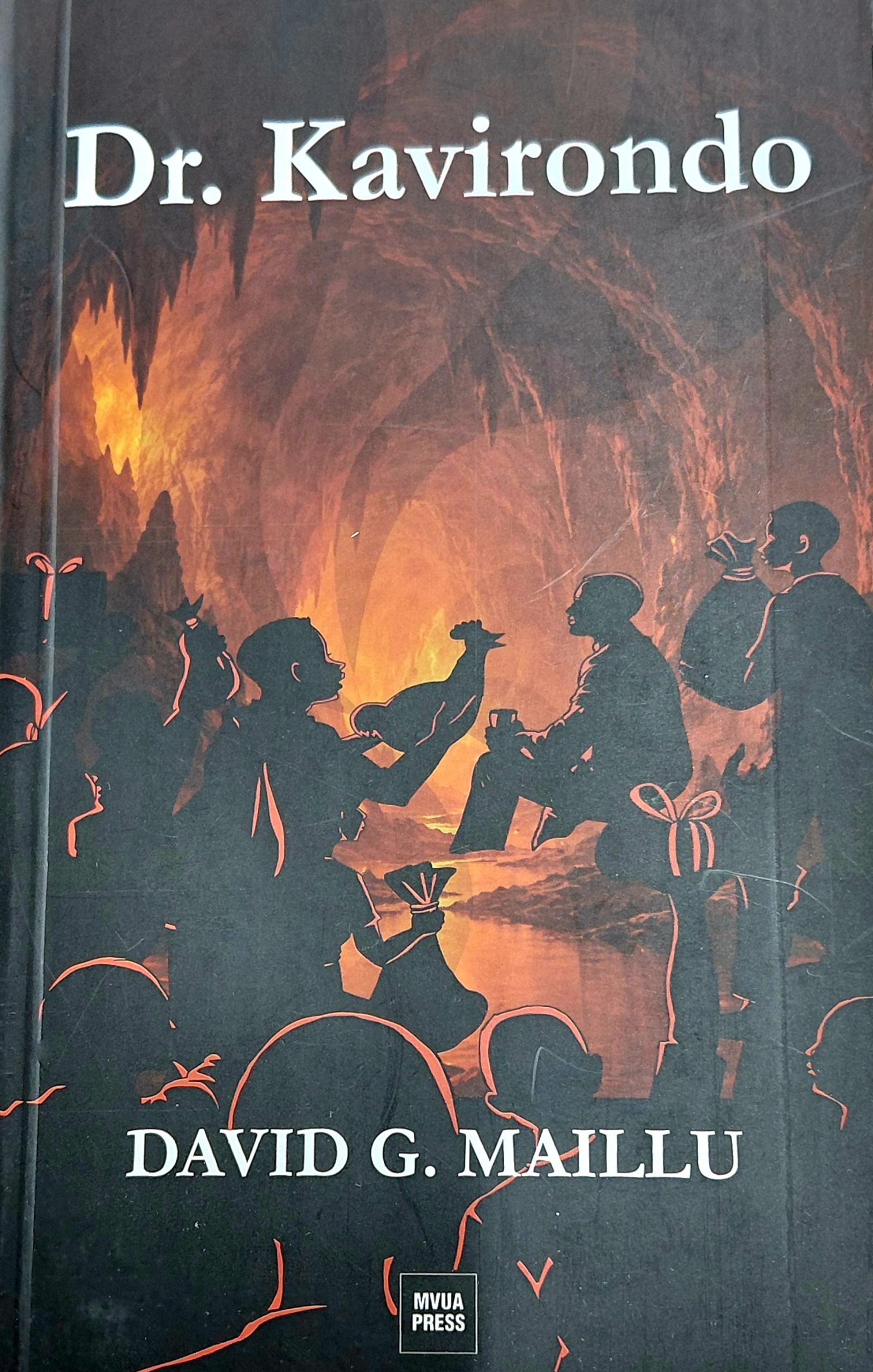
Dr. Kavirondo has spent years crafting a life far from home, yet the shadow of his formidable father-Brigadier Fred Kavirondo-never truly releases him. When duty, mystery and cultural obligation draw him back to Kenya, he becomes entangled in a clandestine spiritual enterprise that transforms him into the feared and revered Jabandha spirit. What begins as an adventure spirals into a terrifying double life marked by secret wealth, ritual power and crushing loneliness.
As rumours swirl that he has become a criminal in hiding, Dr. Kavirondo must abandon the cave shrine, return to his mother, and confront the two women whose futures are bound to him: Bella Akiki, the Luo woman he marries under his father’s mandate, and Marietta, the wife in Mexico who believed he was dead.
Caught between truth and illusion, tradition and modernity, guilt and longing, Dr. Kavirondo faces a single haunting question: can a man return home whole after becoming a legend no one must ever know?



















Literature Guru –
DR KAVIRONDO
Author: David Mailu
Publisher: Mvua Press
Reviewer: Literature Guru
Rating: 3.5/5 ⭐
Dr Kavirondo is a thought-provoking novel that explores the political, social, cultural, and spiritual stagnation of the Luo community through the character of Dr Kavirondo and his family. The author uses the family’s experiences to interrogate the challenges facing a community, particularly the role of the elite in perpetuating or failing to address these problems.
Culture is also central to the narrative, particularly following the death of Kavirondo Senior and the ensuing struggle over inheritance, family wealth, and the question of widow inheritance. These elements provide an interesting entry point into discussions about changing cultural practices and the tension between tradition and modernity.
However, the novel has notable shortcomings, particularly in its cultural authenticity and representation. For Luo readers, some aspects may feel assumptive or insufficiently grounded in contemporary Luo realities. The treatment of widow inheritance, especially within the context of modern Kenya, raises questions about the accuracy and relevance of some of the cultural assumptions presented.
The portrayal of Brigadier’s involvement in politics and community affairs also feels somewhat far-fetched. His political engagement is so overt that it becomes difficult to reconcile with the realities of military culture, where serving officers would generally be expected to exercise considerable restraint in openly expressing political positions.
There are also instances of cultural misrepresentation and narrative choices that could have been handled more convincingly. For example, the introduction of Dr Kavirondo’s siblings feels largely unnecessary. They are mentioned early in the story but become conspicuously absent when the conflict over their father’s inheritance and protection of his wealth intensifies. This weakens the narrative and also raises questions about the cultural plausibility of the inheritance conflict. The story might have been more coherent had Kavirondo been presented as his father’s only child.
Interestingly, the novel ultimately locates the solution to the community’s problems in the cave and the spiritual awakening that follows. In this sense, the author appears to suggest that the challenges facing the Luo nation are not merely a crisis of leadership, but fundamentally a spiritual crisis requiring spiritual renewal.
Despite its flaws, Dr Kavirondo succeeds in doing what good literature should: it provokes conversation. Its themes of leadership, culture, inheritance, spirituality, identity, and the role of the elite provide considerable material for debate and interpretation.
It is particularly suitable for book clubs and literary discussions, where readers can engage critically with both the strengths and weaknesses of the author’s portrayal of Luo society.
Overall: 3.5/5 ⭐