Nsemia Inc Publishers

Nsemia Inc Publishers

  • No ratings found yet!

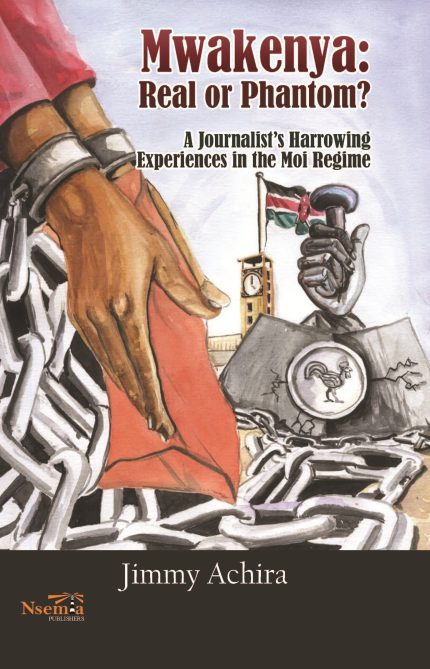
Mwakenya : Real or Phantom

KShs2,000.00 KShs1,500.00
Mwakenya: Real or Phantom?, is Jimmy Achira's persecution experience Daniel Arap Moi's Kenya in 1980s. The Daily Nation captured best the nebulous phenomenon called Mwakenya. “Mwakenya remained a chimera to the Kenyan media. Reporters knew no “Mwakenya” officials and received no calls, manifestos or press releases from them. “There was no known office location, or telephone or fax numbers. Everything that came to the media house, and appeared as trial evidence, was from the Moi-KANU government. “The seditious documents produced in court were always photo-copies, never originals. It was not only university lecturers, students who were victims of the security dragnet-civil servants and journalists too, were picked up”. -Daily Nation, Sept. 20th 1987. In the 1980s, in Moi’s regime, it was anathema to be termed "Mwakenya" for that would pronounce arrest, torture and jail. It was one of the saddest chapters in the nation’s history; people talked in hushed voices, looking over their shoulders to see who was listening; when people worried what they were seen reading for it could be “seditious”. Jimmy Achira, a journalist who found himself in the Mwakenya dragnet, chronicles his experiences in Mwakenya: Real or Phantom? The book is not a history of Mwakenya but a personal account of encounter with oppression in Moi’s Kenya. The real story of Mwakenya would be told by historians. It is unfortunate that instruments like the Truth, Justice and Reconciliation Commission have yet to unearth the atrocities against Kenyan people; atrocities perpetuated in the name of state security; and law and order. What others say: "It is important that the experiences such as Achira's be told for the sake of history and posterity. The history of those dark days should be taught in schools, alongside tales of heroic struggles such as that of Mau Mau "Many Kenyans who enjoy the fruits of "freedom" under multi-party democracy know little about the suffering many faced and sacrifices made to achieve the current freedom.” - Gershom Otachi Bw'Omanwa "The Nyaro era of the 1980s was a time of horror in the history of human rights in Kenya. In early 1986 the crackdown on those Kenyans perceived to have dissenting views about the government had been put in motion. Under the guise of rooting out subversives, particularly referred to as "Mwakenya" ( Muungano wa Wakenya) the police unleashed such a reign of terror that a wide cross-section of people's lives were destroyed. “ - Dr Carey Francis Onyango, Lecturer and HUman Rights Activist. “Political imprisonment was common in the Nyayo era in which Moi held Kenya in a vice-like grip. Now, the untold can be told. Stories, as Jimmy Achira's, help us understand those days and the price many Kenyans paid for freedoms enjoyed today. “ - Dr Matunda Nyanchama, ICT Professional and Publisher. About the Author Achira was born at Bosiango, West Mugirango, Nyamira and went to Bosiango Primary School, Taranganya and Nyansabakwa High Schools. He taught at Mborogo Secondary School before entering journalism. He has worked for Target/ Lengo, East African Standard, Nation and Kenya Times. Others are The Weekend Mail and The Weekly Revie . In April 1995, he incorporated Rural Media Services Limited under which he published regional rural monthly newspaper, The Western Monitor. He co-edited, with Tom Amoro, A Guide to Gusii Politics 1997, published What Next after 1997 General Elections in Gusii? Presently, he is media consultant/publisher and working on The Memoirs of a Veteran Journalist 1979 – 1999.

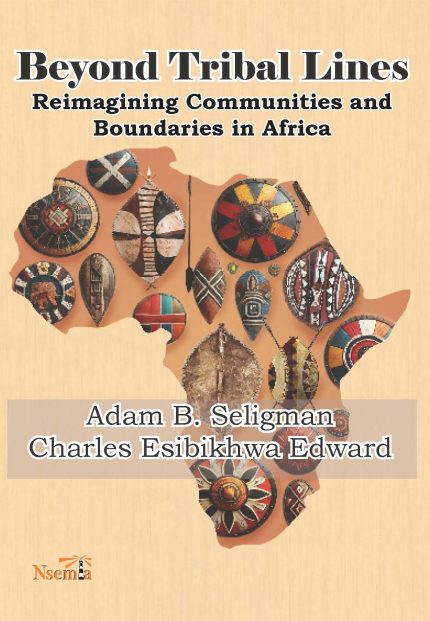
Beyond tribal Lines

KShs1,000.00 KShs800.00
Beyond Tribal Lines: Reimagining Communities and Boundaries in Africa is about the perceptions, understandings, and experiences of difference between selves and communities in Africa and beyond. It focuses on the nature of difference in its many manifestations – social and communal, local and national – and the fundamental bases and typical consequences of such difference. Further, it explains the importance of difference between individuals, communities and societies; affirming that difference is natural to human social and individual existence. Critically, it takes up the challenge of how – given the many differences between us – a society may achieve peaceful co-existence and harmony among its members. The book makes the case that being different doesn’t necessitate being enemies, antagonists or subjects of contestation. To address and live with said difference, the authors present thoughtful ideas on realizing social harmony through individual and community reflection and understanding. What Others Say “Lawyers engaging transformative constitutions in Africa will find the book useful in interrogating these constitutions’ implementation which calls for a multi-disciplinary approach to their interpretation and implementation. The various insights of this book necessarily engage the burning issue of the people’s sovereign power. Political scientists interrogating the politics of division and the quest for alternative forms of political leadership in Africa will find the book’s theoretical and practical reflections useful.” - Dr. Willy Mutunga, EGH, former Chief Justice, Kenyan lawyer, intellectual, reform activist, and former Commonwealth Special Envoy to the Maldives.

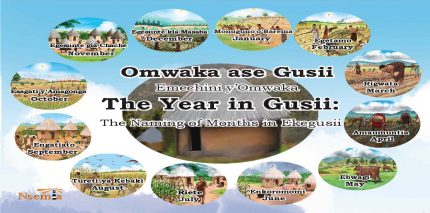
The Year in Gusii: The Naming of Mont...

KShs400.00 KShs300.00
Abagusii, buna banto bande bonsi bare ense eye, imbabwate enchera yokoroberia chingaki ao ao. Rituko, buna ande onsi ase erioba rikoraba, igo riaye gochake ekemambia ka bokogia naende riaera mogoroba ka bwairire. Kobara amatuko igo bare gochaka na ‘rero’ babara gochia magega gose motwe. Emetienyi eyare kobwatia okoraba kw’omotienyi (omweri), ekagera omwaka okaba emetienyi ikomi na ebere. Korende amarieta y’emetienyi ao ao igo are kobwatia gose n’engaki y’embura, omobaso gose omorakera na komenta gose n’engaki gokorema, gosimeka gose kogesa. Ayio onsi n’oyokworokia buna Abagusii bare komanya buna ingaki ki ere egere baroberie keria bagwenerete gokora. **************** Abagusii, like all other communities across the world, had a way of relating with time. While the day was dictated by sunrise and sunset, days were separated relatively, with ‘today’ being the anchor relative to other days. Months, on the other hand, followed the moon’s cycle and hence the twelve months of the year. Months were named relative to the weather of the time and the activities it dictated. For this reason, the names of months were largely descriptive. This provides an overview of the concept of time in Gusii and the rationale for naming the months in the manner they were.

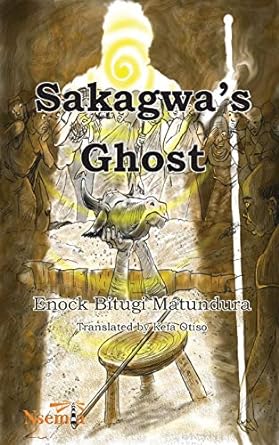
Sakagwa’s Ghost

KShs1,000.00 KShs800.00
Sakagwa's Ghost, originally published in Kiswahil as Kivuli cha Sakawa, is a story about one of Africa's legendary heroes. A seer, strategist and medicine man, Sakagwa's legend lives to date, holding that many of his predictions have come to pass. His wisdom, some say, served to assure the survival of the Abagusii community in the face of colonial incursion. In this this story, Sakagwa finds himself at a crossroads following the death of his father, a prominent leader in his own right. Conservative elders in the community, feeling threatened by this youngster's demonstrated wisdom and knowledge are determined to dim his rising star. Will they succeed? Sakagwa Ng'iti was born and lived in the Abagusii community in western Kenya at the turn of 19th Century (1800). The unfolding story in this book did take place, probably in slightly a different way from that depicted here. By chronicling this episode, the author gives the story a new lease of life, through artistic rendering, and offers chance for others to comment or offer versions of the story as they understand it.

The Fear of the Void

KShs600.00 KShs500.00
When the night touches the ground the day puts a shroud on its head a flood of baffling darkness then the concept of nothingness becomes more real I get filled with terror and receive attacks of anxiety -- the fear of the void death is imminent I practice how to die everyday I die many times I learn to surrender to the void -- to this nothingness.

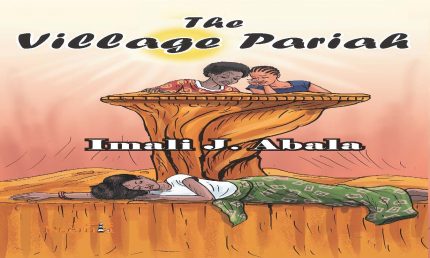
The Village Pariah by Imali J. Abala

KShs1,000.00 KShs800.00
The Village Pariah, narrated in verse, dramatizes the story of Rosie Kasovo, a beautiful and lonely woman from Ngoroke village. Abandoned by her husband shortly after their marriage when he secures a job in the city, her striking beauty unwittingly becomes her double-edged sword, inviting relentless scrutiny from the people of Ngoroke. Every action she takes falls under their watchful gaze. Despite her sincere efforts to contribute positively to the common good of the community, her deeds are met with skepticism. As the accusations and betrayal against her mount, one question remains: will Rosie be able to emerge from this ordeal unscathed, or will she crumble under the weight of her village’s judgment? What Others Say The Village Pariah is a remarkable book illustrating how beauty was once believed to guarantee happiness and a seamless life, yet for Rosie, a Logooli woman, it has become a barrier, a pariah wall, isolating her from the community. Strangely, the fate of the entire village appears intertwined with hers, their destinies woven into the fabric of their relentless gossip. Into this tangled web steps Eliab, a man lacking noble standing but propelled by the villagers’ whispered truths, determined to confront her. If his impulsive action can mend their afflictions, both tangible and perceived and liberate the unfortunate souls ensnared by her charm, then so be it. - Alfred Nyagaka Nyamwange, English/Literature Teacher and Deputy Principal at Bon’gota Secondary School.

Rejected and Blessed by Anderea Morara

KShs1,000.00 KShs800.00
Rejected & Blessed is Anderea Morara’s second novel. His first novel, The Sting, has been adopted by many secondary schools as a crucial reader. Rejected & Blessed is set in East Africa, but cast in a global context with the primary purpose of highlighting the human aspects of the continuous cultural transformation from the pre-colonial, colonial and post-colonial eras as well as the global political economy. The novel tells the dramatic and traumatic love story in which the clash of cultures in the context of rapid social change, makes it awfuly difficult to determine right from wrong. This book gives a glimpse of how this transition affected and is affecting, communities in the region and the resultant coping strategies as well as the effects of the associated coping mechanisms, especially in the realm of love, marriage and child-rearing. On the global scene, the subtle dynamics of economic hegemony, foreign aid, brain drain, racism and cultural dialectics are glossed on.

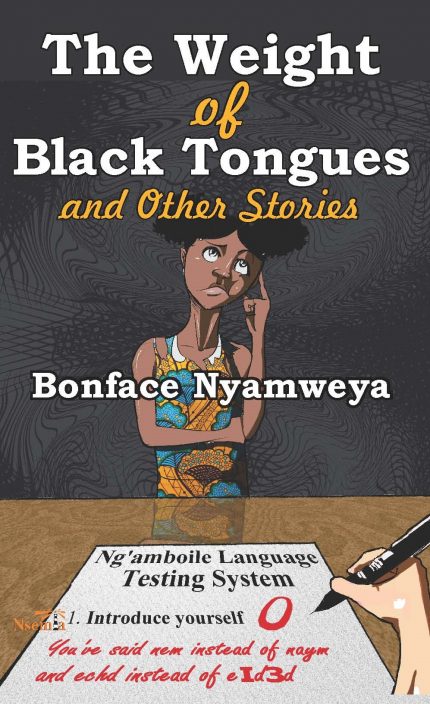
The Weight of Black Tongues and Other...

KShs1,000.00 KShs700.00
“The Weight of Black Tongues is an anthology of over half a dozen original short stories by an emerging star of new Kenyan literature, Bonface Nyamweya. This debut collection is both startling and gripping – envision it as a ride on the tail of a shooting star, zooming through Kenya’s night skies, each twinkle representing a unique story. As a dynamic figure in post-COVID-19 literary circles, whom I have had the honour of mentoring, Nyamweya showcases the depth and scope of storytelling in Kenya, transitioning from unusual novels and sartorial poetry to making his mark in short story fiction. From the enigmatic Whose Title Died to the riveting Waiting for Mama, each title in this new book invites readers into a world of mystery and profound reflection, solidifying Nyamweya as a rising force in African literature in the wake of the fin de siècle.

Enyangi y’Ebitinge

KShs800.00 KShs700.00
Traditional Wedding in Gusii (Enyangi y'Ebitinge), published posthumously, documents the process of old-style marriage in Gusii and related steps, culminating in a wedding ceremony. The process was meticulous and made of a series of steps, each with a very clear purpose and intended not just for the couple but also for their families and clans. Abagusii attached a lot of value to marriage. It was a major landmark in the 'growing up' of a man or woman in that society. Marriage marked the transition from the care of one's parents to being independent and taking care of oneself and one's family. That transition was possible only after marriage. The importance of marriage and the honour it was accorded is underlined by the respect that was given to a married woman. For example, if she found herself late in getting home someone, that person had an obligation to ensure that she got to her home safely; after all, she was a mother and her progeny would be the link to the future. The book is a flashback to when family and relationships were valued and were at the core of order and success in society. It is especially informative today, especially when modern generations do not appear to associate as much importance to wedlock as it was in the past.

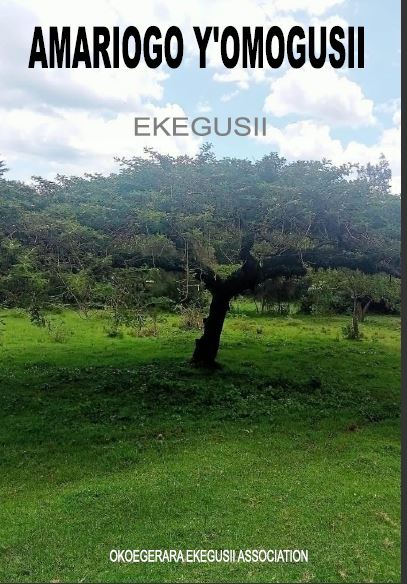
Amariogo Y’Omogusii

KShs600.00 KShs500.00
This book introduces nostalgic herbal remedies which cascades into the present realm of medicinal application outside the current conventional medicine. Herbal medicine is the oldest present form of treatment ever applied in mankind. It is as old as man, God instructed Adam and Eve to eat from any fruit tree in the garden, but spare only one at the centre. The fruits and trees were medicine. Quite many of the modern medicine are derived from the natural vegetation. The vegetation act as food for man as well as medicine. There were no modern hospital facilities then; this came along with the advancement of Science and Technology. Most countries globally now use herbal medicine infused with technological innovation for rapid result. Herbal medicine has less negative effects to both man and animals, their administration is also simple and fast sometimes it can be taken directly or as food. For generations Omogusii has used this form of treatment to manage many diseases they encountered on the way as they sojourned to the present settlement. Some ailments were life threatening and broke out in large scale which occassionally were unmanageable. However through herbal medicine, diseases like Cholera, Yellow fever, dysentery and many others which had snowballed into calamities were controlled and contained. Therefore this book has tried to sample the types of ailments which were prevalent and are still of concern together with the herbal administration applied. Although the authors may not have exhausted all the information, an hunch has been left for further research. The book i s written in Ekegusii for that is the target group even though it can be used universally with little language interpretation and translation. Inconclussion therefore this book is very appropriate and handy in administration of herbal medicine.
delivery

QUICK DELIVERY

Swift dispatch

ONLINE PAYMENT

Multiple options

EXPERT SUPPORT

Help when you need it

WIDE VARIETY

Thousands of books

GLOBAL SHIPPING

Worldwide delivery

Shopping cart
Sign in

No account yet?

Shop
0 Wishlist
0 items Cart
My account