Children who come into contact with justice systems rarely do so in
isolation from their lived realities. My professional journey across
juvenile correctional facilities, counselling spaces, and community
settings in Kenya and internationally has consistently affirmed one
truth: children’s behaviour is often a reflection of unresolved adult,
family, and systemic distress.
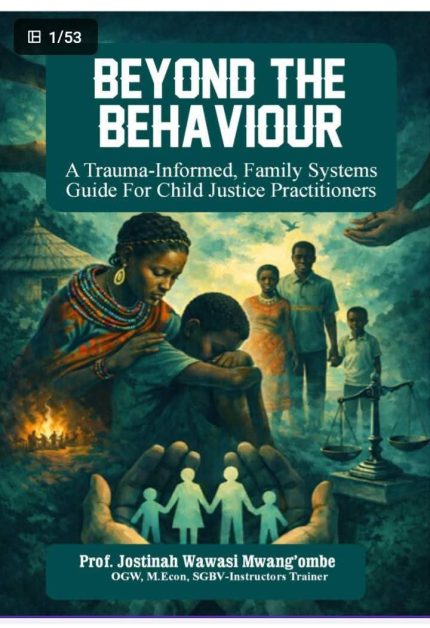
This guidebook is born out of empirical research conducted among urban Kenyan families in informal settlements of Mombasa County, where family triangulation emerged as a critical yet often overlooked contributor to child delinquency. The findings challenged the dominant punitive and child-blaming approaches and instead called for family-centred, trauma- informed, and rights-based responses.
This guide is therefore written for the child justice actor who must make decisions under
pressure, in limited-resource environments, yet with profound consequences for a child’s life trajectory. It is intended to be practical, ethical, and humanistic—placing the child at the
centre, while recognising the family and community systems that shape behaviour.
If this guide enables one practitioner to pause, listen, assess differently, and intervene more
humanely, then its purpose will have been fulfilled.