




















QUICK DELIVERY
Swift dispatch

KShs800.00
Nuria Ranking: #7 in PlaysIn stock
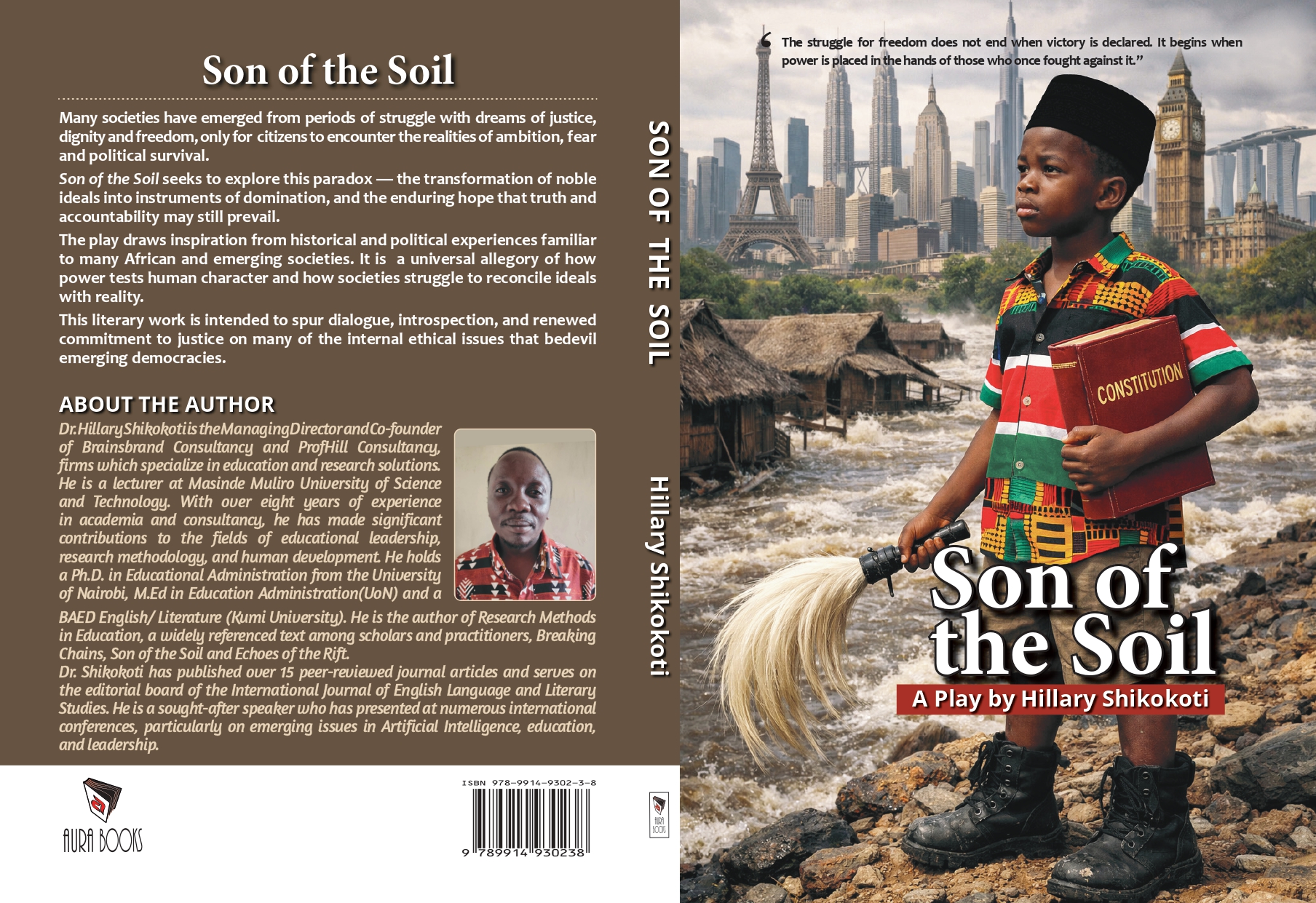
Son of the Soil stands within the long tradition of political theatre that interrogates the relationship between power, morality, and the aspirations of ordinary people. The play employs allegory, memory, and dramatic confrontation to examine the difficult transition from liberation struggle to political authority. In doing so, it raises profound questions about leadership, accountability, and the fragile nature of revolutionary ideals.
At the center of the drama is Raa-Ee-Lah, a character whose life represents the moral arc of many political movements. Beginning as a figure shaped by idealism and the teachings of his father, Jaduong, he grows into a leader confronted by the complex realities of governance and political survival. Through this journey, the play explores a recurring historical paradox: those who once fought to dismantle systems of oppression often find themselves navigating and sometimes reproducing those very structures.
The dramatic structure of Son of the Soil moves fluidly between memory, reflection, and confrontation. The presence of ancestral voices and symbolic dialogue creates a layered narrative that blends personal history with collective experience. This technique situates the play within a broader tradition of postcolonial theatre in which the stage becomes a space for examining the unfinished project of liberation.
Students approaching this text should consider several thematic questions:
• How does the play portray the transformation of revolutionary ideals over time?
• What role do memory and generational voices play in shaping political identity?
• In what ways does the drama critique the relationship between leaders and the people they claim to represent?
• Can the moral authority of liberation struggles survive the realities of state power?
By framing political conflict within a deeply human narrative, Son of the Soil invites readers and audiences to reflect not only on particular historical experiences but also on the universal challenge of preserving justice and accountability in positions of authority. Ultimately, the play reminds us that the struggle for freedom does not end with victory; it continues in the everyday choices made by those entrusted with power




Swift dispatch
No account yet?
Create an Account
Reviews
Clear filtersThere are no reviews yet.