












ENJOY FREE DELIVERY WITHIN NAIROBI FOR ORDERS ABOVE 10,000
Nuria App
Kenyan Shilling (KSh)
  • Kenyan Shilling (KSh)
  • United States (US) dollar ($)
  • Pound sterling (£)
  • Ugandan Shilling (UGX)
0 Wishlist
Login / Register
  • Home
  • Shop
  • Kenyan Books
  • Rare Books
  • Gift Card
  • Blog
  • Contact Us
  • SELL ON NURIA
  • VENDOR LOGIN
Menu
0 items KShs0.00
Browse Categories
  • Kenya Books
  • Rare Books
  • International Bestsellers
  • Self Help & Motivation
  • Fiction
  • Autobiography
  • Business
  • Children’s Books
  • Kids & Teens
  • African Interest
  • Educational Books
  • Romances & Thrillers
HELP / SUPPORT

0794 233 261

0 items KShs0.00
-4%
Click to enlarge
Home Books Novels African History A People Called the Agikuyu: Yesterday, Today and Tomorrow by Paul Njoroge
Plastic Poker Game Playing Cards – Durable Waterproof Bicycle Standard Size Poker Cards for Texas Hold’em, Casino & Family Card Games KShs1,500.00 KShs599.00
Back to products
UKUU, UHURU, USALAMA WA TANGANYIKA NA RASILIMALI ZAKE KShs2,450.00

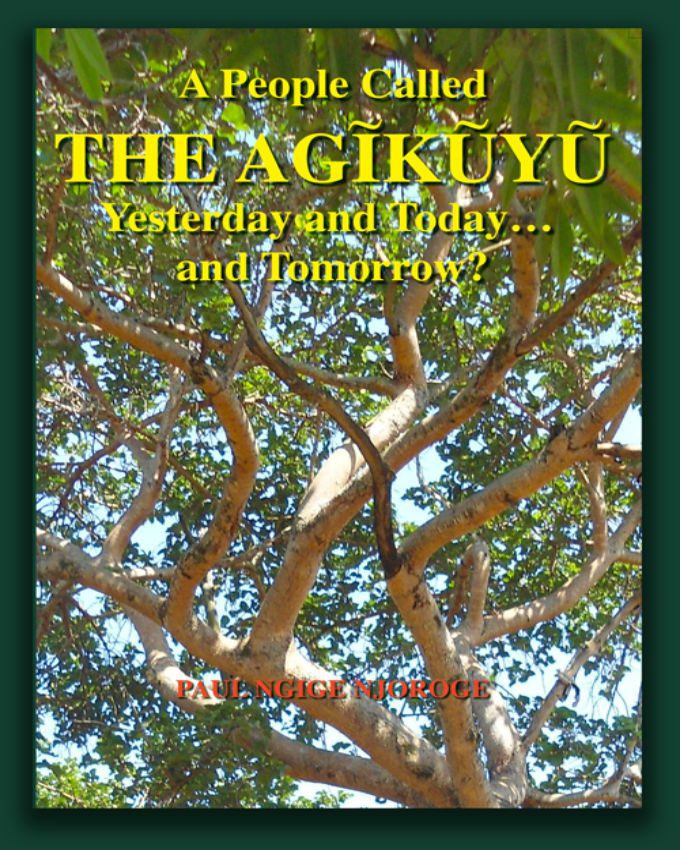
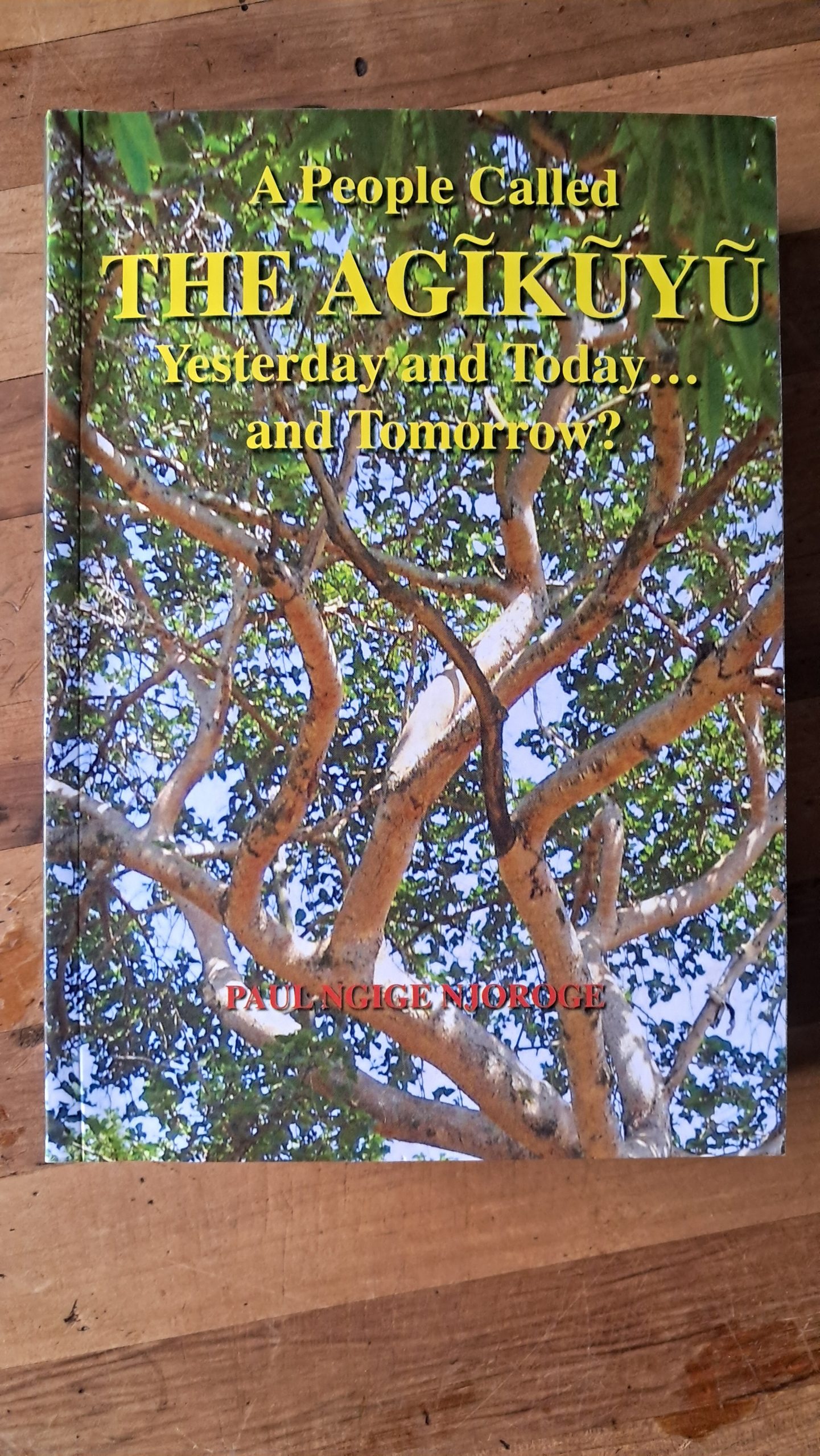
A People Called the Agikuyu: Yesterday, Today and Tomorrow by Paul Njoroge

KShs4,500.00 KShs4,300.00

Nuria Ranking: #1 in African History

In stock

Purchase this product now and earn 9 Points!

A People Called the Agikuyu: Yesterday and Today … and Tomorrow?
Around A.D. 1000, a community of Bantu-Thagicu speakers left their Nyambene Hills area settlement in Igembe-Tigania, in present-day Meru country in central-eastern Kenya, in search of new homes. By A.D. 1400, this community had split into distinct, but closely related, Thagicu-speaking groups occupying a region running from Meru, through Embu and Kirinyaga to Murang’a. These groups were – from north to south – the Tharaka, Cuka, Embu, Mbeere, Gicugu, Ndia, and the Agikuyu.
Gikuyu national consciousness goes back to the early 1400s. In the next 400 years, the Agikuyu would expand into Nyeri, Kiambu and parts of Nyandarwa – to occupy the land between the Four Mountains, namely Kirinyaga (Mount Kenya), Kia-Nyandarwa (the Nyandarwa Range), Kia-Njahi (Kilimambogo), and Kia-Mbiruiru (Ngong Hills).
The British settler-colonialists, as they penetrated the interior of Kenya in the late 19th century, encountered the Agikuyu building fortified villages on the outskirts of the area that would grow into Nairobi. on the southern frontier – and stopped Gikuyu expansion in its tracks. What followed was the brutal and tragic drama of a war of conquest and inevitable resistance. The resistance was suppressed. But within the ensuing half century, the Mau Mau war of liberation would break out, and the Agikuyu and their Thagicu (now GEMA) cousins would suffer ruthless suppression by the mighty British Empire.
This is the story of the Agikuyu, from their beginnings, through their encounter with foreign white rule, their contribution to Kenya’s liberation, and their mixed fortunes since Kenya’s national independence – what with their remarkable contribution to nation-building and economic development, but also their tragic experiences, including attempts at ethnic cleansing targeting them, their GEMA brothers and sisters and other communities in the 1990s, and also, most painfully, in 2007-8.
The story is set against the historical background of the trans-Atlantic slave trade, the Scramble for and Partition of Africa, the struggles for the self-determination of African nation-states, as well as nation building in a brutal Globalized ‘New World Order” under the control of the Imperialist Western powers,
The author, Paul Ngige Njoroge, studied literature at Makerere and Nairobi Universities. He has worked as a teacher and a book-publishing editor.

Add KShs10,000.00 worth of products to your cart for free delivery within Nairobi!
Add to wishlist
Category: African History Tags: African Authors, African Books, Africans, Colonization, Culture, Focus on History, Kenya, Kenya History, Kikuyu, Mau Mau
Share:
Close
  • Description
  • Shipping
  • Reviews (0)
  • Vendor Info
  • More Products
Description

A People Called the Agikuyu: Yesterday and Today … and Tomorrow?

Around A.D. 1000, a community of Bantu-Thagicu speakers left their Nyambene Hills area settlement in Igembe-Tigania, in present-day Meru country in central-eastern Kenya, in search of new homes. By A.D. 1400, this community had split into distinct, but closely related, Thagicu-speaking groups occupying a region running from Meru, through Embu and Kirinyaga to Murang’a. These groups were – from north to south – the Tharaka, Cuka, Embu, Mbeere, Gicugu, Ndia, and the Agikuyu.

Gikuyu national consciousness goes back to the early 1400s. In the next 400 years, the Agikuyu would expand into Nyeri, Kiambu and parts of Nyandarwa – to occupy the land between the Four Mountains, namely Kirinyaga (Mount Kenya), Kia-Nyandarwa (the Nyandarwa Range), Kia-Njahi (Kilimambogo), and Kia-Mbiruiru (Ngong Hills).

The British settler-colonialists, as they penetrated the interior of Kenya in the late 19th century, encountered the Agikuyu building fortified villages on the outskirts of the area that would grow into Nairobi. on the southern frontier – and stopped Gikuyu expansion in its tracks. What followed was the brutal and tragic drama of a war of conquest and inevitable resistance. The resistance was suppressed. But within the ensuing half century, the Mau Mau war of liberation would break out, and the Agikuyu and their Thagicu (now GEMA) cousins would suffer ruthless suppression by the mighty British Empire.

This is the story of the Agikuyu, from their beginnings, through their encounter with foreign white rule, their contribution to Kenya’s liberation, and their mixed fortunes since Kenya’s national independence – what with their remarkable contribution to nation-building and economic development, but also their tragic experiences, including attempts at ethnic cleansing targeting them, their GEMA brothers and sisters and other communities in the 1990s, and also, most painfully, in 2007-8.

The story is set against the historical background of the trans-Atlantic slave trade, the Scramble for and Partition of Africa, the struggles for the self-determination of African nation-states, as well as nation building in a brutal Globalized ‘New World Order” under the control of the Imperialist Western powers,

The author, Paul Ngige Njoroge, studied literature at Makerere and Nairobi Universities. He has worked as a teacher and a book-publishing editor.
Shipping
Reviews (0)
Rated 0 out of 5
0 reviews
Rated 5 out of 5
0
Rated 4 out of 5
0
Rated 3 out of 5
0
Rated 2 out of 5
0
Rated 1 out of 5
0

Reviews

Clear filters

There are no reviews yet.

Be the first to review “A People Called the Agikuyu: Yesterday, Today and Tomorrow by Paul Njoroge” Cancel reply

Your email address will not be published. Required fields are marked *


Vendor Info

Vendor Information

  • Store Name: Paul N Njoroge
  • Vendor: Paul Njoroge
  • No ratings found yet!
More Products
No product has been found!

Related products

-7%

Shades of Benga The Story of Popular Music in Kenya 1946-2016

Books, African Interest
KShs7,000.00 KShs6,500.00
Brief Summary Shades of Benga: The Story of Popular Music in Kenya delves into the foundations of modern Kenyan music, examining external influences from the English waltz to Afro Cuban Rumba and how they helped mould new music styles across Africa. Rumba was brought to Eastern Africa via the itinerant Congolese musicians Edouard Masengo and Jean Bosco Mwenda who’s intricate guitar-picking styles largely shaped the present Kenyan sound, with the Benga playing a dominant role. Although dozens of works have been published over the years on various characteristics of popular music in Kenya – from conventional folk to hip hop – none captures the history of music and its players as authoritatively as Shades of Benga: The Story of Popular Music in Kenya. An informed study of some literary publications and academic papers on music immediately reveals that the writers, who frequently tend to be foreign ‘experts’, do not seek the opinions of pioneer musicians who helped shape the various genres of music. Their research is largely based on information obtained from sources that are readily available on the Internet but often not easily verifiable. As we wrote this book, we made every possible effort to engage with practitioners directly involved in creating and shaping benga in order to ensure that their collective voice remains the sole critical factor to placing the music in its proper perspective while simultaneously giving the other genres in Kenya their correct definition. We undertook the arduous task of meticulously putting together the content that would faithfully recount the remarkable story of the development of our music in a manner previously not attempted. In an effort to make this 678-page book an easy read as well as eye catching, Shades of Benga: The Story of Popular Music in Kenya features over 400 pictures. " ISBN:6164001943132 Author:Ketebul Music
Add to wishlist
Add to basket
Quick view
-9%Sold out

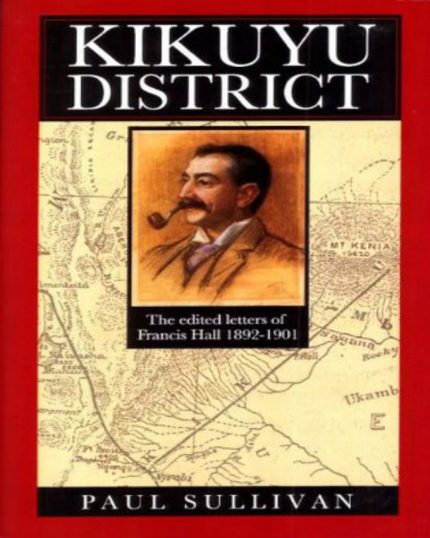
Kikuyu District by Paul Sullivan

Books, African Interest
KShs2,090.00 KShs1,899.00
Brief Summary Francis Hall's letters are among the earliest colonial record of daily life in British East Africa, now modern day Kenya. In 1892 Hall was posted to Fort Smith with orders to build 150 miles of road, to re-supply caravans between the coast and Uganda and to keep the peace between the Kikuyu and the Maasai. His was a hard life in difficult, dangerous conditions and every day was an adventure. He was gored by a rhino and mauled by a leopard, which he strangled with his rifle, and survived bush surgery and frequent bouts of malaria. While on leave in England he married Bee Russell, a colleague's sister, and they set up house together in Fort Smith. As the railway line approached, so the early European settlers started to arrive. But the railway was to change everything, and when Nairobi was established on their doorstep at the turn of the century, Fort Smith became redundant. The government first moved the Halls to Machakos and then back to Kikuyuland to establish a new fort at Mbirri. Six months later Francis Hall was dead from black water fever aged 40. Mbirri was renamed Fort Hall in his memory and today the town is called Muranga. Kikuyu District is a fascinating account of the life of an early colonial administrator and settler.
Add to wishlist
Read more
Quick view
-3%

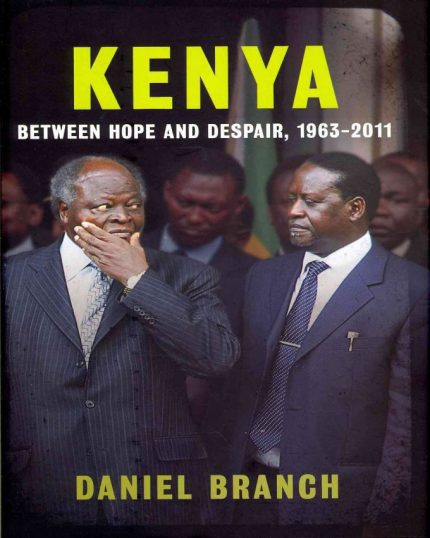
Kenya Between Hope and Despair 1963-2011 by Daniel Branch

Books, African Interest
KShs6,990.00 KShs6,790.00
On December 12, 1963, people across Kenya joyfully celebrated independence from British colonial rule, anticipating a bright future of prosperity and social justice. As the nation approaches the fiftieth anniversary of its independence, however, the people's dream remains elusive. During its first five decades Kenya has experienced assassinations, riots, coup attempts, ethnic violence, and political corruption. The ranks of the disaffected, the unemployed, and the poor have multiplied. In this authoritative and insightful account of Kenya's history from 1963 to the present day, Daniel Branch sheds new light on the nation's struggles and the complicated causes behind them. Branch describes how Kenya constructed itself as a state and how ethnicity has proved a powerful force in national politics from the start, as have disorder and violence. He explores such divisive political issues as the needs of the landless poor, international relations with Britain and with the Cold War superpowers, and the direction of economic development. Tracing an escalation of government corruption over time, the author brings his discussion to the present, paying particular attention to the rigged election of 2007, the subsequent compromise government, and Kenya's prospects as a still-evolving independent state.  
Add to wishlist
Add to basket
Quick view
-15%Sold out

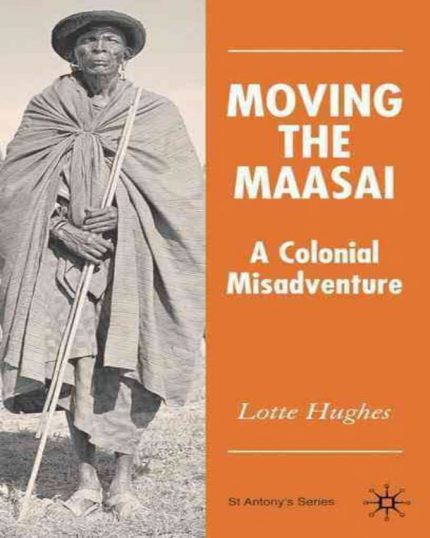
Moving the Maasai A Colonial Misadventure by Lotte Hughes

Books, African Interest
KShs7,500.00 KShs6,399.00
This is the scandalous story of how the Maasai people of Kenya lost the best part of their land to the British in the 1900s. Drawing upon unique oral testimony and extensive archival research, Hughes describes the intrigues surrounding two enforced moves and the 1913 lawsuit, while explaining why recent events have brought the story full circle.
Add to wishlist
Read more
Quick view
-7%

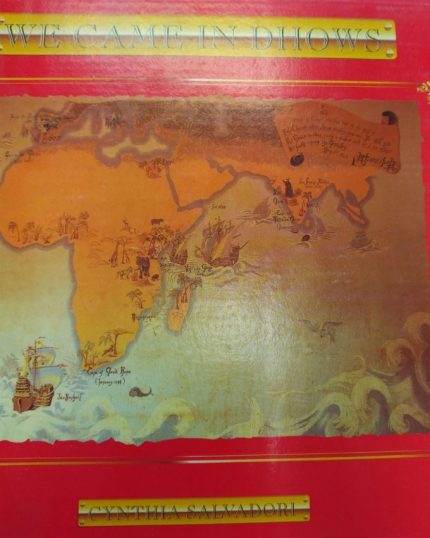
We Came in Dhows by Cynthia Salvadori 3 volumes

Books, African Interest
KShs19,900.00 KShs18,500.00
Brief Summary From the introduction: "This volume has been designed as a companion to Through Open Doors: A View of Asian Cultures in Kenya. Although that book describes the historical background of the various Asian communities in Kenya, it has little information about individual people. This book is all about people."
Add to wishlist
Add to basket
Quick view
-24%

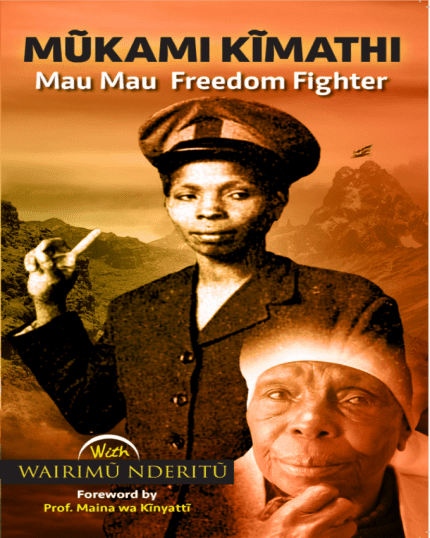
Mukami Kimathi Mau Mau Women Freedom by Alice Wairimu Nderitu

Books, African Interest
KShs2,500.00 KShs1,890.00
In 1964, a newly independent Kenya was facing the uphill task of reconstructing herself into an African State. That reconstruction was called "Africanisation”. As part of the Africanisation policy, my father, Vincent Nderitu, was posted to Sasumua Dam in Kinangop to take over from the British superintendents who were leaving the country. Not long after he had arrived, he asked the foreman, Harun Musungu, to find out where he could buy milk. That was how he met Mukami Kimathi. My father was thunderstruck. Back home in Tetu, Nyeri, his home and Mukami’s were within a walking distance. My father knew her as a legend. She was a Mau Mau heroine, the wife of Field Marshal Dedan Kimathi. My father began treating Mukami like an elder sister, fixing her fences and installing a water tank for her among other duties. When I was growing up, Mukami was the auntie through whose home we passed on our way from school; the one who made my brothers and I porridge and gave us red plums. She was not a blood relative, but we always thought she was. Mukami and her children, Nyambura and Waceke, would often come to our home in the afternoons and I would read the newspaper to her haltingly. She encouraged me saying; "When you grow up, you will write as well as you read. One day, you should write my karugano ( story) because what is not written is forgotten.” She wanted me to remind Kenyans to take care of the country the Mau Mau fought for. Her lowest point was the 2007-2008 post-election violence and often said: "Because we fought the colonialists, Kenyans now have arrow roots, sweet potatoes, bananas and yam on the table. But instead of eating, they are fighting! I wish this generation of Kenyans from all ethnic communities would rally as we did and this time emerge with, instead of independence like we did, national unity! In her story, Mukami shows us who Dedan Kimathi was as a father and husband. Her experiences provide an important complement to existing written records on Kenya’s history. Mukami Kimathi’s prophesy that I would write her karugan is now a reality. The book, Mukami Kimathi: Mau Mau Freedom Fighter, was launched at the National Museums of Kenya in Nairobi last evening. She was also proved right on another front; my sister Consolata Wakonyo became a pilot.  
Add to wishlist
Add to basket
Quick view

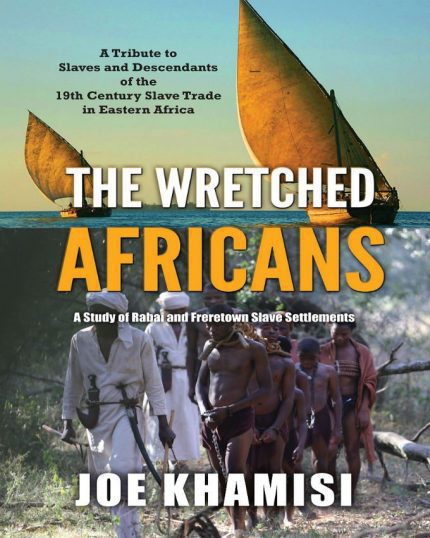
The Wretched Africans: A Study of Rabai and Freretown Slave Settlements by Joe Khamisi

Books, African Interest
Rated 5.00 out of 5
KShs1,900.00
Brief summary The Wretched Africans: A Study of Rabai and Freretown Slave Settlements. This book is about the 19th century slave trade in Eastern and Central Africa. No one in the history of humankind has suffered the indignity, abuse and pain of slavery than the African. Over many centuries, millions of Africans were uprooted from their quaint villages in the interior of the "Dark Continent" and taken into slavery. They were exported to the Americas, Asia, Arabia and a dozen other countries around the globe, to work in plantations, in the pearl industry, and as soldiers and domestic workers. Boys were castrated and made eunuchs and girls were sexually abused and forced into harems. Unfortunately, the African slave narrative - written mostly by Western historians and missionaries - has been contemptibly distorted to portray Europeans as the gallant saviors, the notorious slave traders as swaggering heroes, and the African captives as wretched victims of a horrible but regrettably inevitable human phenomenon of the time. The truth has been loftily garbled or masked and the role of liberated Africans vastly under-represented. The Wretched Africans peels of what is beneath the Arab slave trade, unravels the racism and abuse meted against Africans by European explorers and missionaries, and lays bare the heroism and resilience of the African captives. It memorializes Africans who died in caravan trails, at sea and those who found freedom in slave settlements around the world. It is a must read for historians, researchers, students and the general public wanting to understand the truth about what happened to an estimated eleven million people taken captive from the east coast of Africa to the new world and beyond.
Add to wishlist
Add to basket
Quick view
-7%

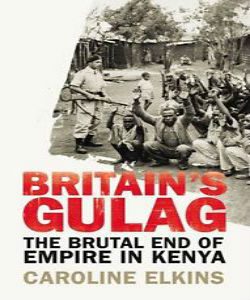
Britains Gulag The Brutal End of Empire in Kenya by Caroline Elkins

Books, African Interest
KShs3,000.00 KShs2,800.00
Britain fought in the Second World War to save the world from fascism. But just a few years after the defeat of Hitler came the Mau Mau uprising in Kenya - a mass armed rebellion by the Kikuyu people, demanding the return of their land and freedom. The draconian response of Britain's colonial government was to detain nearly the entire Kikuyu population of one-and-a half-million - to hold them in camps or confine them in villages ringed with barbed wire - and to portray them as sub-human savages. From 1952 until the end of the war in 1960 tens of thousands of detainees - and possibly a hundred thousand or more - died from the combined effects of exhaustion, disease, starvation and systemic physical brutality. Until now these events have remained untold, largely because the British government in Kenya destroyed most of its files. For the last eight years Caroline Elkins has conducted exhaustive research to piece together the story, unearthing reams of documents and interviewing several hundred Kikuyu survivors. Britain's Gulag reveals what happened inside Kenya's detention camps, as well as the efforts to conceal the truth. Now, for the first time, we can understand the full savagery of the Mau Mau war and the ruthless determination with which Britain sought to control its empire.
Add to wishlist
Add to basket
Quick view
-17%Sold out

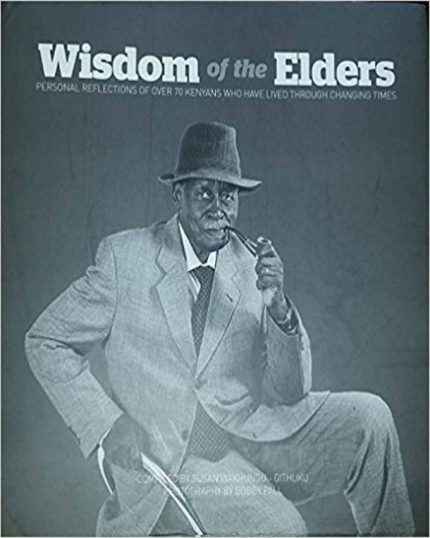
Wisdom of the Elders Personal Reflections of Over 70 Kenyans who Have Lived Through Changing Times by Susan Wakhungu Githuku and Bobby Pall

Books, African Interest
KShs6,000.00 KShs4,990.00
"'Wisdom of the elders' presents conversations with over 70 elders of diverse background, education level, race and gender. One is none other than immediate former President Emilio Mwai Kibaki. Another is the widow of former freedom fighter Dedan Kimathi, while another is the grandmother of President Barrack Hussein. Others are normal Kenyans living in villages, with no claim to fame or stature. However, all those profiled have lived three score ten years and more and in the words of the Bible, have reached the age of wisdom. Discussing how life was then and how it is today, their disparate views will inform and resonate as they provide a veritable history lesson."--Dust jacket flap.  
Add to wishlist
Read more
Quick view
-21%

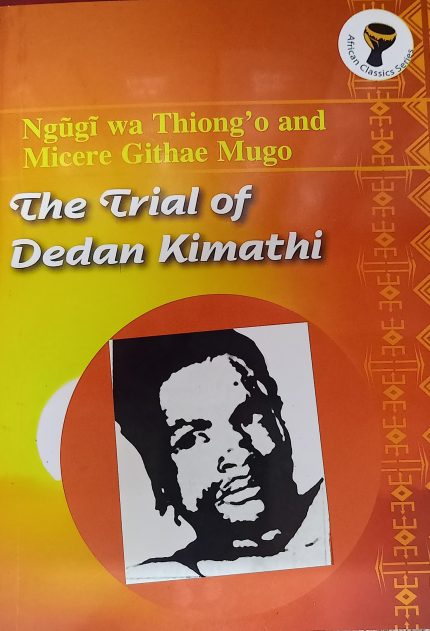
The trial of Dedan Kimathi by Ngugi wa Thiongo and Micere Githae Mugo

Books, African Interest
KShs1,000.00 KShs790.00
The Trial of Dedan Kimathi, written in collaboration with Micere Githae-Mugo, is Ngugi’s response to colonialist writings about the Mau-Mau movement, which traditionally depicted the movement and its leader, Dedan Kimathi, as mentally unbalanced and vicious. Ngugi and his collaborator choose to counter this image with a portrait of Kimathi as a man of great courage and commitment. This was how he was seen by many of the peasants and laborers of Kenya.  
Add to wishlist
Add to basket
Quick view
-9%Sold out

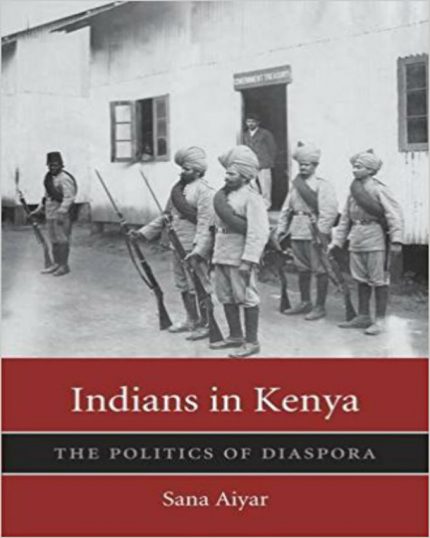
Indians in Kenya The Politics of Diaspora

Books, African Interest
KShs8,000.00 KShs7,299.00
Brief Summary Working as merchants, skilled tradesmen, clerks, lawyers, and journalists, Indians formed the economic and administrative middle class in colonial Kenya. In general, they were wealthier than Africans, but were denied the political and economic privileges that Europeans enjoyed. Moreover, despite their relative prosperity, Indians were precariously positioned in Kenya. Africans usually viewed them as outsiders, and Europeans largely considered them subservient. Indians demanded recognition on their own terms. Indians in Kenya chronicles the competing, often contradictory, strategies by which the South Asian diaspora sought a political voice in Kenya from the beginning of colonial rule in the late 1890s to independence in the 1960s. Indians’ intellectual, economic, and political connections with South Asia shaped their understanding of their lives in Kenya. Sana Aiyar investigates how the many strands of Indians’ diasporic identity influenced Kenya’s political leadership, from claiming partnership with Europeans in their mission to colonize and "civilize” East Africa to successful collaborations with Africans to battle for racial equality, including during the Mau Mau Rebellion. She also explores how the hierarchical structures of colonial governance, the material inequalities between Indians and Africans, and the radicalized political discourses that flourished in both colonial and postcolonial Kenya limited the success of alliances across racial and class lines. Aiyar demonstrates that only by examining the ties that bound Indians to worlds on both sides of the Indian Ocean can we understand how Kenya came to terms with its South Asian minority. " ISBN:9780674289888 Author:Sana Aiyar
Add to wishlist
Read more
Quick view
-25%

The Big Conservation Lie: The Untold Story of Wildlife Conservation in Kenya by Mordecai Ogada and John Mbaria

Books, African Interest
Rated 5.00 out of 5
KShs4,000.00 KShs3,000.00
The Big Conservation Lie' is a wakeup call focused on a field that has been 'front and center' of many people's hearts and minds in recent years; the conservation of Africa's wildlife. It is a pursuit whose power to inspire is only rivalled by its ability to blind its audience to reality. This book takes the reader through Kenya's conservation 'industry' and the players therein with all their prejudices, weaknesses and commitment to causes, many of which are indistinguishable from their personalities. It is a call to indigenous Africans to claim their place at the table where the management of their natural resources is being discussed and invites well-meaning donors to look beyond the romantic images and detect the possible role of their money in the disenfranchisement of a people.
Add to wishlist
Add to basket
Quick view

Looters and Grabbers by Joe Khamisi

Books, African Interest
Rated 5.00 out of 5
KShs3,899.00
This book is about unbridled corruption, bribery and scandalous financial skullduggery in one of Africa's most promising countries, Kenya. It is a narrative of money-laundering, mega scandals, and international wheeler-dealing, and describes how Mafia-like lobbyists have been devouring the country's resources with blatant impunity over four regimes since independence in 1963. It is an important resource for historians, students, researchers, social and political scientists, non-governmental organizations, development and anti-corruption agencies.
Add to wishlist
Add to basket
Quick view
-15%Sold out

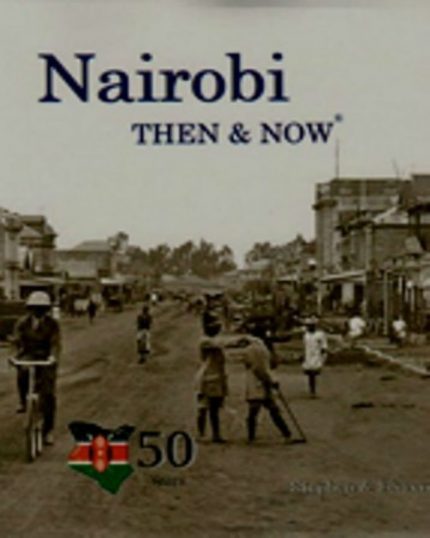
Nairobi then and now 50 years by Stephen and Bhavna Mills

Books, African Interest
KShs2,699.00 KShs2,299.00
Brief Summary This book is a window into Nairobi's past and a reminder of its present. The transformation we see is uneven - some things and places have evolved unrecognizably, while others remain constant. Nairobi is a place of great change. Rapid development and outward expansion is ever reshaping the landscape. Kenya and the UK have been partners in Nairobi's evolutionary journey throughout. Not just government, but also in terms of trade and investment, technology, security, knowledge, and people. The Kenya-UK partnership will continue the journey down this road to the future, towards achieving the Kenyan Government's Vision 2030 and beyond. 50 years in the future many places shown in this book could be long gone. While a few special old places might remain, our vision for the 2063 edition of this book is an ultra-modern Nairobi, a major interchange of the globalized and interconnected world. And a place where we continue to learn from the lessons of the past, as we focus on the promise of the future.
Add to wishlist
Read more
Quick view
-6%Sold out

Rules of the Wild by Francesca Marciano

Books, African Interest
KShs1,799.00 KShs1,699.00
Brief Summary A mesmerizing novel of love and nostalgia set in the vast spaces of contemporary East Africa. Romantic, often resonantly ironic, moving and wise, Rules of the Wild transports us to a landscape of unsurpassed beauty even as it gives us a sharp-eyed portrait of a closely knit tribe of cultural outsiders: the expatriates living in Kenya today. Challenged by race, by class, and by a longing for home, here are "safari boys" and Samaritans, reporters bent on their own fame, travelers who care deeply about elephants but not at all about the people of Africa. They all know each other. They meet at dinner parties, they sleep with each other, they argue about politics and the best way to negotiate their existence in a place where they don't really belong. At the center is Esmé, a beautiful young woman of dazzling ironies and introspections, who tells us her story in a voice both passionate and self-deprecating. Against a paradoxical backdrop of limitless physical freedom and escalating civil unrest, Esmé struggles to make sense of her own place in Africa and of her feelings for the two men there whom she loves--Adam, a second-generation Kenyan who is the first to show her the wonders of her adopted land, and Hunter, a British journalist sickened by its horrors. Rules of the Wild evokes the worlds of Isak Dinesen, Beryl Markham, and Ernest Hemingway. It explores unforgettably our infinite desire for a perfect elsewhere, for love and a place to call home. It is an astonishing literary debut.  
Add to wishlist
Read more
Quick view
-15%

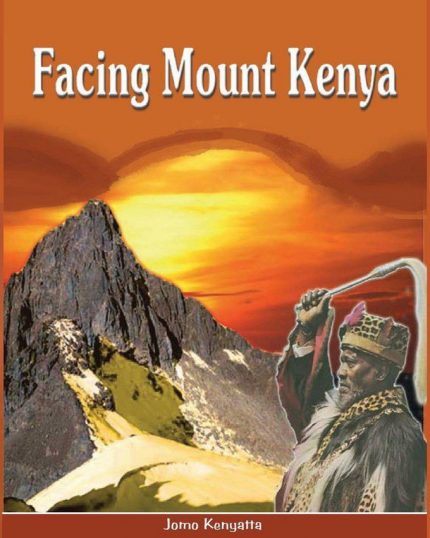
Facing Mount Kenya by Jomo Kenyatta

Books, African Interest
KShs1,990.00 KShs1,690.00
Brief Summary Facing Mount Kenya An eminent scholar and nationalistic leader presents a study of African tribal life as represented in his own Kikuyu society Full description
Add to wishlist
Add to basket
Quick view
delivery

QUICK DELIVERY

Swift dispatch

ONLINE PAYMENT

Multiple options

EXPERT SUPPORT

Help when you need it

WIDE VARIETY

Thousands of books

GLOBAL SHIPPING

Worldwide delivery

  • TALK TO US
    • 0794 233261 / 0724 670194
    • nuriakenyabookstore@gmail.com
    • The Bazaar Building, 1st Floor
  • About Nuria
    • Our Story
    • Blog
    • Contact Us
  • VENDORS
    • Sell on Nuria
    • Vendor Login
    • Privacy Policy
  • USEFUL LINKS
    • Delivery Policy
    • Returns
    • Gift Card Balance
digitals-app-store-button
google-play-button

We Accept

2023 NURIA KENYA All rights reserved
  • Menu
  • Categories
  • Kenya Books
  • Rare Books
  • International Bestsellers
  • Self Help & Motivation
  • Fiction
  • Autobiography
  • Business
  • Children’s Books
  • Kids & Teens
  • African Interest
  • Educational Books
  • Romances & Thrillers
  • Home
  • Shop
  • Gift Card
  • About Us
  • Nuria App
  • Contact Us
  • Wishlist
  • Login / Register
Shopping cart
Close
Sign in
Close

Lost your password?

No account yet?

Create an Account
Shop
Sidebar
0 Wishlist
0 items Cart
My account