














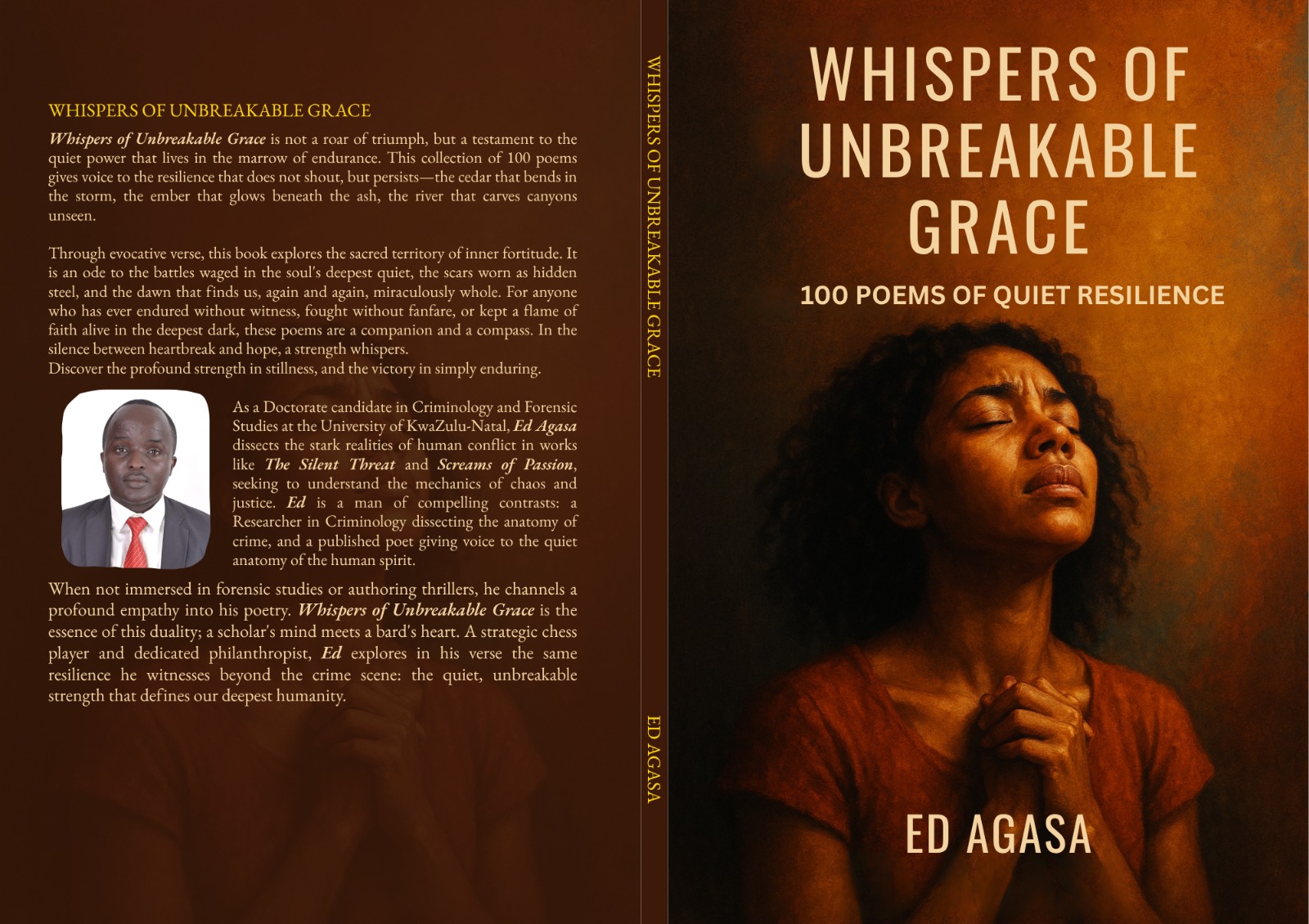


POETIC DEVICES
The poet, Ed Agasa, employs a masterful and restrained set of stylistic devices to create a meditative, resonant, and deeply spiritual body of work.
Using the Harvard Guide to Poetic Terms as a reference, here is a detailed analysis of the poetic devices used in each of the 100 poems in “Whispers of Unbreakable Grace.”
Overall Dominant Devices Across the Collection:
- Metaphor & Extended Metaphor: Every poem is built upon a single, central metaphor (e.g., the soul as a cedar, a river, an ember). This is the core stylistic device of the entire book.
- Anaphora: The frequent repetition of “I,” “My,” “I am,” or “I endure” at the beginning of lines creates a powerful, incantatory rhythm and reinforces the theme of steadfast identity.
- Personification: Nature is consistently personified (winds howl, dawn finds, time bows) to create a living, interactive world that mirrors the speaker’s inner state.
- Juxtaposition: The poet consistently places images of immense pressure/force (storm, flood, avalanche) against images of delicate but enduring strength (reed, ember, paper boat), highlighting the power of resilience.
- Diction: The word choices are consistently gentle and quiet (“whisper,” “soft,” “slow,” “patient,” “hush,” “unseen”) even when describing great trials, which reinforces the central theme.
- Theological Imagery: Direct and indirect references to God, Heaven, and faith are woven throughout, framing the resilience as not just personal but spiritual.












Reviews
Clear filtersThere are no reviews yet.