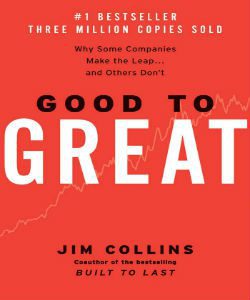
The Challenge Built to Last, the defining management study of the nineties, showed how great companies triumph over time and how long-term sustained performance can be engineered into the DNA of an enterprise from the very beginning. But what about the company that is not born with great DNA?
How can good companies, mediocre companies, even bad companies achieve enduring greatness? The Study For years, this question preyed on the mind of Jim Collins. Are there companies that defy gravity and convert long-term mediocrity or worse into long-term superiority? And if so, what are the universal distinguishing characteristics that cause a company to go from good to great? The Standards Using tough benchmarks, Collins and his research team identified a set of elite companies that made the leap to great results and sustained those results for at least fifteen years.
How great? After the leap, the good-to-great companies generated cumulative stock returns that beat the general stock market by an average of seven times in fifteen years, better than twice the results delivered by a composite index of the world's greatest companies, including Coca-Cola, Intel, General Electric, and Merck. The Comparisons The research team contrasted the good-to-great companies with a carefully selected set of comparison companies that failed to make the leap from good to great.
What was different? Why did one set of companies become truly great performers while the other set remained only good? Over five years, the team analyzed the histories of all twenty-eight companies in the study. After sifting through mountains of data and thousands of pages of interviews, Collins and his crew discovered the key determinants of greatness — why some companies make the leap and others don't.
The Findings The findings of the Good to Great study will surprise many readers and shed light on virtually every area of management strategy and practice. The findings include: Level 5 Leaders: The research team was shocked to discover the type of leadership required to achieve greatness.
The Hedgehog Concept (Simplicity within the Three Circles): To go from good to great requires transcending the curse of competence. A Culture of Discipline: When you combine a culture of discipline with an ethic of entrepreneurship, you get the magical alchemy of great results. Technology Accelerators: Good-to-great companies think differently about the role of technology.
The Flywheel and the Doom Loop: Those who launch radical change programs and wrenching restructurings will almost certainly fail to make the leap. "Some of the key concepts discerned in the study,” comments Jim Collins, "fly in the face of our modern business culture and will, quite frankly, upset some people.”
Perhaps, but who can afford to ignore these findings? "Some of the key concepts discerned in the study," comments Jim Collins, "fly in the face of our modern business culture and will, quite frankly, upset some people." Perhaps, but who can afford to ignore these findings?"























Reuben Samuel –
Very interesting book with real time materials on the hands on job.
With all that it takes to achieve such knowledge,I encourage the readers to buy and equip yourselves with real time experience.
Am getting it very interesting,and I like it.
Good work here.
Reuben Samuel –
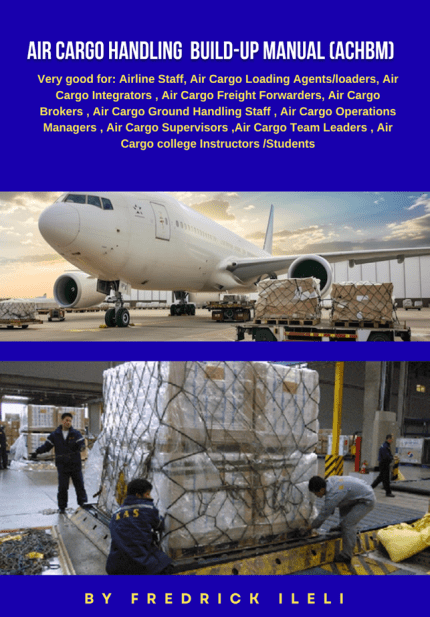
Very good manual training book.i have gone through it and it gives a real time information on hands on the job if you’re in the industry.l encourage everyone to buy and go through it for efficiency.
Miss Ntheeu –
Its delivered fast and its very well written book.
Miss Ntheeu –
Its delivered fast and its very well written book for everyone in air cargo industry..
Miss Ntheeu –
Good book
Miss Ntheeu –
I have gone through the book and it works very well for everyone. It is good for air cargo colleges, people already in the industry. and not expensive to purchase,
lifredrick –
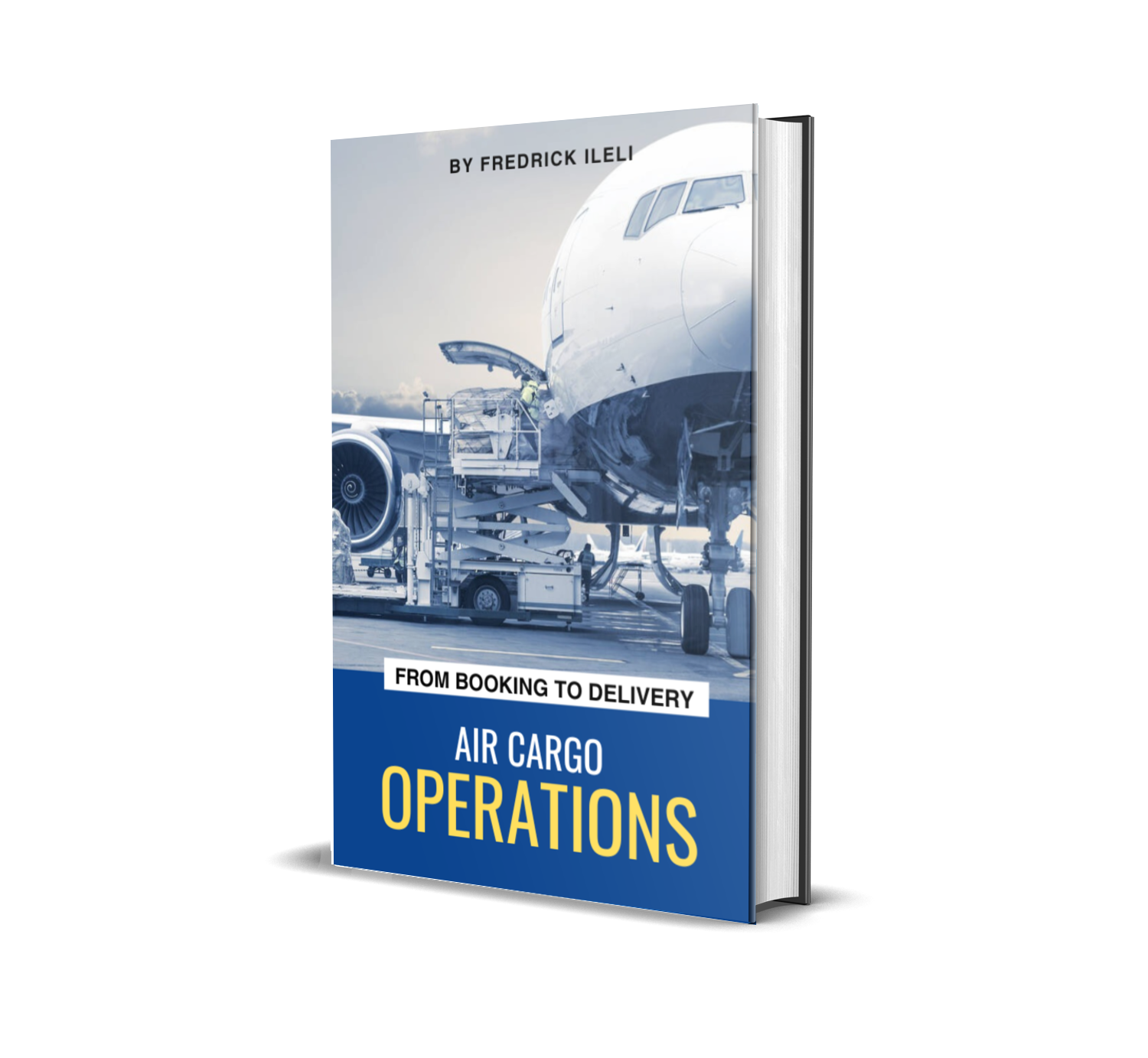
This book is good because it provides essential knowledge and practical understanding of air cargo operations. It is important to learners as it introduces the key concepts, procedures, and documentation involved in the air freight industry. For freight forwarders, the air cargo book serves as a guide to handling shipments, preparing accurate documentation, and ensuring smooth coordination with carriers and customs authorities. Airlines benefit from the book as it outlines the procedures for managing cargo, maintaining compliance, and ensuring efficient and secure transportation of goods.
For air cargo juniors, the book is a helpful tool for learning industry terminology, cargo handling basics, and documentation processes. Supervisors use it to reinforce standard operating procedures and improve team performance by ensuring consistent handling of shipments. Managers find value in the book as it supports decision-making, improves operational planning, and ensures that regulatory and service standards are met. In logistics, the book plays a crucial role by enhancing understanding of the overall supply chain, improving coordination, and ensuring timely and efficient delivery of cargo. Overall, the air cargo book is a valuable resource across all levels of the air cargo and logistics industry.