ENJOY FREE DELIVERY WITHIN NAIROBI FOR ORDERS ABOVE 10,000
Nuria App
Kenyan Shilling (KSh)
  • Kenyan Shilling (KSh)
  • United States (US) dollar ($)
  • Pound sterling (£)
  • Ugandan Shilling (UGX)
0 Wishlist
Login / Register
  • Home
  • Shop
  • Kenyan Books
  • Rare Books
  • Gift Card
  • Blog
  • Contact Us
  • SELL ON NURIA
  • VENDOR LOGIN
Menu
0 items KShs0.00
Browse Categories
  • Kenya Books
  • Rare Books
  • International Bestsellers
  • Self Help & Motivation
  • Fiction
  • Autobiography
  • Business
  • Children’s Books
  • Kids & Teens
  • African Interest
  • Educational Books
  • Romances & Thrillers
HELP / SUPPORT

0794 233 261

0 items KShs0.00
-20%Sold out
Click to enlarge
Home Books Governance From MauMau to Ruto Must Go: A Scrapbook of Essays on Kenya’s Struggle Against Imperialism
My Father's Heart by Michael Wanjau KShs950.00
Back to products
ORPHANED BY FATE, CROWNED BY DESTINY KShs800.00 KShs750.00

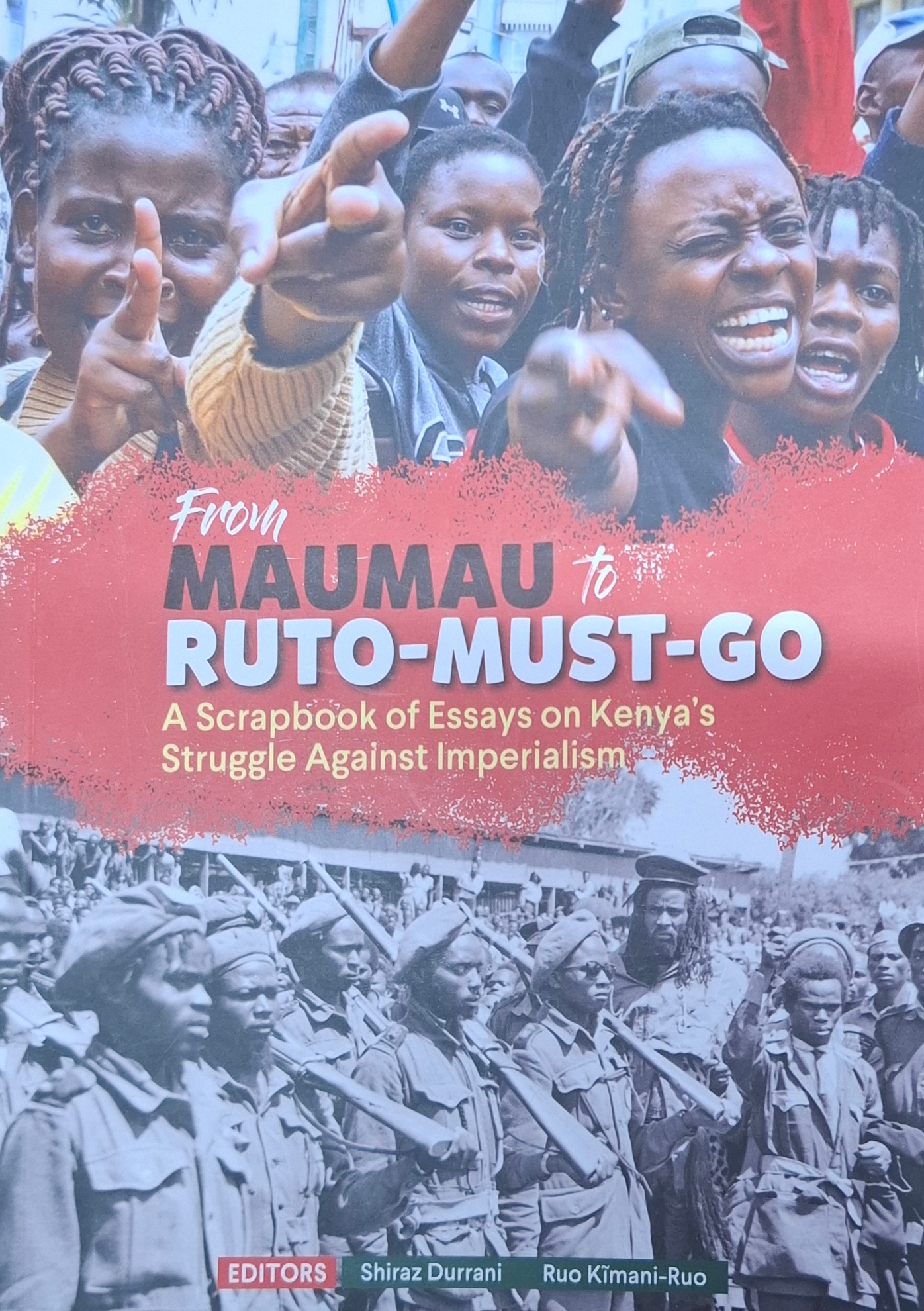
From MauMau to Ruto Must Go: A Scrapbook of Essays on Kenya’s Struggle Against Imperialism

KShs2,500.00 KShs2,000.00

Nuria Ranking: #13 in Governance

Out of stock

Get updates when restocked

In from Mau Mau to Ruto MustGo we have a revolutionary book that will help radical parties and social movements in Kenya and Beyond to continue to think through the practice of our struggles for a planet we wish to see. Willy Mutunga

Add KShs10,000.00 worth of products to your cart for free delivery within Nairobi!
Add to wishlist
Category: Governance Tag: Academic Books
Share:
Close
  • Shipping
  • Reviews (0)
  • Vendor Info
  • More Products
Shipping
Reviews (0)
Rated 0 out of 5
0 reviews
Rated 5 out of 5
0
Rated 4 out of 5
0
Rated 3 out of 5
0
Rated 2 out of 5
0
Rated 1 out of 5
0

Reviews

Clear filters

There are no reviews yet.

Be the first to review “From MauMau to Ruto Must Go: A Scrapbook of Essays on Kenya’s Struggle Against Imperialism” Cancel reply

Your email address will not be published. Required fields are marked *


Vendor Info

Vendor Information

  • Store Name: Shiraz
  • Vendor: Gacheke Gachihi
  • No ratings found yet!
More Products
No product has been found!

Related products

-26%

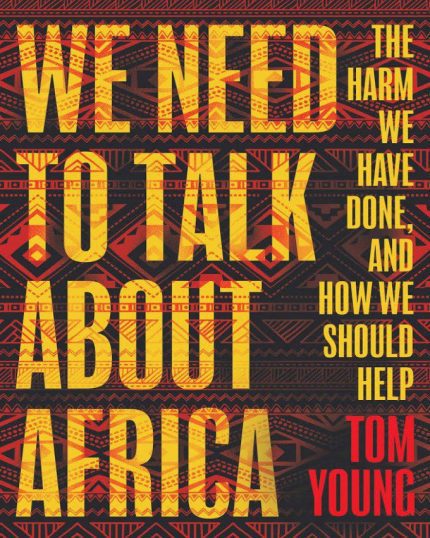
We Need to Talk About Africa: The Harm We Have Done, and how We Should Help

Books, African Interest, Energy, Governance, History, International Bestsellers
Rated 5.00 out of 5
KShs1,890.00 KShs1,399.00
Brief Summary If you boil a kettle twice today, you will have used five times more electricity than a person in Mali uses in a whole year. How can that be possible? Decades after the colonial powers withdrew Africa is still struggling to catch up with the rest of the world. When the same colonists withdrew from Asia there followed several decades of sustained and unprecedented growth throughout the continent. So what went wrong in Africa? And are we helping to fix it, or simply making matters worse? In this provocative analysis, Tom Young argues that so much has been misplaced: our guilt, our policies, and our aid. Human rights have become a cover for imposing our values on others, our shiniest infrastructure projects have fuelled corruption and our interference in domestic politics has further entrenched conflict. Only by radically changing how we think about Africa can we escape this vicious cycle.
Add to wishlist
Add to basket
Quick view
-11%

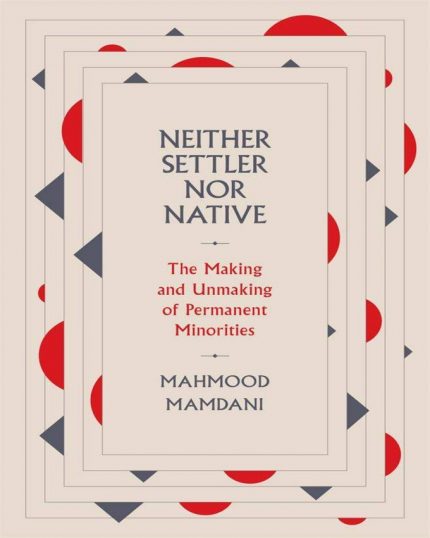
Neither Settler nor Native: The Making and Unmaking of Permanent Minorities by Mahmood Mamdani

Books, Governance
KShs3,500.00 KShs3,100.00
Brief Summary Making the radical argument that the nation-state was born of colonialism, this book calls us to rethink political violence and reimagine political community beyond majorities and minorities. In this genealogy of political modernity, Mahmood Mamdani argues that the nation-state and the colonial state created each other. In case after case around the globe―from the New World to South Africa, Israel to Germany to Sudan―the colonial state and the nation-state have been mutually constructed through the politicization of a religious or ethnic majority at the expense of an equally manufactured minority. The model emerged in North America, where genocide and internment on reservations created both a permanent native underclass and the physical and ideological spaces in which new immigrant identities crystallized as a settler nation. In Europe, this template would be used by the Nazis to address the Jewish Question, and after the fall of the Third Reich, by the Allies to redraw the boundaries of Eastern Europe’s nation-states, cleansing them of their minorities. After Nuremberg the template was used to preserve the idea of the Jews as a separate nation. By establishing Israel through the minoritization of Palestinian Arabs, Zionist settlers followed the North American example. The result has been another cycle of violence. Neither Settler nor Native offers a vision for arresting this historical process. Mamdani rejects the “criminal” solution attempted at Nuremberg, which held individual perpetrators responsible without questioning Nazism as a political project and thus the violence of the nation-state itself. Instead, political violence demands political solutions: not criminal justice for perpetrators but a rethinking of the political community for all survivors―victims, perpetrators, bystanders, beneficiaries―based on common residence and the commitment to build a common future without the permanent political identities of settler and native. Mamdani points to the anti-apartheid struggle in South Africa as an unfinished project, seeking a state without a nation.
Add to wishlist
Add to basket
Quick view
-17%

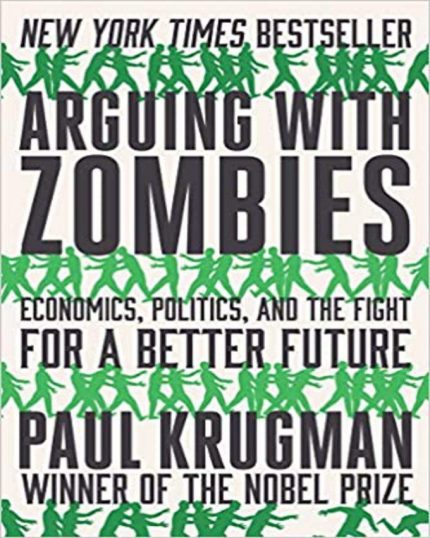
Arguing with Zombies: Economics, Politics, and the Fight for a Better Future by Paul Krugman

Books, Governance, International Bestsellers, Self Help & Motivation
KShs3,000.00 KShs2,499.00
There is no better guide than Paul Krugman to basic economics, the ideas that animate much of our public policy. Likewise, there is no stronger foe of zombie economics, the misunderstandings that just won’t die. In Arguing with Zombies, Krugman tackles many of these misunderstandings, taking stock of where the United States has come from and where it’s headed in a series of concise, digestible chapters. Drawn mainly from his popular New York Times column, they cover a wide range of issues, organized thematically and framed in the context of a wider debate. Explaining the complexities of health care, housing bubbles, tax reform, Social Security, and so much more with unrivaled clarity and precision, Arguing with Zombies is Krugman at the height of his powers. Arguing with Zombies puts Krugman at the front of the debate in the 2020 election year and is an indispensable guide to two decades’ worth of political and economic discourse in the United States and around the globe. With quick, vivid sketches, Krugman turns his readers into intelligent consumers of the daily news and hands them the keys to unlock the concepts behind the greatest economic policy issues of our time. In doing so, he delivers an instant classic that can serve as a reference point for this and future generations.
Add to wishlist
Add to basket
Quick view
-20%

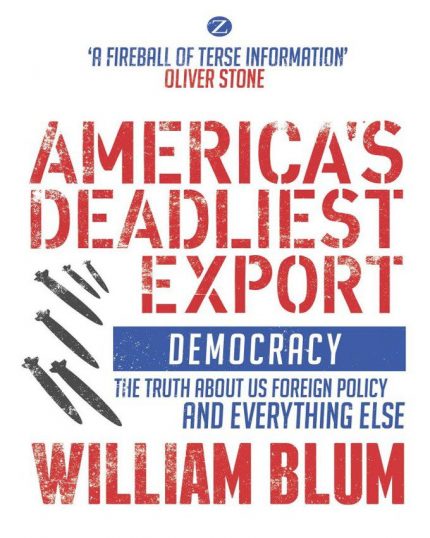
America’s Deadliest Export: Democracy The Truth About US Foreign Policy and Everything Else by William Blum

Books, Governance
KShs2,500.00 KShs1,999.00
Brief Summary For over sixty-five years, the United States war machine has been on automatic pilot. Since World War II we have been conditioned to believe that America's motives in 'exporting' democracy are honorable, even noble. In this startling and provocative book, William Blum, a leading dissident chronicler of US foreign policy and the author of controversial bestseller Rogue State, argues that nothing could be further from the truth. Moreover, unless this fallacy is unlearned, and until people understand fully the worldwide suffering American policy has caused, we will never be able to stop the monster.
Add to wishlist
Add to basket
Quick view
-10%

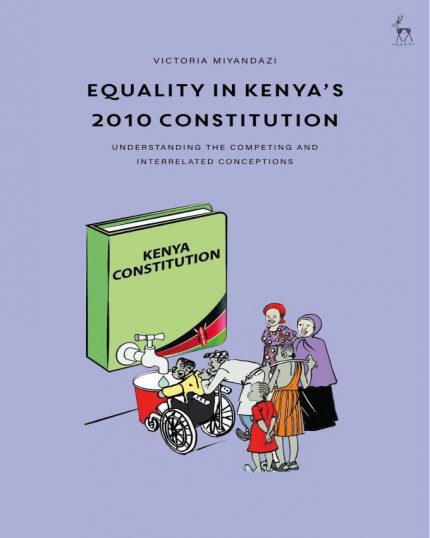
Equality in Kenya’s 2010 Constitution: Understanding the Competing and Interrelated Conceptions by Victoria Miyandazi

Books, Governance
KShs10,000.00 KShs8,999.00
Brief Summary "This book asks whether there is a coherent conception of equality in Kenya's 2010 Constitution and explores how competing and interrelated ideas of equality in it should be conceptualized, interpreted and applied. Making a significant contribution to the ongoing global conversations on the various understandings of equality, the book illuminates the many ways in which diverse equality guarantees clash, or are interrelated. It also sets out principled approaches on how they can be coherently interpreted to address the myriad inequalities in Kenya. Taking a comparative approach, the book considers how other jurisdictions including the United States, the United Kingdom, Canada, South Africa, India and Botswana have approached the conceptualization, interpretation and application of various equality concepts. The book focuses on important issues such as: - transformative constitutionalism in relation to the interpretation of Kenya's 2010 Constitution; - expanding the list of enumerated grounds for non-discrimination; - affirmative action; - accommodating religious and cultural diversity versus gender equality; - the interrelation between socio-economic rights and status-based equality"--
Add to wishlist
Add to basket
Quick view
-44%

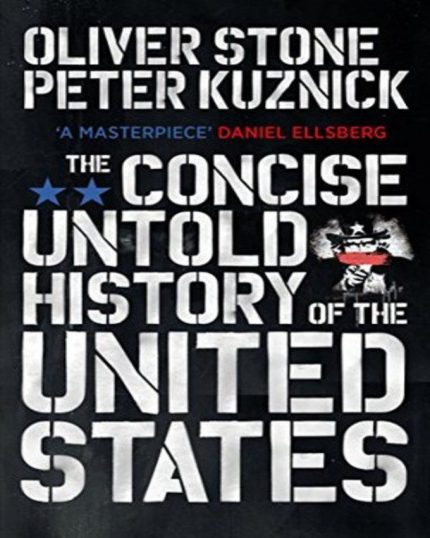
The Concise Untold History of the United States by Oliver Stone and Peter Kuznick

Books, Governance
KShs2,500.00 KShs1,399.00
Brief Summary A companion to Oliver Stone’s ten-part documentary series of the same name, this guide offers a people’s history of the American Empire: “a critical overview of US foreign policy…indispensable” (former Soviet president Mikhail Gorbachev); “brilliant, a masterpiece!” (Daniel Ellsberg); “Oliver Stone’s new book is as riveting, eye-opening, and thought-provoking as any history book you will ever read. It achieves what history, at its best, ought to do: presents a mountain of previously unknown facts that makes you question and re-examine many of your long-held assumptions about the most influential events” (Glenn Greenwald). In November 2012, Showtime debuted a ten-part documentary series based on Oliver Stone and Peter Kuznick’s The Untold History of the United States. The book and documentary looked back at human events that, at the time, went underreported, but also crucially shaped America’s unique and complex history over the twentieth century. From the atomic bombing of Japan to the Cold War and fall of Communism, this concise version of the larger book is adapted for the general reader. Complete with poignant photos, arresting illustrations, and little-known documents, The Concise Untold History of the United States covers the rise of the American empire and national security state from the late nineteenth century through the Obama administration, putting it all together to show how deeply rooted the seemingly aberrant policies of the Bush-Cheney administration are in the nation’s past and why it has proven so difficult for Obama to change course. In this concise and indispensible guide, Kuznick and Stone (who Pulitzer Prize-winning historian Garry Wills has called America’s own “Dostoevsky behind a camera”) challenge prevailing orthodoxies to reveal the dark truth about the rise and fall of American imperialism
Add to wishlist
Add to basket
Quick view
-21%

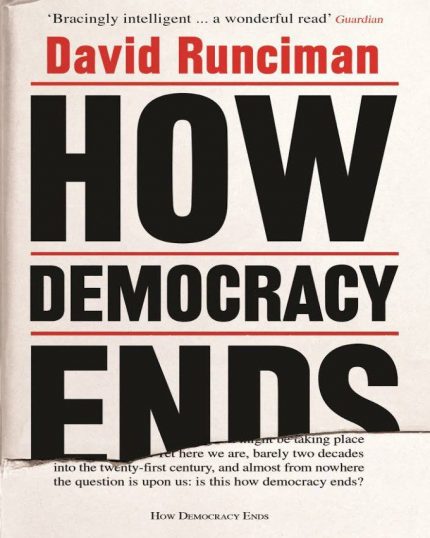
How Democracy Ends by David Runciman

Books, African Interest, Governance
KShs1,899.00 KShs1,499.00
Brief Summary Since the end of World War II, democracy's sweep across the globe seemed inexorable. Yet today, it seems radically imperiled, even in some of the world's most stable democracies. How bad could things get? In How Democracy Ends, David Runciman argues that we are trapped in outdated twentieth-century ideas of democratic failure. By fixating on coups and violence, we are focusing on the wrong threats. Our societies are too affluent, too elderly, and too networked to fall apart as they did in the past. We need new ways of thinking the unthinkable -- a twenty-first-century vision of the end of democracy, and whether its collapse might allow us to move forward to something better. A provocative book by a major political philosopher, How Democracy Ends asks the most trenchant questions that underlie the disturbing patterns of our contemporary political life.
Add to wishlist
Add to basket
Quick view
-10%

Why Nations Fail by Daron Acemoglu and James A. Robinson

Books, Governance
KShs3,000.00 KShs2,690.00
Brilliant and engagingly written, Why Nations Fail answers the question that has stumped the experts for centuries: Why are some nations rich and others poor, divided by wealth and poverty, health and sickness, food and famine? Is it culture, the weather, geography? Perhaps ignorance of what the right policies are? Simply, no. None of these factors is either definitive or destiny. Otherwise, how to explain why Botswana has become one of the fastest growing countries in the world, while other African nations, such as Zimbabwe, the Congo, and Sierra Leone, are mired in poverty and violence? Daron Acemoglu and James Robinson conclusively show that it is man-made political and economic institutions that underlie economic success (or lack of it). Korea, to take just one of their fascinating examples, is a remarkably homogeneous nation, yet the people of North Korea are among the poorest on earth while their brothers and sisters in South Korea are among the richest. The south forged a society that created incentives, rewarded innovation, and allowed everyone to participate in economic opportunities. The economic success thus spurred was sustained because the government became accountable and responsive to citizens and the great mass of people. Sadly, the people of the north have endured decades of famine, political repression, and very different economic institutions—with no end in sight. The differences between the Koreas is due to the politics that created these completely different institutional trajectories. Based on fifteen years of original research Acemoglu and Robinson marshall extraordinary historical evidence from the Roman Empire, the Mayan city-states, medieval Venice, the Soviet Union, Latin America, England, Europe, the United States, and Africa to build a new theory of political economy with great relevance for the big questions of today, including: - China has built an authoritarian growth machine. Will it continue to grow at such high speed and overwhelm the West? - Are America’s best days behind it? Are we moving from a virtuous circle in which efforts by elites to aggrandize power are resisted to a vicious one that enriches and empowers a small minority? - What is the most effective way to help move billions of people from the rut of poverty to prosperity? More philanthropy from the wealthy nations of the West? Or learning the hard-won lessons of Acemoglu and Robinson’s breakthrough ideas on the interplay between inclusive political and economic institutions? Why Nations Fail will change the way you look at—and understand—the world."
Add to wishlist
Add to basket
Quick view
-47%

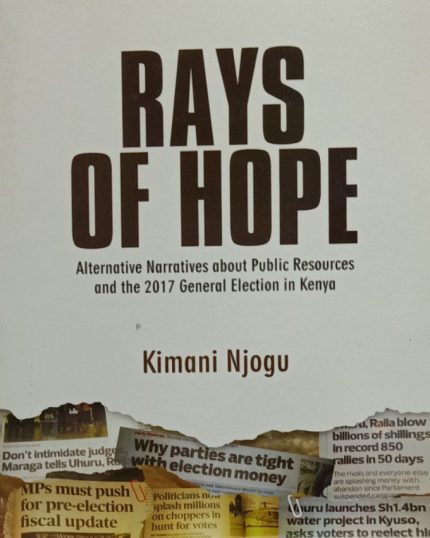
Rays of Hope: Alternative Narratives about Public Resources and the 2017 General Election in Kenya by Kimani Njogu

Books, Governance
KShs1,500.00 KShs799.00
Brief Summary Rays of Hope: Alternative Narratives about Public Resources and the 2017 General Election in Kenya by Kimani Njogu
Add to wishlist
Add to basket
Quick view
-17%Sold out

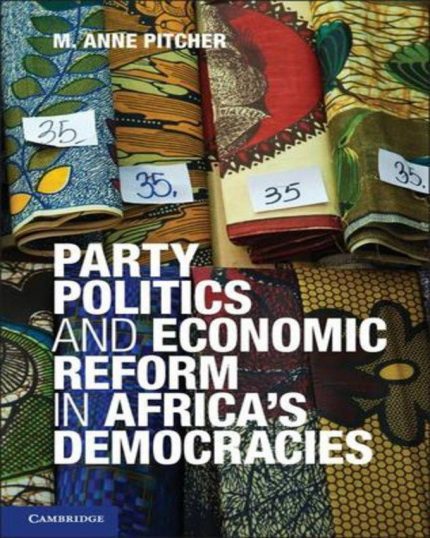
Party Politics and Economic Reform in Africa’s Democracies by M Anne Pitcher

Books, African Interest, Governance
KShs6,000.00 KShs4,999.00
Brief Summary In Party Politics and Economic Reform in Africa's Democracies, M. Anne Pitcher offers an engaging new theory to explain the different trajectories of private sector development across contemporary Africa. Pitcher argues that the outcomes of economic reforms depend not only on the kinds of institutional arrangements adopted by states in order to create or expand their private sectors, but also on the nature of party system competition and the quality of democracy in particular countries. To illustrate her claim, Pitcher draws on several original data sets covering twenty-seven countries in Africa, and detailed case studies of the privatization process in Zambia, Mozambique, and South Africa. This study underscores the importance of formal institutions and political context to the design and outcome of economic policies in developing countries.
Add to wishlist
Read more
Quick view
-17%Sold out

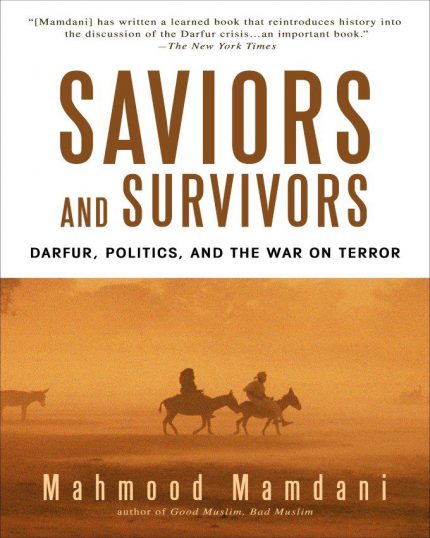
Saviors and Survivors: Darfur, Politics, and the War on Terror by Mahmood Mamdani

Books, Governance
KShs3,000.00 KShs2,499.00
Brief Summary In Saviors and Survivors, Mahmood Mamdani explains how the conflict in Darfur began as a civil war (1987—89) between nomadic and peasant tribes over fertile land in the south, triggered by a severe drought that had expanded the Sahara Desert by more than sixty miles in forty years; how British colonial officials had artificially tribalized Darfur, dividing its population into “native” and “settler” tribes and creating homelands for the former at the expense of the latter; how the war intensified in the 1990s when the Sudanese government tried unsuccessfully to address the problem by creating homelands for tribes without any. The involvement of opposition parties gave rise in 2003 to two rebel movements, leading to a brutal insurgency and a horrific counterinsurgency–but not to genocide, as the West has declared. Mamdani also explains how the Cold War exacerbated the twenty-year civil war in neighboring Chad, creating a confrontation between Libya’s Muammar al-Qaddafi (with Soviet support) and the Reagan administration (allied with France and Israel) that spilled over into Darfur and militarized the fighting. By 2003, the war involved national, regional, and global forces, including the powerful Western lobby, who now saw it as part of the War on Terror and called for a military invasion dressed up as “humanitarian intervention.” Incisive and authoritative, Saviors and Survivors will radically alter our understanding of the crisis in Darfur.
Add to wishlist
Read more
Quick view

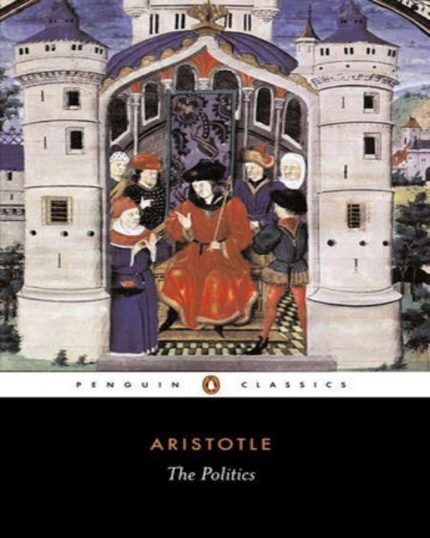
The Politics by Aristotle

Books, Dictionaries & References, Fiction and Non Fiction, Governance, Self Help & Motivation
KShs2,290.00
Brief Summary What is the relationship of the individual to the state? What is the ideal state, and how can it bring about the most desirable life for its citizens? What sort of education should it provide? What is the purpose of amassing wealth? These are some of the questions Aristotle attempts to answer in one of the most intellectually stimulating works. Both heavily influenced by and critical of Plato's Republic and Laws, Politics represents the distillation of a lifetime of thought and observation. "Encyclopaedic knowledge has never, before or since, gone hand in hand with a logic so masculine or with speculation so profound," says H. W. C. Davis in his introduction. Students, teachers, and scholars will welcome this inexpensive new edition of the Benjamin Jowett translation, as will all readers interested in Greek thought, political theory, and depictions of the ideal state.
Add to wishlist
Add to basket
Quick view
-7%

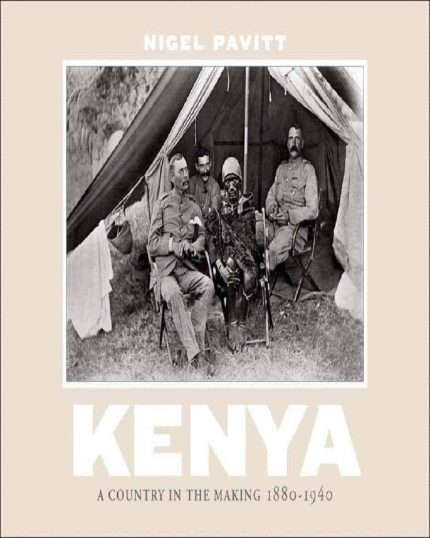
Kenya A Country in the Making 1880-1940 by Nigel Pavitt

Books, Governance, History
KShs4,500.00 KShs4,200.00
This stunning collection of 720 photographs, many of them drawn from family archives and scrapbooks and all carefully restored, is one of the most important visual records of Africa in the late nineteenth and early twentieth centuries ever to have been published. The early photographers captured the beauty and dangerous allure of life on this spectacular frontier: the ceremonies and traditional attire of the native people, the fantastic machinery used in construction of the Uganda Railway, the gradual development of trade on the coast and in the country's interior, the hardships of the East African Campaign during World War I, and the pioneering spirit of early European settlers and farmers. Many of the most famous names and places connected with Africa appear in these pages, including Karen Blixen's farm and Ernest Hemingway and Theodore Roosevelt on safari. This is a book to delight anyone who has ever traveled to East Africa or been intrigued by its history. 720 photographs
Add to wishlist
Add to basket
Quick view
-5%

Debt The First 5000 Years by David Graeber

Books, Governance
KShs3,990.00 KShs3,790.00
Brief Summary Before there was money, there was debt Every economics textbook says the same thing: Money was invented to replace onerous and complicated barter systems to relieve ancient people from having to haul their goods to market. The problem with this version of history? There’s not a shred of evidence to support it. Here anthropologist David Graeber presents a stunning reversal of conventional wisdom. He shows that for more than 5,000 years, since the beginnings of the first agrarian empires, humans have used elaborate credit systems to buy and sell goods that is, long before the invention of coins or cash. It is in this era, Graeber argues, that we also first encounter a society divided into debtors and creditors. Graeber shows that arguments about debt and debt forgiveness have been at the center of political debates from Italy to China, as well as sparking innumerable insurrections.
Add to wishlist
Add to basket
Quick view
-31%

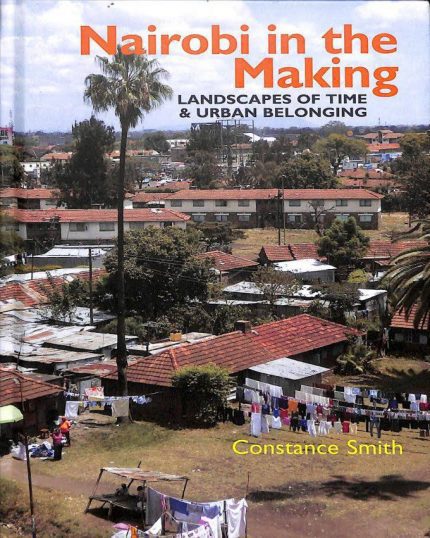
Nairobi in the Making: Landscapes of Time and Urban Belonging by Constance Smith

Books, African Interest, Governance
KShs1,590.00 KShs1,099.00
Brief Summary What does it mean to make a life in an African city today? How do ordinary Africans, surrounded by collapsing urban infrastructures and amid fantastical promises of hypermodern, globalized futures, try to ensure a place for themselves in the city's future? Exploring the relationship between the remains of empire and the global city, and themes of urban belonging and exclusion, housing and security, Constance Smith examines the making and remaking of one of Africa's most fragmented, vibrant cities. Nairobi is on the cusp of radical urban change. As in other capital cities across Africa, the Kenyan government has launched "Vision 2030", an urban megaproject that envisions the capital as a "world class metropolis", a spectacular new node in a network of global cities. Yet as a city born of British colonialism, Nairobians also live amongst the dilapidated vestiges of imperial urban planning; spaces designed to regulate urban subjects. Based on extensive ethnographic research in a dilapidated, colonial-era public housing project built as a model urban neighborhood but which is now slated for demolition, Smith explores how projects of self-making and city-making are entwined. She traces how it is through residents' everyday lives - in the mundane, incremental work of home maintenance, in the accumulation of stories about the past, in ordinary people's aspirations for the future - that urban landscapes are formed, imaginatively, materially and unpredictably, across time. Nairobi emerges as a place of pathways and plans, obstructions and aspirations, residues and endurances, that inflect the way that ordinary people produce the city, generating practices of history making, ideas about urban belonging and attempts to refashion "Vision 2030" into a future more meaningful and inclusive to ordinary city dwellers.
Add to wishlist
Add to basket
Quick view
-10%

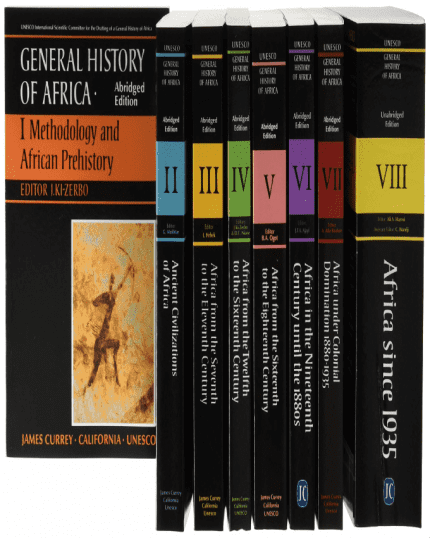
General History of Africa Complete Set of Vol 1-8 (Unesco General History of Africa)

Books, African Interest, Governance, History, Rare Books
KShs20,000.00 KShs18,000.00
This set brings together all 8 volumes of the groundbreaking Unesco General History of Africa, which are all now available again as paperbacks. The series demonstrates the importance of African history from earliest pre-history, through the establishment of its ancient civilizations to the placing of Africa in the context of world history. The growth and development of African historiography, once written records became more common, document the triumph of Islam, the extension of trading relations, cultural exchanges and human contacts, as well as the impact and consequences of the slave trade. The European scramble for colonial territory in the 1880s is examined with a focus on the responses of Africans themselves to the economic and social aspects of colonial systems up to 1935, including the growth of anti-colonial movements and the strengthening of African political nationalism. The contributions document how the continent moved from international conflict under foreign domination to struggles for political sovereignty and economic independence. The last (unabridged) volume 8 examines the challenges of nation-building and the socio-cultural changes affecting the newly independent nations.
Add to wishlist
Add to basket
Quick view
delivery

QUICK DELIVERY

Swift dispatch

ONLINE PAYMENT

Multiple options

EXPERT SUPPORT

Help when you need it

WIDE VARIETY

Thousands of books

GLOBAL SHIPPING

Worldwide delivery

  • TALK TO US
    • 0794 233261 / 0724 670194
    • nuriakenyabookstore@gmail.com
    • The Bazaar Building, 1st Floor
  • About Nuria
    • Our Story
    • Blog
    • Contact Us
  • VENDORS
    • Sell on Nuria
    • Vendor Login
    • Privacy Policy
  • USEFUL LINKS
    • Delivery Policy
    • Returns
    • Gift Card Balance
digitals-app-store-button
google-play-button

We Accept

2023 NURIA KENYA All rights reserved
  • Menu
  • Categories
  • Kenya Books
  • Rare Books
  • International Bestsellers
  • Self Help & Motivation
  • Fiction
  • Autobiography
  • Business
  • Children’s Books
  • Kids & Teens
  • African Interest
  • Educational Books
  • Romances & Thrillers
  • Home
  • Shop
  • Gift Card
  • About Us
  • Nuria App
  • Contact Us
  • Wishlist
  • Login / Register
Shopping cart
Close
Sign in
Close

Lost your password?

No account yet?

Create an Account
Shop
Sidebar
0 Wishlist
0 items Cart
My account