
ENJOY FREE DELIVERY WITHIN NAIROBI FOR ORDERS ABOVE 10,000
Nuria App
Kenyan Shilling (KSh)
  • Kenyan Shilling (KSh)
  • United States (US) dollar ($)
  • Pound sterling (£)
  • Ugandan Shilling (UGX)
0 Wishlist
Login / Register
  • Home
  • Shop
  • Kenyan Books
  • Rare Books
  • Gift Card
  • Blog
  • Contact Us
  • SELL ON NURIA
  • VENDOR LOGIN
Menu
0 items KShs0.00
Browse Categories
  • Kenya Books
  • Rare Books
  • International Bestsellers
  • Self Help & Motivation
  • Fiction
  • Autobiography
  • Business
  • Children’s Books
  • Kids & Teens
  • African Interest
  • Educational Books
  • Romances & Thrillers
HELP / SUPPORT

0794 233 261

0 items KShs0.00
Click to enlarge
Home Books Governance The cost of Betrayal by Abdikarim Ibrahim
Elimutab ET04 Pro Memory 32GB Tablet Android 7 inch Assorted colour Age- 1 Year to 10 Years KShs10,000.00
Back to products
Still I Rise-Overcoming Addiction, Reclaiming Faith and Rediscovering Purpose by Caroline Kagia KShs2,000.00

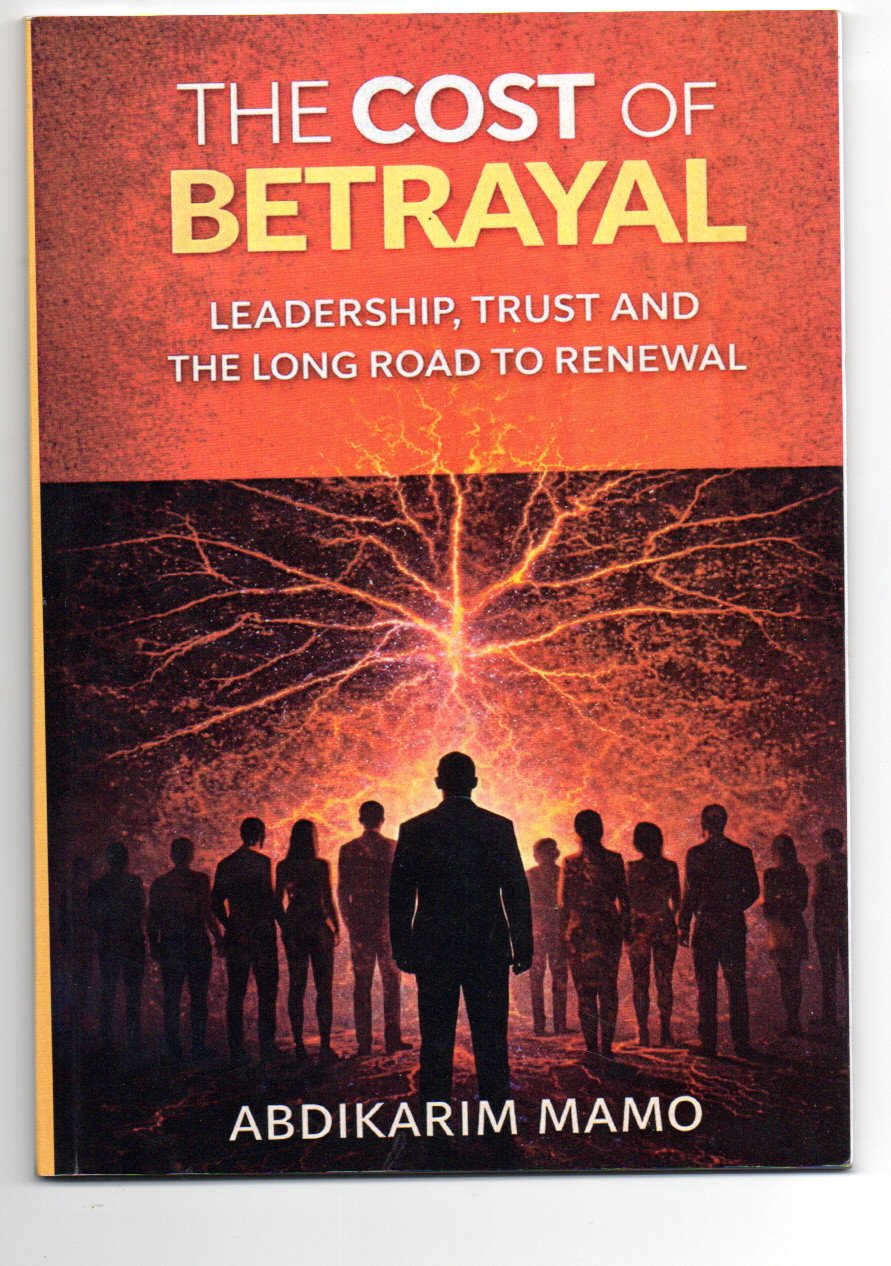
The cost of Betrayal by Abdikarim Ibrahim

KShs1,200.00

Nuria Ranking: #97 in Governance

In stock

Purchase this product now and earn 2 Points!

Here’s a brief synopsis of The Cost of Betrayal: Leadership, Integrity and the Future of Communities:

The book examines how betrayal—through dishonesty, self-interest, and broken promises—undermines leadership and weakens communities. It argues that even well-intentioned leadership systems can gradually decay when accountability is lost and ambition takes priority over integrity.

Rather than blaming individuals alone, the author explores deeper cultural issues such as silence, fear, and the acceptance of unethical behavior, which allow betrayal to become normalized. These patterns erode trust, discourage public participation, and create cycles of mistrust that persist over time.

Importantly, the book is not just critical—it offers a solution. It calls for a return to ethical leadership grounded in honesty, accountability, and service, urging both leaders and citizens to take shared responsibility in rebuilding trust and strengthening communities. 

Add KShs10,000.00 worth of products to your cart for free delivery within Nairobi!
Add to wishlist
Category: Governance Tag: Adult Only
Share:
Close
  • Shipping
  • Reviews (0)
  • Vendor Info
  • More Products
Shipping
Reviews (0)
Rated 0 out of 5
0 reviews
Rated 5 out of 5
0
Rated 4 out of 5
0
Rated 3 out of 5
0
Rated 2 out of 5
0
Rated 1 out of 5
0

Reviews

Clear filters

There are no reviews yet.

Be the first to review “The cost of Betrayal by Abdikarim Ibrahim” Cancel reply

Your email address will not be published. Required fields are marked *


Vendor Info

Vendor Information

  • Store Name: Abdikarim Ibrahim
  • Vendor: Abdikarim Ibrahim
  • No ratings found yet!
More Products
No product has been found!

Related products

-20%

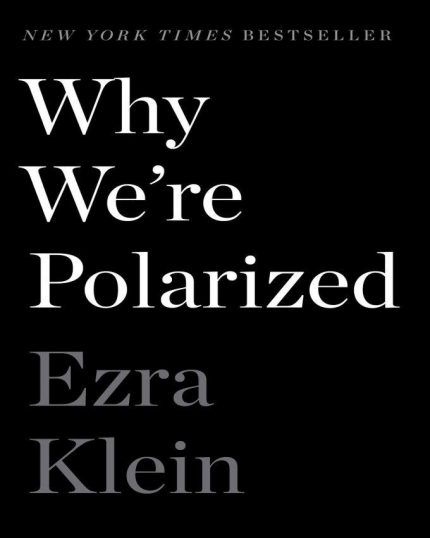
Why We’re Polarized Book by Ezra Klein

Books, Governance
KShs3,000.00 KShs2,399.00
Brief Summary Discover how American politics became a toxic system, why we participate in it, and what it means for our future--from journalist, political commentator, and cofounder of Vox, Ezra Klein. After Election Day 2016, both supporters and opponents of the soon-to-be president hailed his victory as a historically unprecedented event. Most Americans could agree that no candidate like Donald Trump had ever been elected President before. But political journalist Ezra Klein makes the case that the 2016 election wasn't surprising at all. In fact, Trump's electoral victory followed the exact same template as previous elections, by capturing a nearly identical percentage of voter demographics as previous Republican candidates. Over the past 50 years in America, our partisan identities have merged with our racial, religious, geographic, ideological, and cultural identities. Those merged identities have attained a weight that is breaking much in our politics and tearing at the bonds that hold this country together. In this groundbreaking book, Klein shows how and why American politics polarized around identity in the 20th century, and what that polarization did to the way we see the world and each other. And he traces the feedback loops between our polarized political identities and our polarized political institutions that are driving our political system towards crisis. Neither a polemic nor a lament, Klein offers a clear framework for understanding everything from Trump's rise to the Democratic Party's leftward shift to the politicization of everyday culture. A revelatory book that will change how you look at politics, and perhaps at yourself.
Add to wishlist
Add to basket
Quick view
-44%

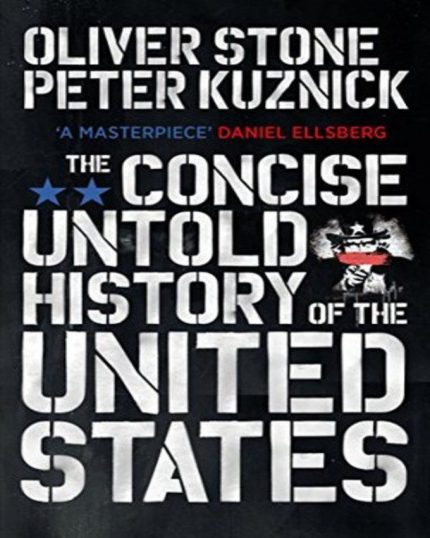
The Concise Untold History of the United States by Oliver Stone and Peter Kuznick

Books, Governance
KShs2,500.00 KShs1,399.00
Brief Summary A companion to Oliver Stone’s ten-part documentary series of the same name, this guide offers a people’s history of the American Empire: “a critical overview of US foreign policy…indispensable” (former Soviet president Mikhail Gorbachev); “brilliant, a masterpiece!” (Daniel Ellsberg); “Oliver Stone’s new book is as riveting, eye-opening, and thought-provoking as any history book you will ever read. It achieves what history, at its best, ought to do: presents a mountain of previously unknown facts that makes you question and re-examine many of your long-held assumptions about the most influential events” (Glenn Greenwald). In November 2012, Showtime debuted a ten-part documentary series based on Oliver Stone and Peter Kuznick’s The Untold History of the United States. The book and documentary looked back at human events that, at the time, went underreported, but also crucially shaped America’s unique and complex history over the twentieth century. From the atomic bombing of Japan to the Cold War and fall of Communism, this concise version of the larger book is adapted for the general reader. Complete with poignant photos, arresting illustrations, and little-known documents, The Concise Untold History of the United States covers the rise of the American empire and national security state from the late nineteenth century through the Obama administration, putting it all together to show how deeply rooted the seemingly aberrant policies of the Bush-Cheney administration are in the nation’s past and why it has proven so difficult for Obama to change course. In this concise and indispensible guide, Kuznick and Stone (who Pulitzer Prize-winning historian Garry Wills has called America’s own “Dostoevsky behind a camera”) challenge prevailing orthodoxies to reveal the dark truth about the rise and fall of American imperialism
Add to wishlist
Add to basket
Quick view
-30%Sold out

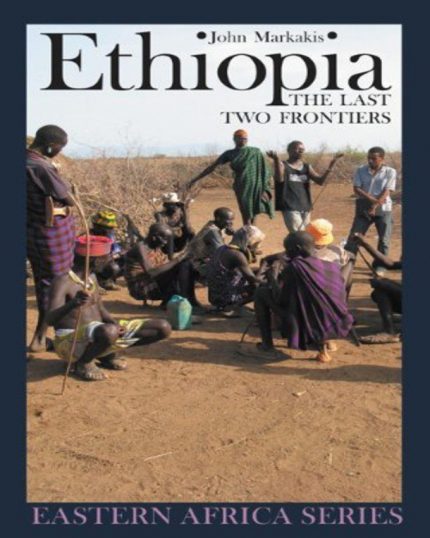
Ethiopia: The Last Two Frontiers by John Markakis

Books, Governance
KShs6,000.00 KShs4,199.00
Brief Summary Provides the gist of one scholar's knowledge of this country acquired over several decades. The author of numerous works on Ethiopia, Markakis presents here an overarching, concise historical profile of a momentous effort to integrate a multicultural empire into a modern nation state. The concept of nation state formation provides the analytical framework within which this process unfolds and the changes of direction it takes under different regimes, as well as a standard for assessing its progress and shortcomings at each stage. Over a century old, the process is still far from completion and its ultimate success is far from certain. In the author's view, there are two major obstacles that need to be overcome, two frontiers that need to be crossed to reach the desired goal. The first is the monopoly of power inherited from the empire builders and zealously guarded ever since by a ruling class of Abyssinian origin. The descendants of the people subjugated by the empire builders remain excluded from power, a handicap that breeds political instability and violent conflict. The second frontier is the arid lowlands on the margins of the state, where the process of integration has not yet reached, and where resistance to it is greatest. Until this frontier is crossed, the Ethiopian state will not have the secure borders that a mature nation state requires. John Markakis is a political historian who has devoted a professional lifetime to the study of Ethiopia and its neighbours in the Horn of Africa. He has published several books and many articles on this area.
Add to wishlist
Read more
Quick view
-9%

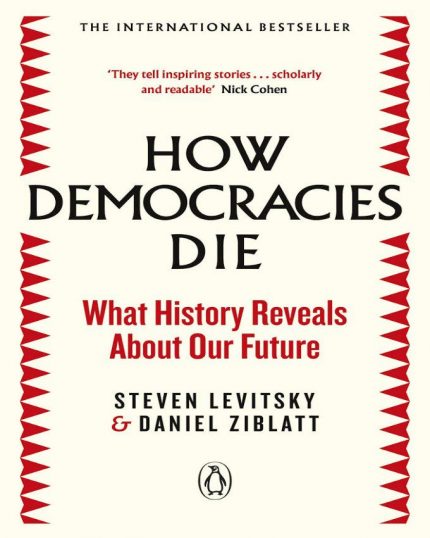
How Democracies Die by Steven Levitsky and Daniel Ziblatt

Books, Governance, International Bestsellers
KShs2,190.00 KShs1,990.00
Donald Trump’s presidency has raised a question that many of us never thought we’d be asking: Is our democracy in danger? Harvard professors Steven Levitsky and Daniel Ziblatt have spent more than twenty years studying the breakdown of democracies in Europe and Latin America, and they believe the answer is yes. Democracy no longer ends with a bang—in a revolution or military coup—but with a whimper: the slow, steady weakening of critical institutions, such as the judiciary and the press, and the gradual erosion of long-standing political norms. The good news is that there are several exit ramps on the road to authoritarianism. The bad news is that, by electing Trump, we have already passed the first one. Drawing on decades of research and a wide range of historical and global examples, from 1930s Europe to contemporary Hungary, Turkey, and Venezuela, to the American South during Jim Crow, Levitsky and Ziblatt show how democracies die—and how ours can be saved.
Add to wishlist
Add to basket
Quick view
-28%

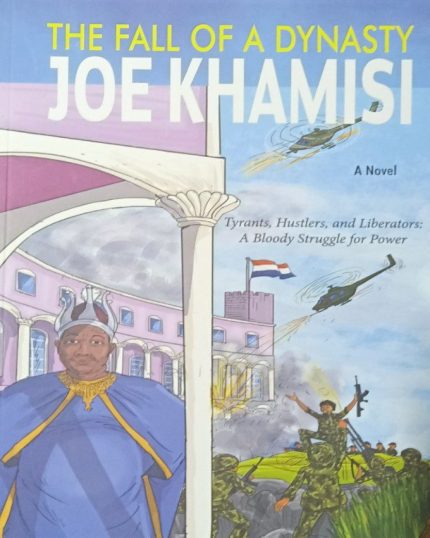
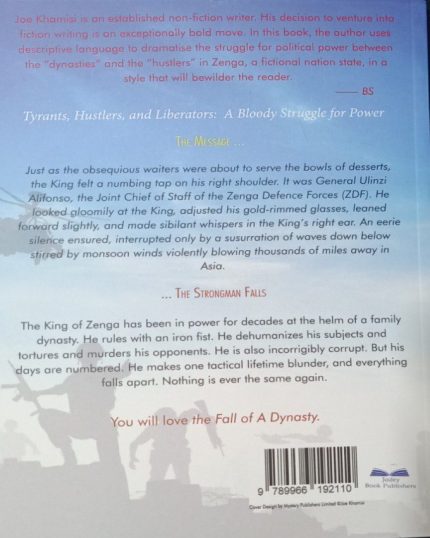
The Fall of A dynasty by Joe Khamisi

Books, Governance, Kenya Fiction
Rated 4.00 out of 5
KShs1,390.00 KShs999.00
Brief Summary The Fall of A dynasty Tyrants hustlers and Liberators A bloody struggle for power by Joe Khamisi
Add to wishlist
Add to basket
Quick view
-21%

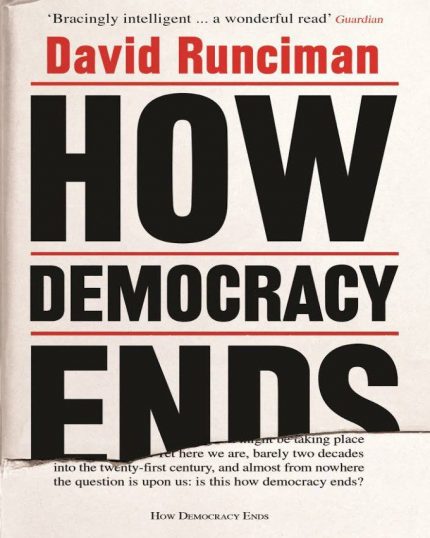
How Democracy Ends by David Runciman

Books, African Interest, Governance
KShs1,899.00 KShs1,499.00
Brief Summary Since the end of World War II, democracy's sweep across the globe seemed inexorable. Yet today, it seems radically imperiled, even in some of the world's most stable democracies. How bad could things get? In How Democracy Ends, David Runciman argues that we are trapped in outdated twentieth-century ideas of democratic failure. By fixating on coups and violence, we are focusing on the wrong threats. Our societies are too affluent, too elderly, and too networked to fall apart as they did in the past. We need new ways of thinking the unthinkable -- a twenty-first-century vision of the end of democracy, and whether its collapse might allow us to move forward to something better. A provocative book by a major political philosopher, How Democracy Ends asks the most trenchant questions that underlie the disturbing patterns of our contemporary political life.
Add to wishlist
Add to basket
Quick view
-31%

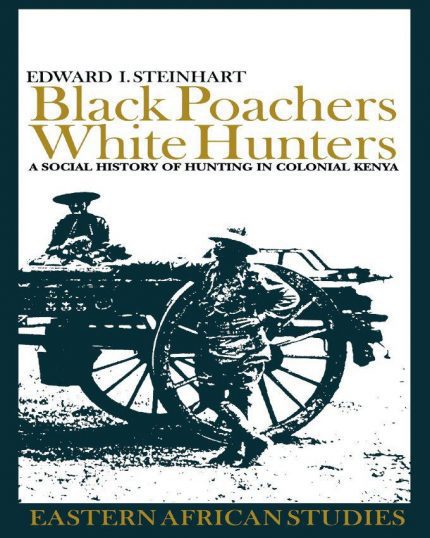
Black Poachers White Hunters A Social History of Hunting in Colonial Kenya by Edward I Steinhart

Books, African Interest, Governance
KShs4,500.00 KShs3,099.00
Brief Summary For centuries, Kenya's game-laden plains and forests were the rewarding hunting grounds of her native African population. Black Poachers, White Hunters traces the history of hunting there in the colonial era, describing the British attempt to impose the practices and values of nineteenth-century European aristocratic hunts. This both created and enforced an image of African inferiority and subordination. Ultimately conservationists came to claim sovereignty over African wildlife, completing the transformation of indigenous hunters into criminal poachers and seeking to eliminate them altogether from the "sportsman's paradise" of Kenya.ABOUT THE AUTHOR---Edward I. Steinhart is an associate professor of history at Texas Tech University, Lubbock.
Add to wishlist
Add to basket
Quick view
-26%

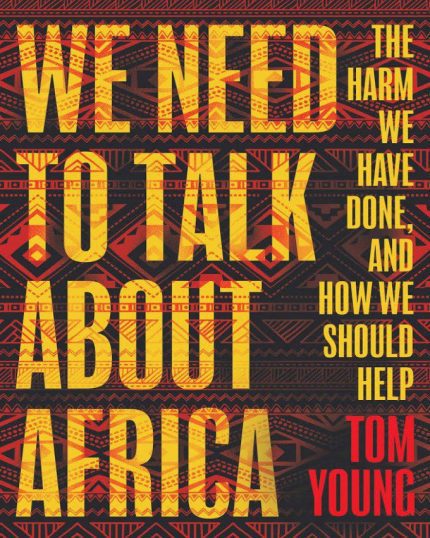
We Need to Talk About Africa: The Harm We Have Done, and how We Should Help

Books, African Interest, Energy, Governance, History, International Bestsellers
Rated 5.00 out of 5
KShs1,890.00 KShs1,399.00
Brief Summary If you boil a kettle twice today, you will have used five times more electricity than a person in Mali uses in a whole year. How can that be possible? Decades after the colonial powers withdrew Africa is still struggling to catch up with the rest of the world. When the same colonists withdrew from Asia there followed several decades of sustained and unprecedented growth throughout the continent. So what went wrong in Africa? And are we helping to fix it, or simply making matters worse? In this provocative analysis, Tom Young argues that so much has been misplaced: our guilt, our policies, and our aid. Human rights have become a cover for imposing our values on others, our shiniest infrastructure projects have fuelled corruption and our interference in domestic politics has further entrenched conflict. Only by radically changing how we think about Africa can we escape this vicious cycle.
Add to wishlist
Add to basket
Quick view
-17%Sold out

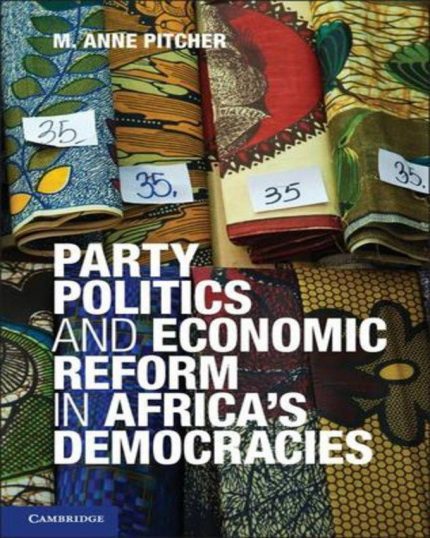
Party Politics and Economic Reform in Africa’s Democracies by M Anne Pitcher

Books, African Interest, Governance
KShs6,000.00 KShs4,999.00
Brief Summary In Party Politics and Economic Reform in Africa's Democracies, M. Anne Pitcher offers an engaging new theory to explain the different trajectories of private sector development across contemporary Africa. Pitcher argues that the outcomes of economic reforms depend not only on the kinds of institutional arrangements adopted by states in order to create or expand their private sectors, but also on the nature of party system competition and the quality of democracy in particular countries. To illustrate her claim, Pitcher draws on several original data sets covering twenty-seven countries in Africa, and detailed case studies of the privatization process in Zambia, Mozambique, and South Africa. This study underscores the importance of formal institutions and political context to the design and outcome of economic policies in developing countries.
Add to wishlist
Read more
Quick view
-11%

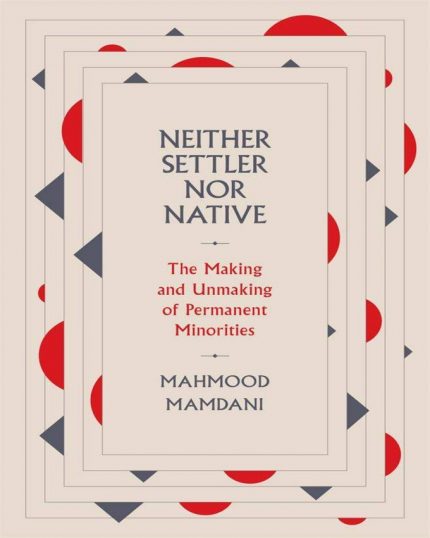
Neither Settler nor Native: The Making and Unmaking of Permanent Minorities by Mahmood Mamdani

Books, Governance
KShs3,500.00 KShs3,100.00
Brief Summary Making the radical argument that the nation-state was born of colonialism, this book calls us to rethink political violence and reimagine political community beyond majorities and minorities. In this genealogy of political modernity, Mahmood Mamdani argues that the nation-state and the colonial state created each other. In case after case around the globe―from the New World to South Africa, Israel to Germany to Sudan―the colonial state and the nation-state have been mutually constructed through the politicization of a religious or ethnic majority at the expense of an equally manufactured minority. The model emerged in North America, where genocide and internment on reservations created both a permanent native underclass and the physical and ideological spaces in which new immigrant identities crystallized as a settler nation. In Europe, this template would be used by the Nazis to address the Jewish Question, and after the fall of the Third Reich, by the Allies to redraw the boundaries of Eastern Europe’s nation-states, cleansing them of their minorities. After Nuremberg the template was used to preserve the idea of the Jews as a separate nation. By establishing Israel through the minoritization of Palestinian Arabs, Zionist settlers followed the North American example. The result has been another cycle of violence. Neither Settler nor Native offers a vision for arresting this historical process. Mamdani rejects the “criminal” solution attempted at Nuremberg, which held individual perpetrators responsible without questioning Nazism as a political project and thus the violence of the nation-state itself. Instead, political violence demands political solutions: not criminal justice for perpetrators but a rethinking of the political community for all survivors―victims, perpetrators, bystanders, beneficiaries―based on common residence and the commitment to build a common future without the permanent political identities of settler and native. Mamdani points to the anti-apartheid struggle in South Africa as an unfinished project, seeking a state without a nation.
Add to wishlist
Add to basket
Quick view
-17%

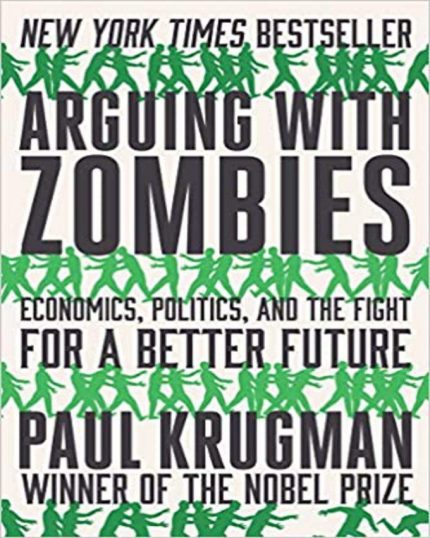
Arguing with Zombies: Economics, Politics, and the Fight for a Better Future by Paul Krugman

Books, Governance, International Bestsellers, Self Help & Motivation
KShs3,000.00 KShs2,499.00
There is no better guide than Paul Krugman to basic economics, the ideas that animate much of our public policy. Likewise, there is no stronger foe of zombie economics, the misunderstandings that just won’t die. In Arguing with Zombies, Krugman tackles many of these misunderstandings, taking stock of where the United States has come from and where it’s headed in a series of concise, digestible chapters. Drawn mainly from his popular New York Times column, they cover a wide range of issues, organized thematically and framed in the context of a wider debate. Explaining the complexities of health care, housing bubbles, tax reform, Social Security, and so much more with unrivaled clarity and precision, Arguing with Zombies is Krugman at the height of his powers. Arguing with Zombies puts Krugman at the front of the debate in the 2020 election year and is an indispensable guide to two decades’ worth of political and economic discourse in the United States and around the globe. With quick, vivid sketches, Krugman turns his readers into intelligent consumers of the daily news and hands them the keys to unlock the concepts behind the greatest economic policy issues of our time. In doing so, he delivers an instant classic that can serve as a reference point for this and future generations.
Add to wishlist
Add to basket
Quick view
-17%Sold out

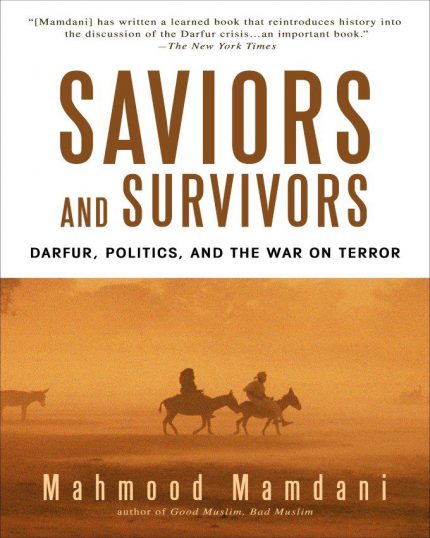
Saviors and Survivors: Darfur, Politics, and the War on Terror by Mahmood Mamdani

Books, Governance
KShs3,000.00 KShs2,499.00
Brief Summary In Saviors and Survivors, Mahmood Mamdani explains how the conflict in Darfur began as a civil war (1987—89) between nomadic and peasant tribes over fertile land in the south, triggered by a severe drought that had expanded the Sahara Desert by more than sixty miles in forty years; how British colonial officials had artificially tribalized Darfur, dividing its population into “native” and “settler” tribes and creating homelands for the former at the expense of the latter; how the war intensified in the 1990s when the Sudanese government tried unsuccessfully to address the problem by creating homelands for tribes without any. The involvement of opposition parties gave rise in 2003 to two rebel movements, leading to a brutal insurgency and a horrific counterinsurgency–but not to genocide, as the West has declared. Mamdani also explains how the Cold War exacerbated the twenty-year civil war in neighboring Chad, creating a confrontation between Libya’s Muammar al-Qaddafi (with Soviet support) and the Reagan administration (allied with France and Israel) that spilled over into Darfur and militarized the fighting. By 2003, the war involved national, regional, and global forces, including the powerful Western lobby, who now saw it as part of the War on Terror and called for a military invasion dressed up as “humanitarian intervention.” Incisive and authoritative, Saviors and Survivors will radically alter our understanding of the crisis in Darfur.
Add to wishlist
Read more
Quick view
-16%

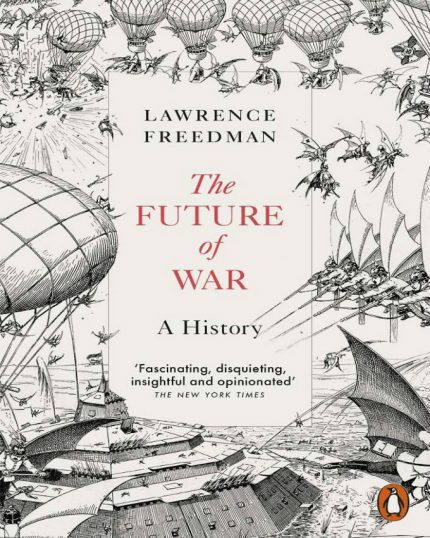
The Future of War A History by Lawrence Freedman

Books, Governance
KShs1,899.00 KShs1,599.00
Brief Summary In 1912, Sir Arthur Conan Doyle, creator of Sherlock Holmes, wrote a short story about a war fought from underwater submersibles that included the sinking of passenger ships. At the time, it was dismissed by the British generals and admirals of the day not because the idea of submarines was technically unfeasible, but because no one could imagine that any nation would be so depraved as to sink civilian merchant ships. The future of war more often than not surprises us less because of some fantastic technical or engineering dimension but because of some human, political, or moral threshold that we had never imagined wanting to cross. As Lawrence Freedman shows, the future of war has a past and a present. Ideas of war, strategies for warfare and its practice, and organizing principles of war all have rich and varied origins which have shaped the minds of those who conceive the next war. Freedman shows how war can be studied systematically and empirically to provide a firm foundation for enlightened policy. The Future of War—which covers civil wars to as yet unknown nuclear conflicts, proxy wars (real) to the Cold War (not), fashionably small wars to the War to End All Wars (it didn’t)—is filled with insight and fascinating nuggets of military history and culture from one of the most brilliant military and strategic historians of his generation.
Add to wishlist
Add to basket
Quick view

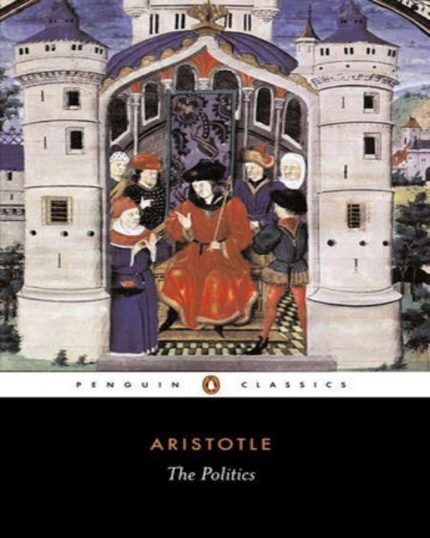
The Politics by Aristotle

Books, Dictionaries & References, Fiction and Non Fiction, Governance, Self Help & Motivation
KShs2,290.00
Brief Summary What is the relationship of the individual to the state? What is the ideal state, and how can it bring about the most desirable life for its citizens? What sort of education should it provide? What is the purpose of amassing wealth? These are some of the questions Aristotle attempts to answer in one of the most intellectually stimulating works. Both heavily influenced by and critical of Plato's Republic and Laws, Politics represents the distillation of a lifetime of thought and observation. "Encyclopaedic knowledge has never, before or since, gone hand in hand with a logic so masculine or with speculation so profound," says H. W. C. Davis in his introduction. Students, teachers, and scholars will welcome this inexpensive new edition of the Benjamin Jowett translation, as will all readers interested in Greek thought, political theory, and depictions of the ideal state.
Add to wishlist
Add to basket
Quick view
-25%

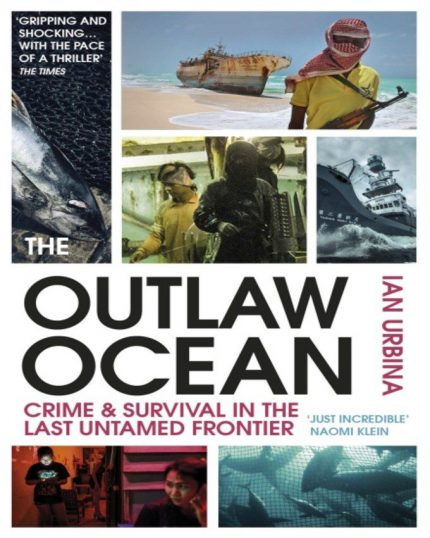
The Outlaw Ocean Crime and Survival in the Last Untamed Frontier by Ian Urbina

Books, African Interest, Governance
KShs1,599.00 KShs1,199.00
Add to wishlist
Add to basket
Quick view
-20%

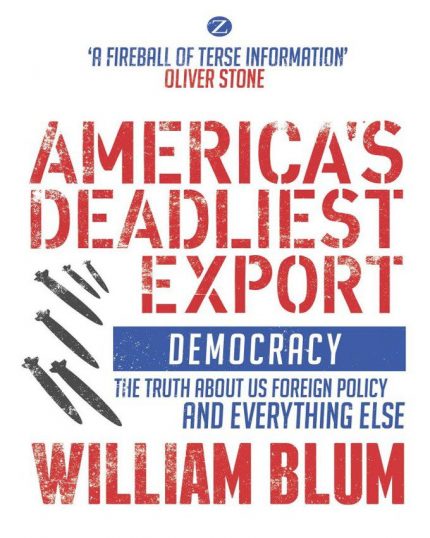
America’s Deadliest Export: Democracy The Truth About US Foreign Policy and Everything Else by William Blum

Books, Governance
KShs2,500.00 KShs1,999.00
Brief Summary For over sixty-five years, the United States war machine has been on automatic pilot. Since World War II we have been conditioned to believe that America's motives in 'exporting' democracy are honorable, even noble. In this startling and provocative book, William Blum, a leading dissident chronicler of US foreign policy and the author of controversial bestseller Rogue State, argues that nothing could be further from the truth. Moreover, unless this fallacy is unlearned, and until people understand fully the worldwide suffering American policy has caused, we will never be able to stop the monster.
Add to wishlist
Add to basket
Quick view
delivery

QUICK DELIVERY

Swift dispatch
ONLINE PAYMENT

Multiple options

EXPERT SUPPORT

Help when you need it

WIDE VARIETY

Thousands of books

GLOBAL SHIPPING

Worldwide delivery

  • TALK TO US
    • 0794 233261 / 0724 670194
    • nuriakenyabookstore@gmail.com
    • The Bazaar Building, 1st Floor
  • About Nuria
    • Our Story
    • Blog
    • Contact Us
  • VENDORS
    • Sell on Nuria
    • Vendor Login
    • Privacy Policy
  • USEFUL LINKS
    • Delivery Policy
    • Returns
    • Gift Card Balance
digitals-app-store-button
google-play-button

We Accept

2023 NURIA KENYA All rights reserved
  • Menu
  • Categories
  • Kenya Books
  • Rare Books
  • International Bestsellers
  • Self Help & Motivation
  • Fiction
  • Autobiography
  • Business
  • Children’s Books
  • Kids & Teens
  • African Interest
  • Educational Books
  • Romances & Thrillers
  • Home
  • Shop
  • Gift Card
  • About Us
  • Nuria App
  • Contact Us
  • Wishlist
  • Login / Register
Shopping cart
Close
Sign in
Close

Lost your password?

No account yet?

Create an Account
Shop
Sidebar
0 Wishlist
0 items Cart
My account