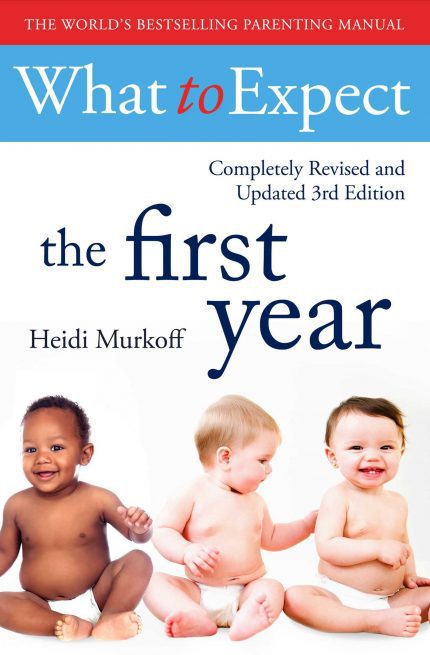
Announcing the completely revised third edition of What to Expect the First Year. With over 10.5 million copies in print, First Year is the world’s best-selling, best-loved guide to the instructions that babies don’t come with, but should. And now, it’s better than ever. Every parent’s must-have/go-to is completely updated.
Keeping the trademark month-by-month format that allows parents to take the potentially overwhelming first year one step at a time, First Year is easier-to-read, faster-to-flip-through, and new-family-friendlier than ever?packed with even more practical tips, realistic advice, and relatable, accessible information than before. Illustrations are new, too.
Among the changes: Baby care fundamentals?crib and sleep safety, feeding, vitamin supplements?are revised to reflect the most recent guidelines. Breastfeeding gets more coverage, too, from getting started to keeping it going. Hot-button topics and trends are tackled: attachment parenting, sleep training, early potty learning (elimination communication), baby-led weaning, and green parenting (from cloth diapers to non-toxic furniture). An all-new chapter on buying for baby helps parents navigate through today’s dizzying gamut of baby products, nursery items, and gear.
Also new: tips on preparing homemade baby food, the latest recommendations on starting solids, research on the impact of screen time (TVs, tablets, apps, computers), and “For Parents” boxes that focus on mom’s and dad’s needs. Throughout, topics are organized more intuitively than ever, for the best user experience possible."





















Nancy Kemuma –
There’s a kind of medicine we romanticize. Spotless hospitals, a medical doctor who looks at you and simply knows the genesis of your pain, or a body that never betrays you.
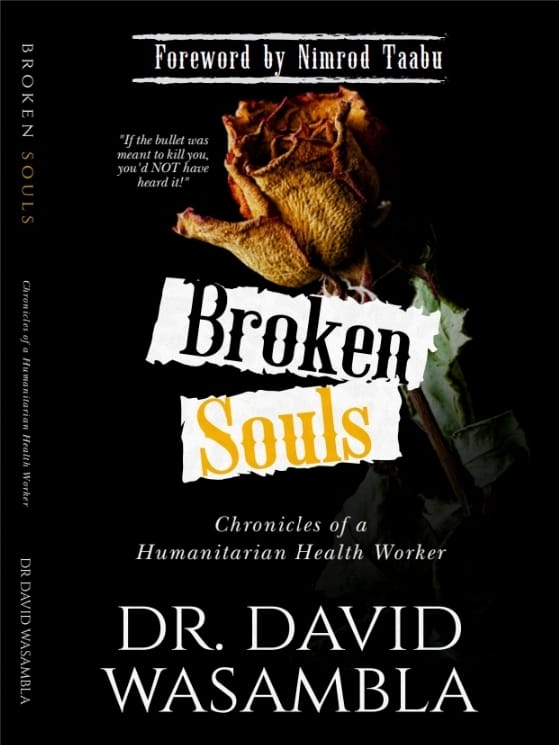
Then there is the version that lives in the pages of Broken Souls – Chronicles of a Humanitarian Worker by Dr David Wasambla. This memoir is written in a way that is as unpredictable as it is gripping.
This book pulls you in slowly without rushing. You begin to see what it means to practice medicine where systems have collapsed, where roads disappear, and where help often arrives late, if at all. Places where a doctor is not just a doctor, but a bridge between life and something far more uncertain.
It deepens in the in-between moments. The stints of joblessness that follow intense missions. The sudden stillness after constant urgency. The faces of patients you could not save. The questions that do not have clean answers. You begin to understand that the work does not end when the assignment does. It follows you and forever imprints your memory.
A theme that comes out strongly is the emotional cost and how it shows up in what the medical doctors carry. Imagine witnessing war up close through the sound of air raids, the silence after something has been lost. Or standing at the edge of the unknown, responding to the first case of Ebola outbreak in Liberia, where fear is immediate and contagious. These are not moments you clock out from. They settle into the mind. And yet, there is rarely space to process them.
The book also explores the weight of being an outsider in a foreign land. The sharp edges of racism and the constant awareness that even in service, you are being seen and judged by your appearance. It lingers in the background, but never really leaves.
It is not an easy read. But if you have ever wondered what it truly costs to save a life beyond the walls of a hospital, this book will answer you without flinching.
Read the book slowly and let it sit with you.
You’ll love this book if:
✅You want to understand the human side of medicine
✅You’re drawn to memoirs that don’t filter the truth
✅You value stories that hold both grief and hope simultaneously