














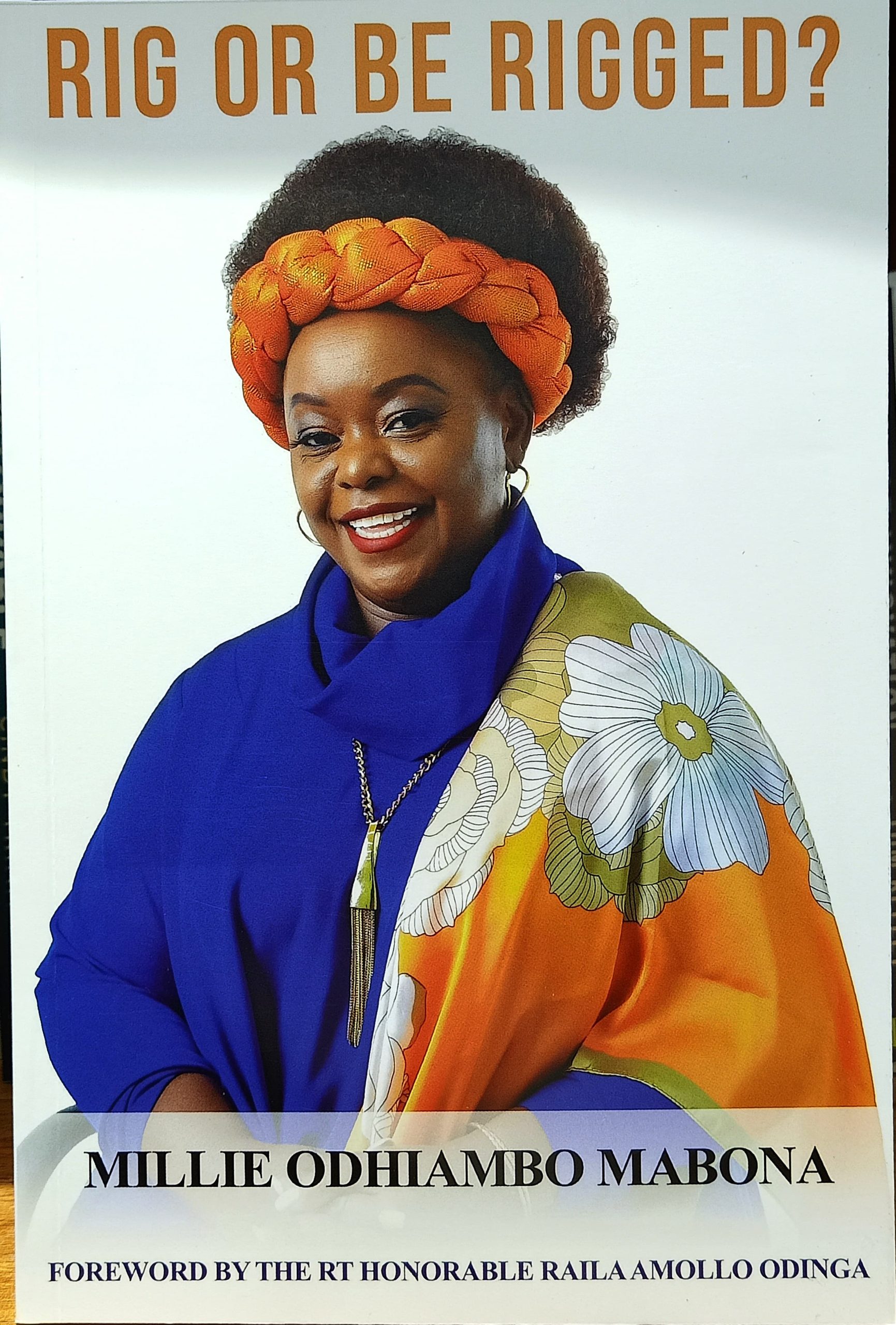

Hon Millie Odhiambo-Mabona is a lawyer, author, actor, poet, coach, mentor, philanthropist, motivational speaker, an award-winning human rights activist and a politician. She has a distinguished career in law and public service, having served as a member of Parliament of Kenya for four terms, a member of the Pan African Parliament, Executive Member of the PGA and President of on The Human Rights of Parliamentarians The Committee of The Inter-parliamentary Union. She has acted as a technical advisor and/or consultant to the government of Kenya, UN agencies, international organizations parliaments in Africa. and different
This is her first political leadership book based largely on her experiences and that of other distinguished women leaders. The lessons are couched as principles and explore the world of realpolitik for women in Africa. It address pertinent issues in the
political arena for women such as:
1) No manners please, we are in politics.
2) The “Bottoms” Up approach.
3) Is Bad Really Bad?
4) Tantalizing or Soft Power
5) The Power Facade







Gabriel Oguda –
I had hoped to finish reading this book within three days after its launch earlier this month, but that was hardly possible with the unexpected events life threw my way. While I was eagerly planning to dive into its pages, circumstances kept me reaching for my bowl of popcorn instead, as certain distractions demanded my full attention. Nonetheless, when I finally started reading, I realized the wait was worthwhile, for this book delves into the complex layers of Kenyan politics in a way that few do, offering a unique glimpse into the life and legacy of Millie Grace Akoth Odhiambo Mabona.
Millie is a character who defies simple definitions. Known widely as the “Bad Girl of Kenyan politics,” her fierce, outspoken demeanor has earned her a reputation of unpredictability and relentlessness. Millie herself admits that her fearless approach stems from her roots in African feminism, though this is only one of many layers that shape her story. Through the foreword by Raila Odinga and the following chapters, readers quickly see beyond the media’s portrayal of Millie as a source of chaos, instead discovering a politician with an unwavering sense of purpose. Beneath the tough exterior is a vulnerable woman deeply affected by the often brutal nature of Kenyan politics, and someone who, had she not become an MP, could have easily thrived in a humanitarian role.
As the pages unfold, Millie’s journey reveals the raw realities of political life, including tales of betrayal, loyalty, and survival. She recounts her initiation into politics during the 2007 post-election violence and the defining moments that followed, likening herself to a political “big game hunter.” Much like a football player rising to the occasion in critical matches, Millie saw herself prepared to face Kenya’s fiercest political challenges head-on. She reflects on the political figures she crossed paths with, from Oburu Oginga to Gerald Otieno Kajwang, and the personal costs of political allegiances. This book is not only a window into her world but also an eye-opener for those considering a political career in Kenya, cautioning them to brace for the storms that come with it.