














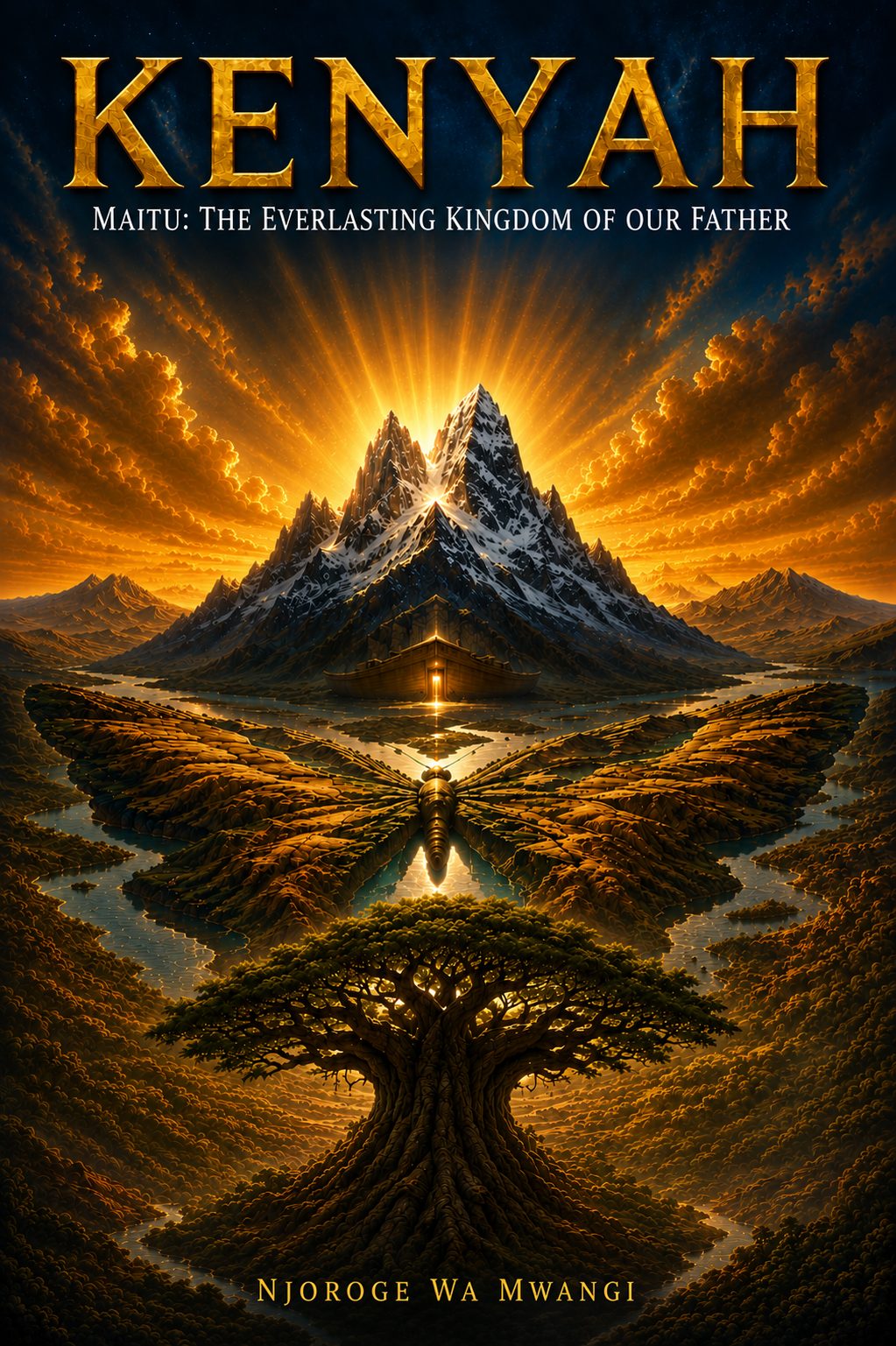

KENYAH MAITU: The Everlasting Kingdom of our Father. A Sacred Mandate for Spiritual, Cultural, and Constitutional Restoration By Njoroge wa Mwangi Joseph. Overview: KENYAH MAITU: The Everlasting Kingdom of our Father is a legal, cultural, and spiritual manifesto that challenges the colonial narrative of Kenya’s history. Authored by advocate and cultural custodian Njoroge wa Mwangi, the book calls for an awakening of the Kenyan people to shed colonial amnesia, reclaim their pre-colonial identity, and restore their ancestral covenant with the land and the Divine Creator (Ngai). Key Themes & Concept: The Dual Identity of the Nation:
The author argues that Kenya is not a colonial invention born out of the 1884–1885 Berlin Conference, but rather KEN-YAH (“The Light of YAH”), an ancient, sovereign, and sacred homeland. Māitū (The Living Ark): Drawing from African cosmology and sacred texts, the land is honored as Māitū (“Our Living Truth”), a living mother and protective vessel that has preserved ancestral bloodlines and covenants despite centuries of imperial occupation.
Sacred Geography & Mount Zion: The book maps Kenya’s physical landscapes to biblical geography, positioning Mount Kīrīnyaga (Mount Kenya) as the true Mount Zion—the primary altar of light and resting place of the Almighty. Other geographic landmarks across Kenya’s counties are similarly aligned with scriptural sites.
Tribal Mapping & Israelite Ancestry: The text presents a detailed framework mapping indigenous Kenyan ethnic groups (Bantu, Nilotic, and Cushitic) to the 12 biblical Tribes of Israel, detailing their historical, spiritual, and territorial callings.
The High Court Petition: Functioning as a legal framework as well as a book, the text outlines a petition to be filed in the High Court of Kenya. It cites constitutional breaches (under Articles 10, 11, 44, and 60) and demands state action to overhaul the national education curriculum, restore indigenous names to landmarks, and protect sacred sites. Personal Testimony: Interwoven throughout the text is the author’s personal journey—from colonial language erasure and corporate alienation to personal addiction recovery, ancestral lineage tracing, and his defense of sacred sites like Gīthūngūri Kīa Wairera.
Who It’s For: This book appeals to readers interested in African indigenous history, constitutional law, spiritual theology, decolonization movements, and the reclamation of cultural identity.



Reviews
Clear filtersThere are no reviews yet.