














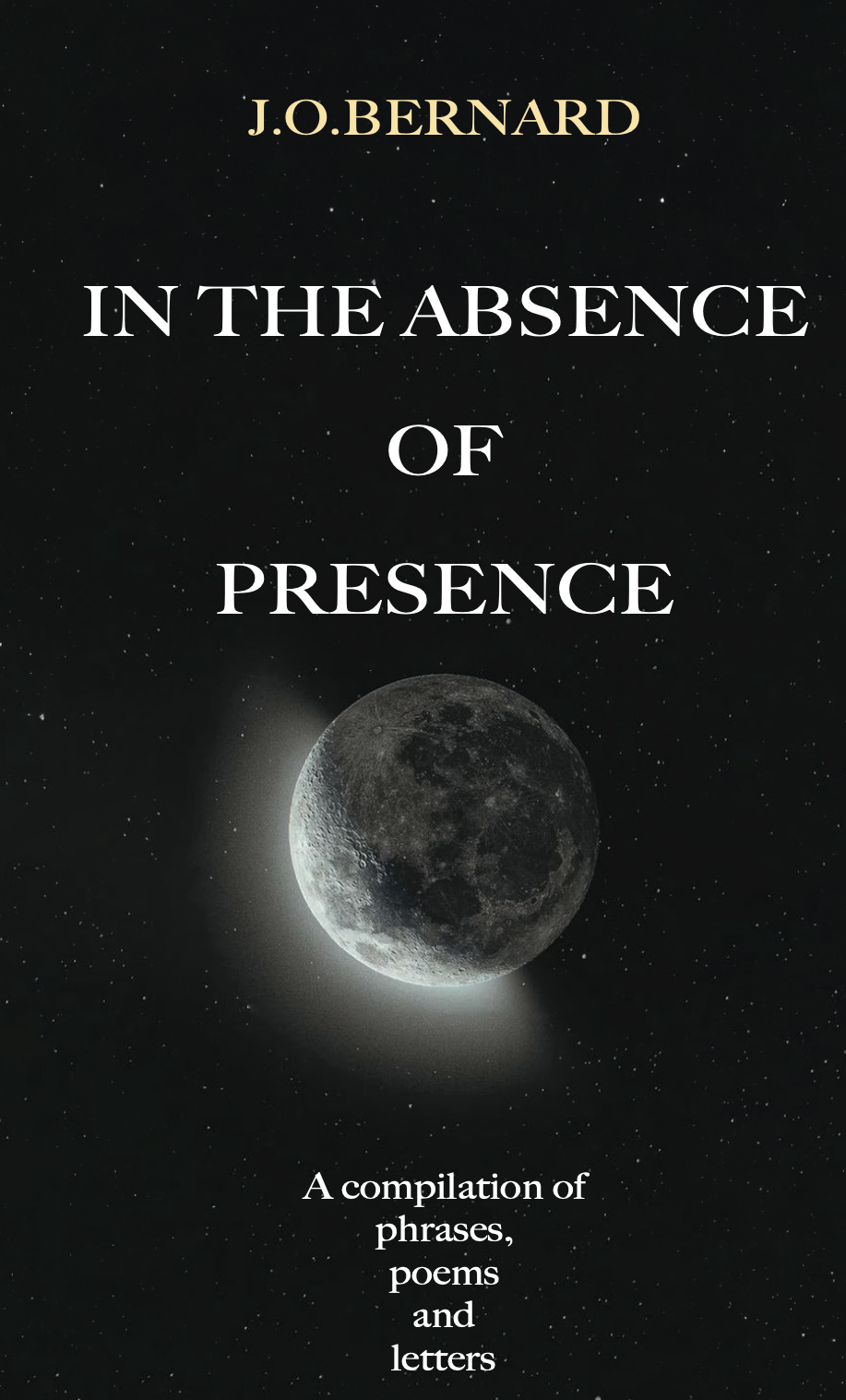

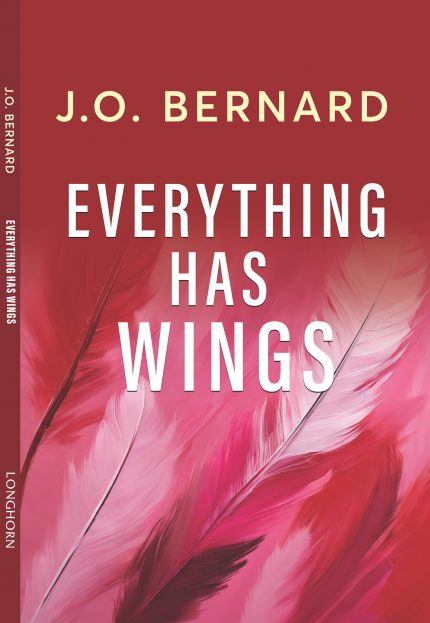
With Everything Has Wings, J.O. Bernard reminded us that hope has a way of lifting us, even when life feels unbearably heavy. His new collection, In the Absence of Presence, asks a different but equally urgent question: what do we do when love disappears, when silence settles in, and when absence feels bigger than presence?
Through poems, phrases, and letters, Bernard writes with the honesty of someone who has lived every word. At times tender, at times sharp, his work doesn’t shy away from pain but it also refuses to let sorrow have the last word. Here, absence is not emptiness. It is memory, longing, and the strange proof that we once had a loss worth bearing.
One thing to note is that this, isn’t self-help, and it won’t tell you how to “move on.” What it might do, however, is sit beside you in the mess, hand you a few tissues, and remind you that even heartbreak makes for very good poetry!






Hattie –
This book feels less like a collection of poems and more like a record of someone thinking out loud over a long period of time. The writing is quiet, intimate, and often heavy, as if each piece is part of an ongoing conversation that never really ends. There’s a strong sense of restraint throughout: nothing is overexplained, and very little is resolved. At times this makes the book feel slow, even uncomfortable, but it also makes it feel honest. It doesn’t try to impress or perform emotion; it simply stays with it.
What stood out to me most was the way absence is handled, not just as loss but as something that continues to shape the speaker’s inner life. The poems often read like unsent messages, and that gave the book a slightly intrusive feeling, as though I was reading thoughts that were never meant to be shared. There are these prose letters scattered throughout that made this even more intense. They’re direct and vulnerable and kind of unfinished in a way that feels intentional. Beneath the longing, there is a quiet sense of guilt and responsibility, and a feeling that the speaker may be hoping for forgiveness or a second chance without ever fully asking for it. This emotional hesitation is powerful, but it can also feel frustrating, as if the speaker is aware of what went wrong yet remains emotionally stuck in the same place.
The writing itself is uneven. Some lines hit hard, others feel more predictable. But honestly, that unevenness doesn’t feel like a flaw so much as part of the book’s rawness. It reads like documentation, not performance.
By the end, what stayed with me was not a sense of closure, but a feeling of unresolved weight. The book doesn’t offer healing or answers, and it doesn’t pretend that time fixes everything. Instead, it acknowledges that some connections linger without resolution, and that wanting forgiveness does not guarantee it will come. That honesty is what gives the book its strength, even when it feels heavy or incomplete. It’s not an easy read, but it feels real.
Hattie –
This book feels less like a collection of poems and more like a record of someone thinking out loud over a long period of time. The writing is quiet, intimate, and often heavy, as if each piece is part of an ongoing conversation that never really ends. There’s a strong sense of restraint throughout: nothing is overexplained, and very little is resolved. At times this makes the book feel slow, even uncomfortable, but it also makes it feel honest. It doesn’t try to impress or perform emotion; it simply stays with it.
What stood out to me most was the way absence is handled, not just as loss but as something that continues to shape the speaker’s inner life. The poems often read like unsent messages, and that gave the book a slightly intrusive feeling, as though I was reading thoughts that were never meant to be shared. There are these prose letters scattered throughout that made this even more intense. They’re direct and vulnerable and kind of unfinished in a way that feels intentional. Beneath the longing, there is a quiet sense of guilt and responsibility, and a feeling that the speaker may be hoping for forgiveness or a second chance without ever fully asking for it. This emotional hesitation is powerful, but it can also feel frustrating—as if the speaker is aware of what went wrong yet remains emotionally stuck in the same place.
The writing itself is uneven. Some lines hit hard, others feel more predictable. But honestly, that unevenness doesn’t feel like a flaw so much as part of the book’s rawness. It reads like documentation, not performance.
By the end, what stayed with me was not a sense of closure, but a feeling of unresolved weight. The book doesn’t offer healing or answers, and it doesn’t pretend that time fixes everything. Instead, it acknowledges that some connections linger without resolution, and that wanting forgiveness does not guarantee it will come. That honesty is what gives the book its strength, even when it feels heavy or incomplete. It’s not an easy read, but it feels real.
Nicole Otieno –
Having read this piece several times, I am convinced that J.O. Bernard is one of the few Kenyan,male authors willing to write with such startling emotional transparency. He welcomes the reader into his grief without theatrics or restraint, allowing us to witness both the depth of his wounds and the fragile process of finding himself again on the other side of loss.
This book feels necessary especially for those of us who feel deeply. It offers a kind of emotional companionship, a reminder that there is nothing strange or excessive about immersing oneself fully in feeling. Bernard’s honesty creates a space of belonging, a quiet affirmation that sensitivity is not a burden but a language.
His writing stirred a spectrum of emotions in me: hurt, pain, joy, empathy. And as he concludes with a reflection on Palestine, the narrative widens beyond the personal, touching on shared human ache. It is a poignant and unforgettable ending to a profoundly honest work.
A moving, courageous, and beautifully vulnerable read.
Nicole Otieno –
Having read this piece several times, I am convinced that J.O. Bernard is one of the few Kenyan male authors willing to write with such startling emotional transparency. He welcomes the reader into his grief without theatrics or restraint, allowing us to witness both the depth of his wounds and the fragile process of finding himself again on the other side of loss.
This book feels necessary ,especially for those of us who feel deeply. It offers a kind of emotional companionship, a reminder that there is nothing strange or excessive about immersing oneself fully in feeling. Bernard’s honesty creates a space of belonging, a quiet affirmation that sensitivity is not a burden but a language.
His writing stirred a spectrum of emotions in me: hurt, pain, joy, empathy. And as he concludes with a reflection on Palestine, the narrative widens beyond the personal, touching on shared human ache. It is a poignant and unforgettable ending to a profoundly honest work.
A moving, courageous, and beautifully vulnerable read.