














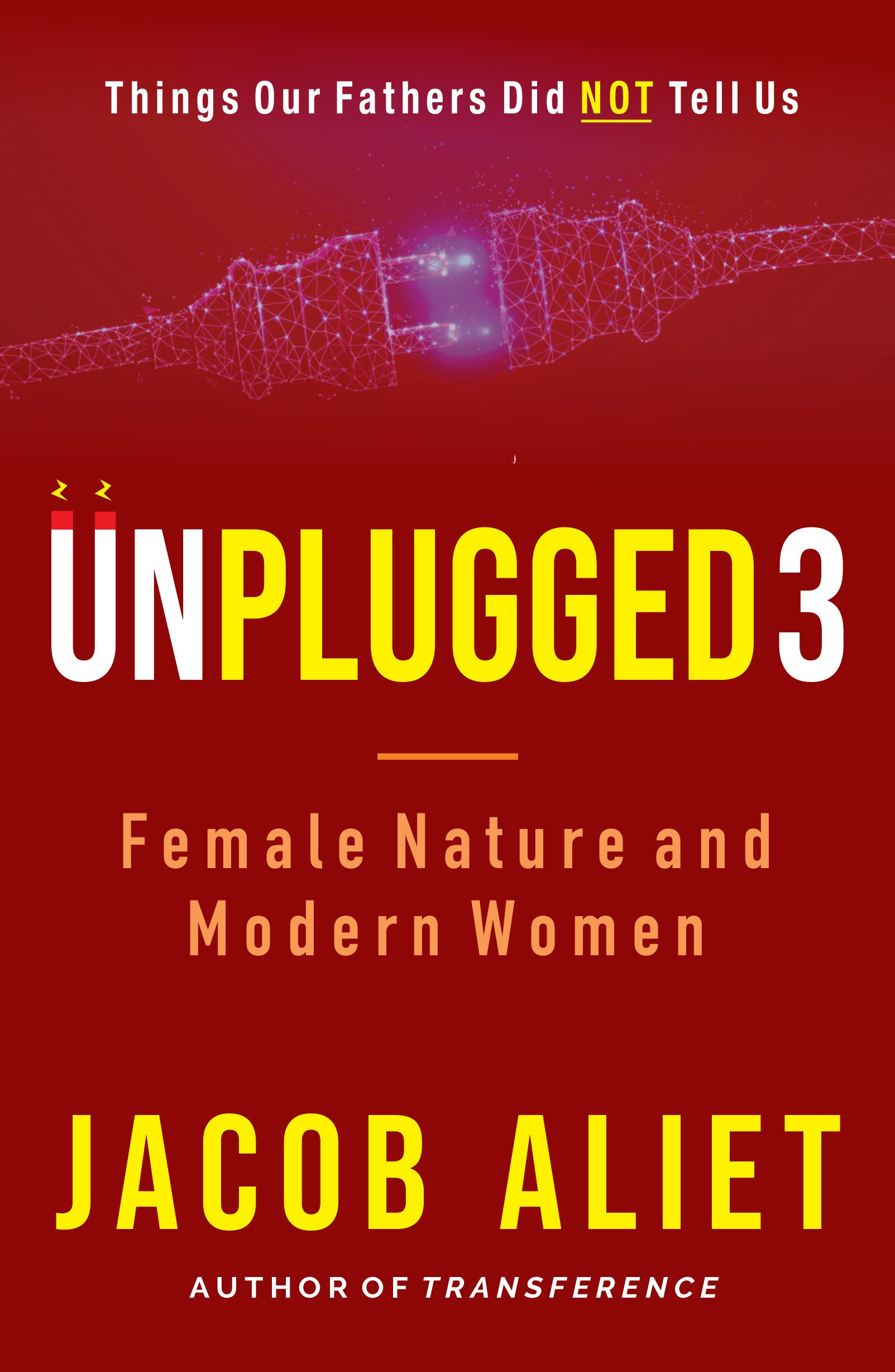
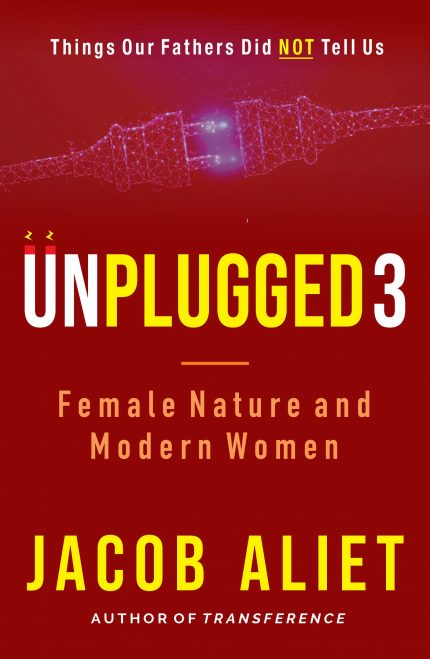
UNPLUGGED 3 – Modern Women and Female Nature
The ancient Greek Philosopher Plato said we were once conjoined and very happy. But Zeus split us into male and female to punish us for our egoism, leaving us forever looking for our other half.
This soulmate myth has been used to advertise the finding of true love as a matter of destiny, and many novels and movies have been developed from this belief. Overpriced honeymoons, diamond rings, and other excessive accoutrements of romanticism have been developed from this myth, alongside cases of homicide when the expectations of the beloved are violated.
The Bible says in Genesis that God created woman to be a helper of man. Is female nature reflective of this, or was this a romantic fantasy fabricated by patriarchy to subjugate women into submitting to men? If pressure is meant for the shoulders, not for the hips, can hips help the shoulders?
Across many animals, including octopuses, some species of pythons, and the praying mantis, the female kills and often eats the male after mating. When circumstances force the man to depend on his wife for survival for a long time, does the wife support him or discard him?
With all the patriarchal structures removed and the modern woman empowered to do as she wishes, how does she handle relationships and her place in society? Why are women filing for divorce 70-80% of the time, and why does this rate go close to 90% when the woman is educated and has a career? Why does divorce have an appeal for the modern woman? Polled Gen Z women (born 1995-2012) rank marriage as their 7th priority behind travel, a career, buying a house, financial independence, etc. What does this portend for the institution of marriage?
In the face of unfettered female nature, we look at how women handle relationships, leadership, submission, money, and parenting. We delve into how competition anxiety affects fertility and desire in women.
The hot-button topic of single motherhood is tackled unflinchingly alongside the sins of the mothers and how, despite their best intentions, women raise weak men.
This book shines the light on the dark aspects of female nature and modern women in a manner not done before. It gets uncomfortable along the process, but we shrug off the discomfort, clinically excavate the features and lay them bare.













Nancy Kemuma –
Reading ‘Unplugged 3’ by Jacob Aliet is like sitting in a room where a bold conversation is unfolding. It’s one you weren’t sure you wanted to be part of, but find yourself unable to leave.
It is written by a man, yes. But not the kind who’s out to preach or patronize. Instead, Aliet approaches his subject with a quiet boldness, unafraid to say what many only whisper behind closed doors.
The author writes about modern women with a tone that is direct, occasionally jarring, but strangely thought-provoking.
The book tackles topics that make you sit up: marriage, divorce, female sexuality, career ambition, single motherhood, and how these evolving realities are reshaping both women and men. Aliet’s voice is not always tender. In fact, some pages may make you frown or even flinch. But then again, aren’t some truths uncomfortable before they are freeing?
From a woman’s perspective, this book is layered.
On one hand, it might feel like someone dissecting your life without fully knowing what it’s like to live in your skin. But there’s value in hearing how the world sees you, especially how men interpret the shifts we’re still trying to make sense of.
Aliet doesn’t sugarcoat. He investigates into the modern woman’s journey through what he calls the ”unplugging” process, examining what’s lost and what’s gained as women grow into independence, reject traditional gender roles, and redefine what it means to thrive.
He asks uncomfortable questions:
– Has modern empowerment come at a hidden cost to intimacy?
– Are women truly freer, or are we carrying heavier emotional loads under the weight of ”having it all”?
– What has changed for men now that women are leading, earning, and asserting more?
The author draws from history, religion, pop culture, and personal observation, crafting a book that reads like a mix of social commentary and philosophical exploration. And while the tone is unapologetically masculine, there’s an underlying curiosity, a desire to understand rather than dismiss.
Perhaps what surprised me most is how much I found myself reflecting on my choices. On what freedom really means to me. On how I’ve navigated love, ambition, and identity in a world that applauds independence but still judges a woman harshly when she deviates from the script.
There’s a chapter on marriage that particularly stood out. Aliet critiques modern romantic expectations. It made me uncomfortable. But it also made me think. And that’s what good writing does.
If you’re looking for comfort, this book is not for you. It’s for women and men who want honest, yet stinging conversations.
As a woman, I didn’t always agree with Aliet. In the same breath, I never felt dismissed. If anything, I felt seen through a lens that doesn’t flatter but reflects.
This book may leave you with more questions than answers. But if you’re the kind of reader who values curiosity over comfort, then this book is worth your time.
It dares to say the quiet parts out loud.
Merceline Odhiambo –
I’ve just finished reading Unplugged 3 and I must commend you, it’s a thought-provoking and well-researched piece of work. The breadth of referencing, the integration of theory, and the real-world observations reflect a deep commitment to understanding both human behaviour and gender dynamics.
There’s a lot in the book that resonated with me. The themes around accountability and responsibility particularly stood out. Your emphasis on owning one’s choices and outcomes rather than blaming others is powerful and universally applicable, regardless of gender.
I also appreciated the point that relationships are mirrors—reflecting where we are emotionally, psychologically, and spiritually at any given time. The book does well to unpack how both men and women must confront their inner worlds to understand their relational patterns.
Your commentary on modern-day dynamics like the rise of single motherhood, emotionally driven partnerships, and the shift in gender roles felt timely and accurate. The social consequences of certain choices made in early adulthood are well captured, and your lens on delayed consequences is sobering.
There’s also an important critique of the performative nature of some marriages and the reality that many women, consciously or unconsciously use relationships for survival or status. It may be uncomfortable for some readers, but it’s necessary to challenge these norms if we’re to foster healthier engagements between the sexes.
I liked how you touched on sacredness and intentionality in intimacy, the importance of self-awareness, and the reality that men and women should complement each other, not complete each other. Your reminder to be the “mental point of origin” and focus on self-mastery is a standout message from the book.
Thank you for writing this. While it is directed toward men, there’s a lot that women can also take away especially those who are introspective and value personal evolution.
That’s my feedback!😊
Bramwel –
Understand why they left you heartbroken..🤔🎯💯 and master the art.
Kelvin –
His books are best ft
Silim Hussein –
Unplugged came to me at the perfect time, being a victim of hypergemy and not understanding what was happening to my perfect love(deep blue pill mentality), boy did the cold hard truths sting! But after the sting, there was clarity and focus that I have never experienced in my entire life. Goals were set, actionables followed upon, am talking about life changing decisions. Every young man should have a copies of these series of books. I highly recommend